Cancer's distinctive pattern of gene expression could aid early screening and prevention
Distinctive patterns of genes turned off - or left on - in healthy versus cancerous cells could enable early screening for many common cancers and maybe help avoid them, Medical College of Georgia scientists say.
Researchers are comparing chemical alterations, called DNA methylation, in the body's basic building block in healthy colon, breast, brain and lymphatic cells and their cancerous counterpart to find telltale patterns that could one day be detected in the blood, urine or feces.
The patterns could give patients a heads up that lifestyle changes, or more severe intervention, is in order, says Dr. Kapil Bhalla, director of the MCG Cancer Center, Cecil F. Whitaker Jr., M.D./Georgia Research Alliance Eminent Scholar in Cancer and Georgia Cancer Coalition Scholar.
DNA methylation is a piece of a relatively new research field called epigenetics that looks more globally at which genes are turned off and on with an eye on early identification of some of the aberrant adjustments that enable cancer cells to thrive. Epigenetic changes actually are more common than the genetic mutations long known to put people at risk for cancer and other diseases and they are probably inherited as well, Dr. Bhalla says.
The early and apparently significant role of epigenetics in cancer has made the field a focal point for centers such as the MCG Cancer Center, which recently recruited two new epigenetics researchers with the help of the Georgia Cancer Coalition. The second floor of the three-year-old Cancer Research Center building, which is being finished with the help of $3.5 million from the Georgia Research Alliance, will house the Georgia Genomics/Epigenomics Center. In early 2008, the National Institutes of Health established an epigenomics program to coordinate such efforts to better understand how this method of gene regulation fits into normal development, aging, learning and memory as well as its role in cancer, obesity, depression and other disease.
DNA methylation inhibitors already are under study at MCG and other centers for a variety of cancers and blood disorders. Because tumor cells that result from aberrant changes shed their DNA into bodily fluids, non-invasive screening for a wide range of cancers could result be another result of this initiative, Dr. Bhalla says.
"We know that long before anyone tells you that you have a tumor, methyl groups have been put where they should not be," says Dr. Keith D. Robertson, cancer epigeneticist and Georgia Cancer Coalition Scholar. "Every single tumor that anybody has looked at has aberrant change in DNA methylation. It's clearly not random."
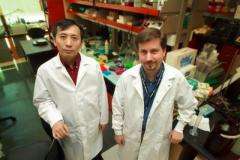
The environment, from chemicals leached from plastic or cigarettes, along with diet, sleep patterns even physical activity levels can result in these epigenetic changes that contribute to cancer and other diseases. "The natural aging process, environment, our lifestyle really changes our natural mechanisms," says Dr. Huidong Shi, epigenetics researcher who joined the MCG faculty this year and was recently named a Georgia Cancer Coalition Scholar.
But why tumors have so many epigenetic changes compared to healthy tissue is one of many mysteries. Whether the changes cause or result from tumors is another. "A lot of methylated genes we found in cancer are not naturally expressed in normal cells. So there are a lot of things we don't know," Dr. Shi says.
"A tumor is not only gaining methylation in certain areas and turning this gene off, it's losing methylation in normally methylated areas," echoes Dr. Robertson.
Dr. Shi has found, for example, a single gene that is methylated in the majority of the broad group of cancers called non-Hodgkin's lymphoma. This methylated DLC1 is detectable in the plasma samples of lymphoma patients, making it a good candidate for the screening, says Dr. Shi who also is looking for these types of biomarkers in breast cancer and the aggressive adult brain tumor glioblastoma.
Dr. Robertson, who also works in breast cancer and brain tumors as well as colon cancer, is finding patterns of genes that regulate healthy cell differentiation are shut off in cancers. "These are genes that may need to be active during a certain period of development but once you have committed to become a certain cell type, like a skin cell, you need to turn the gene off," he says.
"A lot of people think of cancer cells turning genes on, like oncogenes, that allow them to grow faster, evade immune surveillance, that sort of thing," Dr. Robertson says. "There are also many genes that they also want to turn off, like ones that tell a cell to differenitate. For a cell to become cancerous, those kinds of things have to happen. Cells that don't divide are not going to become cancer. They have to slip by the normal surveillance to survive and grow."
To find the differences, that means always looking at healthy tissue to identify the standard and how that happens. "We want to know how a normal cell knows where to put methylation," Dr. Shi says. "We don't understand that. If you look in the genome there are regions that are always methylated and regions that never are. How does a cell know that? To understand what happens when it doesn't, we need to know how the normal process is regulated."
To get a total picture, these researchers also are looking at how the enzymes that methylate DNA work and how modifications in histones, the proteins around which DNA is wrapped, can leave a gene susceptible to methylation.
Additionally, Dr. Shi, who as a postdoctoral fellow 10 years ago worked alongside Dr. Tim H.M. Huang at the University of Missouri in Columbia, Missouri, to develop some of the first technology to examine genome-scale DNA methylation, is working with an NIH initiative to refine the technology to support the genome-wide DNA methylation sequencing effort.
"The work of Drs. Robertson and Shi is eminently important for our understanding of cancer, easily translated to patients and central to the Cancer Center's mission to reduce cancer morbidity and mortality," Dr. Bhalla says.
Source: Medical College of Georgia


