Sex in the Caribbean: Environmental change drives evolutionary change -- eventually
July 29, 2009 Sex in the Caribbean: Environmental change drives evolutionary change -- eventually

Enlarge

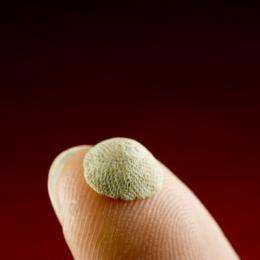
Tiny bryozoans in sediments dredged up from the bottom of the Caribbean Sea reveal that environmental change drove evolution. Credit: Aaron O'Dea

Hungry, sexual organisms replaced well-fed, clonal organisms in the Caribbean Sea as the Isthmus of Panama arose, separating the Caribbean from the Pacific, report researchers from the Smithsonian Tropical Research Institute and Scripps Institution of Oceanography. The fossil record shows that if a species could shift from clonal to sexual reproduction it survived. Otherwise it was destined for extinction, millions of years later.

Closure of the Isthmus of Panama involved a protracted sequence of volcanic and tectonic events. During the final phase, between about 4.5 and 3.5 million years ago, the Caribbean underwent a major change from a pea soup-like environment, fed by nutrient-rich waters surging up along South America, into a crystal-clear, nutrient-poor environment.

"As the was cut off from the Pacific Ocean, many new species appeared in the fossil record, and all reproduced sexually," said Aaron O'Dea, who holds a Tupper Postdoctoral Fellowship at the Smithsonian Tropical Research Institute.

Well-preserved fossils show that cupuladriid bryozoans, colonial animals similar to corals that walk around on the sea floor, reproduced either by cloning or by sex. To clone a new colony requires immediately available energy, so when nutrients are scarce, it's better not to fragment. Nutrients to form eggs and sperm needed for sex can, on the other hand, accumulate slowly over time.

O'Dea, with Jeremy Jackson, emeritus staff scientist at the Smithsonian and director of the Center for Marine Biodiversity and Conservation at Scripps Institution of Oceanography, measured the relative amount of cloning and sex occurring in species over the last 10 million years in the Caribbean. "The two forms are unmistakable," explained O'Dea. "You can clearly see the first individual that founded a sexual colony, while a clonal colony preserves the fragment from the previous colony from which it cloned."
Sex in the Caribbean: Environmental change drives evolutionary change -- eventually
Enlarge

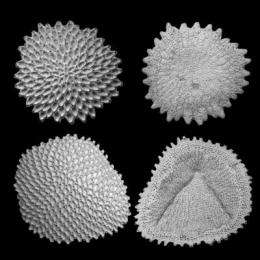
Scanning electron microscope photos of these minutely sculptured cupuladriid bryozoan fossils tell paleontologists whether the animal reproduced sexually or clonally. Top: Sexual form-- frontal and basal views Bottom: Clonal form--frontal and basal views Credit: Aaron O'Dea

As predicted, clonal bryozoans rapidly disappeared from the record as the Caribbean was isolated. Species that survived did so by becoming increasingly robust to reduce the chances of fragmentation while those that failed to evolve went extinct. They are still found in the nutrient-rich eastern Pacific.

But not everyone agreed that the extinctions which occurred 1-2 million years later in the Caribbean were caused by the formation of the Isthmus—a pattern also seen in corals and molluscs. Now these authors have the evidence to be sure.

"It's important to distinguish between ecological extinction—when these organisms stopped being important players in the game—and actual extinction, when they disappeared from the geological record," said Jackson. "The idea that extinction may be delayed by millions of years after the cause is worrisome. Today an overwhelming number of species are being reduced in abundance. The forecast from the is that even if they survive now, the ultimate cause of their extinction may already have passed us by."

This report appears in the Proceedings of the Royal Society B online.

More information: Aaron O'Dea and Jeremy Jackson. 2009. Environmental change drove macroevolution in cupuladriid bryozoans. Proc. Roy. Soc. B. online: doi:10.1098/rspb.2009.0844

Source: Smithsonian Tropical Research Institute


print this article email this article download pdf blog this article bookmark this article     Stumble it Digg this share on Facebook retweet share on Reddit add to delicious
Rate this story - 4 /5 (1 vote)

Rank Filter

Move the slider to adjust rank threshold, so that you can hide some of the comments.


Display comments: newest first

  • QubitTamer - Jul 29, 2009
    • Rank: 1 / 5 (1)
    But what about CLIMATE CHANGE???? Didn't manmade CO2 have an impact on this? AGW is not a modern time only impact.... it can TIME TRAVEL and is the true source of all mass extinctions over the last 250 million years of earth's history! Sudden arrival of billions of gigatons of dirty industrial CO2 has been wiping out species left and right! I know this because I come from the future and with our advanced technology we are PUNISHING you, the ignorant masses of the early 21st century for your failure to stop producing this huge mass of CO2 which we, your unhappy children, were left to deal with on our own!! We decided that along with darkening the sky we would transport the carbon mass throughout the time continuum as an attempt to WARN you about your stupid oil based capitalist folly!!!! Oh and we have been leaving you messages like this one ALL OVER THE INTERNET!!! JUST READ IT AND STOP MAKING ALL THE DAMN CO2!!!!!
  • Ethelred - Jul 29, 2009
    • Rank: not rated yet
    But what about CLIMATE CHANGE????


    It has nothing to do with this article. Why bring in it in? Can you think of nothing else?

    AGW is not a modern time only impact.... it can TIME TRAVEL and is the true source of all mass extinctions over the last 250 million years of earth's history!


    Lie a lot don't you? Never mind the answer is yes.

    know this because I come from the future and with our advanced technology


    Even Dennis makes worthwhile comments. You seem to only froth at the mouth.

    Oh and we have been leaving you messages like this one ALL OVER THE INTERNET!!! JUST READ IT AND STOP MAKING ALL THE DAMN CO2!!!!!


    Stop dragging your obsessions into every thread that you see.

    Ethelred

July 29, 2009 all stories

Comments: 2

4 /5 (1 vote)
  • Stumble this up

  • Digg this

  • share this

  • hide
  • Related Stories


  • hide
  • Relevant PhysicsForums posts

  • What is transpulmonary pressure?
    created Nov 24, 2009
  • Is there a gay gene?
    created Nov 23, 2009
  • Super quick question about Starling forces?
    created Nov 22, 2009
  • Questions about diffusion
    created Nov 22, 2009
  • Human Leukocyte Antigen (HLA) typing
    created Nov 21, 2009
  • Breeding program
    created Nov 20, 2009
  • More from Physics Forums - Biology

Other News

Variable Temperatures Leave Insects wtih a Frosty Reception

Biology / Plants & Animals

created 7 hours ago | popularity not rated yet | comments 0

(PhysOrg.com) -- For the first time, scientists at The University of Western Ontario have shown that insects exposed to repeated periods of cold will trade reproduction for immediate survival.


When camouflage is a plant's best protection

Rare woodland plant uses 'cryptic coloration' to hide from predators

Biology / Plants & Animals

created 9 hours ago | popularity 4.3 / 5 (3) | comments 0

It is well known that some animal species use camouflage to hide from predators. Individuals that are able to blend in to their surroundings and avoid being eaten are able to survive longer, reproduce, and ...


Cells defend themselves from viruses, bacteria with armor of protein errors

Biology / Cell & Microbiology

created 11 hours ago | popularity 5 / 5 (7) | comments 0

When cells are confronted with an invading virus or bacteria or exposed to an irritating chemical, they protect themselves by going off their DNA recipe and inserting the wrong amino acid into new proteins to defend them ...


'Safety valve' protects photosynthesis from too much light

Biology / Cell & Microbiology

created 10 hours ago | popularity 5 / 5 (2) | comments 0

Photosynthetic organisms need to cope with a wide range of light intensities, which can change over timescales of seconds to minutes. Too much light can damage the photosynthetic machinery and cause cell death. Scientists ...


Researchers discover biological basis of 'bacterial immune system'

Biology / Cell & Microbiology

created 11 hours ago | popularity 4.7 / 5 (3) | comments 0

Bacteria don't have easy lives. In addition to mammalian immune systems that besiege the bugs, they have natural enemies called bacteriophages, viruses that kill half the bacteria on Earth every two days.