Drug-resistant malaria has emerged in Cambodia
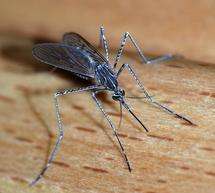
(PhysOrg.com) -- Malaria parasites in western Cambodia have become resistant to artemisinin-based therapies, the first-line treatment for malaria, according to a study published in the New England Journal of Medicine today. Resistance to the drugs makes them less effective and could eventually render them obsolete, putting millions of lives at risk.
Signs of artemisinin resistance have been reported in the region already, but this new research is the first detailed study of the problem. The study was funded by the Wellcome Trust, the Li Ka Shing Foundation, and the Global Malaria Programme of the World Health Organisation (through grants from the Bill and Melinda Gates Foundation and the Western Pacific Regional Office).
Malaria is a potentially deadly disease that kills more than a million people each year, mainly young children and pregnant women. It is caused by malaria parasites, which are injected into the bloodstream by infected mosquitoes. The most deadly form, Plasmodium falciparum, is responsible for nine out of ten deaths from malaria.
The most effective anti-malarial drug is artemisinin, derived from Artemisia annua, also known as sweet wormwood, which had been used in Chinese medicine for centuries under the name Qinghaosu. It was rediscovered in the 1970s, evaluated first in South-East Asia, and eventually accepted as an essential component of antimalarial treatment in the past few years. The artemisinin derivatives have the advantage over other anti-malarial drugs, such as chloroquine and mefloquine, in having few side effects and - until now - malaria parasites have no resistance against it.
Although the drugs - most commonly in the form of the derivative artesunate - can be used on their own as a monotherapy, fears over the possible development of resistance mean that they are usually given in conjunction with one or more other drugs as artemisinin-based combination therapies (ACTs), now recommended by the WHO as the first-line treatment for uncomplicated falciparum malaria in all endemic countries.
Following increasing reports that the efficacy of artemisinin monotherapies and combination therapies were declining in western Cambodia, researchers at the Wellcome Trust-Mahidol University Oxford Tropical Medicine Research Programme, based in Bangkok, studied the susceptibility of P. falciparum parasites to the drugs. The Research Programme is a collaboration between Mahidol University, Bangkok, and the University of Oxford, supported by the Wellcome Trust.
The researchers studied forty patients in each of Pailin, western Cambodia, and Wang Pha, north-western Thailand. In two open-label, randomised trials, each was given the relevant dosage appropriate to their body weight of either artesunate or a combination of artesunate and mefloquine.
On average, patients in Thailand were clear of parasites in 48 hours; in western Cambodia this took 84 hours - in other words, it took almost twice as long to clear the parasites in Cambodia as it did in Thailand.
During the treatment period, as the number of parasites in the blood falls, so the infection should clear. Its recurrence can be a sign that the drug treatment is not working effectively.
In this study, out of the twenty patients treated with the monotherapy in each country, there were recurrences of the infection in six patients in western Cambodia compared to just one person in Thailand. Of the twenty patients treated with the combination therapy, infection recurred in two patients in Cambodia compared to one in Thailand. These results again suggest that artemisinin was less effective on the Cambodian parasites.
"Our study suggests that malaria parasites in Cambodia are less susceptible to artemisinin than those in Thailand," says Dr Arjen Dondorp, lead author of the study. "This means that it takes longer to kill the parasites. Artemisinin should clear the parasites at an early stage, preventing them further maturing and reproducing. When the drug's action is impaired, it becomes more difficult to eliminate the parasites from the body.
"With artesunate losing its potency, ACTs rely much more on the weaker partner drug, increasing the risk that resistance also evolves towards the partner drug. This has very important consequences for the lifespan of ACTs. Losing ACTs would be a disaster for malaria control."
Artemisinin-based drugs have been in use in western Cambodia for around thirty years and the country was one of the earliest to switch to ACTs in 2001. However, the majority of patients in the region receive their medication from the private sector, which is less well regulated. Patients in the private sector are frequently provided with monotherapies or incomplete treatment courses. Added to this is the problem of substandard or counterfeit drugs with sub-clinical doses of artemisinin. This extended period of sub-optimal use of artemisinin-based drugs may have contributed to the emergence of resistance.
With signs of artemisinin-resistance occurring in other areas of Cambodia and Thailand, Dr Dondorp says swift action is required to contain the spread.
"Preventing the spread of resistant parasites when they emerge is crucial," he says. "The use of combination therapies is very important for this. I would like to see a ban on artesunate monotherapy except for specific cases."
Professor Nick White, co-author of the study and Chair of the Wellcome Trust South-East Asia Programme, believes the implications of the findings are potentially huge.
"Artemisinins are essential weapons in our war against malaria," he says. "If they become ineffective, we have no immediate replacement. The consequences could be devastating. Elimination of malaria will not be possible and millions of lives could be lost."
Source: Wellcome Trust (news : web)


