Janet Rowley to receive Presidential Medal of Freedom for cancer chromosome studies
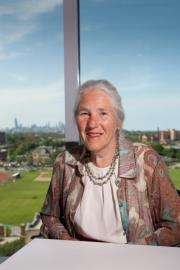
Janet Davison Rowley, MD, a pioneer in demonstrating that cancer is a genetic disease, will receive the 2009 Presidential Medal of Freedom the White House announced Thursday. President Barack Obama will award the Medal of Freedom, the nation's highest civilian honor, to Rowley and 15 others at a ceremony Wednesday, August 12.
The Medal recognizes "an especially meritorious contribution to the security or national interests of the United States, world peace, cultural or other significant public or private endeavors." First established in 1945, the medal was reinstated by President John Kennedy in 1963 to honor distinguished civilian service in peacetime. Among the ten previous recipients affiliated with the University of Chicago are scientist James Watson, economists Gary Becker and Milton Friedman, and historians Hanna Gray and John Hope Franklin.
Rowley receives the award for her discovery of recurring chromosomal abnormalities in leukemias and lymphomas—findings that have revolutionized how cancer is understood and treated.
"These outstanding men and women represent an incredible diversity of backgrounds," said President Obama. "Yet they share one overarching trait: Each has been an agent of change. Each saw an imperfect world and set about improving it, often overcoming great obstacles along the way. Their relentless devotion to breaking down barriers and lifting up their fellow citizens sets a standard to which we all should strive."
"Janet Rowley's work established that cancer is a genetic disease," said Mary-Claire King, PhD, a geneticist at the University of Washington. "She demonstrated that mutations in critical genes lead to specific forms of leukemia and lymphoma, and that one can determine the form of cancer present in a patient directly from the cancer's genes. This changed the way cancer was understood, opened the door to development of drugs directed at the cancer-specific genetic abnormalities and created the paradigm that still drives cancer research."
"By showing that unique genetic abnormalities are the root cause of cancer, Rowley laid the foundation for personalized cancer care and targeted therapy," said Richard L. Schilsky, MD, professor of medicine at the University of Chicago and past president of the American Society for Clinical Oncology.
"Janet was a pioneer in what is now called 'translational research,' the direct application of laboratory studies to understanding and treating human disease," added colleague, leukemia specialist Richard Larson, MD, professor of medicine at the University of Chicago. "She opened a window that allowed us to see the genetic basis of the leukemias and other cancers. She has also been a champion of international collaboration for the advancement of science."
Rowley, 84, the Blum-Riese Distinguished Service Professor of Medicine, Molecular Genetics & Cell Biology and Human Genetics at the University of Chicago, has received many honors, including both the Lasker Award and the National Medal of Science in 1998 and, most recently, this year's Genetics Prize from The Peter and Patricia Gruber Foundation. She continues to head an active laboratory that focuses on the connections between genetic changes and cancer, especially leukemia.
Despite the long list of previous honors, she said she was "flabbergasted" when the call came from the White House Monday afternoon. "I was in total disbelief. "When I tried to tell my family I couldn't help crying. I was overwhelmed for 24 hours."
Before Rowley, few scientists suspected that chromosomal aberrations caused tumors. The established view at the time was that abnormal chromosomes were manifestations of generalized chaos within leukemia and lymphoma cells. But Rowley wondered if something else might be going on with those damaged pieces of DNA, and continued to examine thousands of chromosomes from patients.
Her persistence bore fruit. Beginning in 1972, she made a number of remarkable discoveries, including the landmark finding that an abnormally short chromosome associated with chronic myelogenous leukemia (CML) was not a chromosome deletion, as many scientists had thought, but an exchange (known as a translocation) of segments between two chromosomes.
The next struggle was to convince fellow researchers. "I became a kind of missionary," she said, saying that chromosome abnormalities were important and hematologists should know about them. I got sort of amused tolerance at the beginning," before the field gained credence.
Prior to this discovery, Rowley had an unusual career path. In 1940, at age 15, she enrolled as an undergraduate at the Hutchins College at University of Chicago, which combined the last two years of high school with the first two years of college. In 1945, she was one of only seven women out of 65 students entering the University of Chicago School of Medicine. In 1948, the day after graduating from medical school, she married fellow student, Donald Rowley. They had four children, all boys. She stayed home to raise them while working part-time with mentally disabled children, including children with Down syndrome, caused by an extra chromosome.
Her scientific career gained traction only in 1962. She traveled with her husband on his sabbatical to Oxford, where she learned newly developed techniques of chromosome analysis. Back in Chicago, at the request of her clinical colleagues, she used these techniques to study the chromosomes of patients with leukemia. For the next decade she labored over the microscope, searching amid the seeming genetic chaos of leukemic cells for consistent chromosome abnormalities. The first such abnormality had just been reported by Peter Nowell and colleague David Hungerford. They found that patients with chronic myelogenous leukemia had an abnormally small chromosome 22 in their tumor cells, which they labeled the "Philadelphia" chromosome.
The next step came in the early 1970's when geneticists perfected the art of chromosome "banding," a way of visualizing segments of chromosomes with more precision. Again, Rowley learned these techniques during a sabbatical in Oxford. They enabled her to discover that chromosomes from leukemic cells not only lost genetic material, they sometimes exchanged it. Early in 1972, Rowley discovered the first such "translocation," an exchange of small pieces of DNA between chromosomes 8 and 21 in patients with acute myeloblastic leukemia. Later that same year, she found that the "Philadelphia" chromosome was also the result of a translocation. In patients with CML, a crucial segment of chromosome 22 broke off and moved to chromosome 9, where it did not belong. At the same time, a tiny piece of chromosome 9, which included an important cancer-causing gene, had moved to the breakpoint on chromosome 22. Because of this transfer from one chromosome to another, important genes that regulated cell growth and division were no longer located in their normal position on the chromosome. This provided critical evidence that cancer was a genetic disorder. Rowley and her colleagues subsequently identified several other chromosome translocations that were characteristic of specific malignancies, such as the 14;18 translocation seen in follicular lymphoma, and the 15;17 translocation that causes acute promyelocytic leukemia (APL). Quickly picking up on her lead that specific translocations defined specific forms of cancer, scientists around the world joined the search for chromosomes that either exchanged genetic material or in some cases lost it altogether in a process known as a "deletion." Others used the translocations as road maps to narrow the search for specific genes that were disrupted by chromosome damage, thus opening up the current era of cancer genetics. Rowley's contributions to identifying chromosomal abnormalities in leukemias and lymphomas have changed the way these diseases are diagnosed and treated. Today, newer techniques can identify the DNA damage within individual cells, offering a much more precise diagnosis of disease—and more effective treatments.
The research led to the development of the drug imatinib (Gleevec)—one of the most successful targeted cancer therapies to date—stems directly from Rowley's work on the 9;22 translocation. Imatinib blocks the abnormal protein produced by that translocation.
She has also had an impact on the relationship between medical research and public policy. Rowley served on the President's Council on Bioethics, established by President George Bush in 2001, where she advocated for fewer restrictions, including those placed on federally funded stem-cell research."
Rowley's research continues at her lab at the University of Chicago, where she has inspired and generously mentored countless students and postgraduate fellows. Cancer cytogenetics continues to fascinate her.
"We're still working on the leukemias," she says. "There's a lot of evidence that translocations and other chromosome abnormalities aren't sufficient to make a cell malignant. We're looking for the other mechanisms involved."
"I can't think of anyone who deserved the award more or who would accept it more humbly," said colleague Michelle Le Beau, PhD, director of the University of Chicago Cancer Research Center. "Janet has been a mentor for her colleagues as well as her trainees and an ongoing example of scientific wisdom and imagination combined with impeccable professional and personal style."
The Medal of Freedom validates the enthusiasm that still inspires Rowley to bicycle from her Hyde Park home to her laboratory daily at the age of 84. "It's a recognition not of me but of our research," she said. "Our discoveries have had a major impact on the treatment and on the lives of patients with leukemia, especially those with CML."
Source: University of Chicago Medical Center


