Epilepsy halted in mice
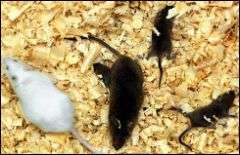
August 3, 2009 Lab mice

Scientists at Leeds have prevented epilepsy caused by a gene defect from being passed on to mice offspring - an achievement which may herald new therapies for people suffering from the condition.

The study is published today in the US journal (PNAS). It offers, for the first time, irrefutable proof that a faulty version of a gene known as Atp1a3 is responsible for causing epileptic seizures in mice.

Says lead researcher Dr Steve Clapcote, of the University of Leeds' Faculty of Biological Sciences: "Atp1a3 makes an enzyme called a sodium-potassium pump that regulates levels of sodium and potassium in the brain's . An imbalance of sodium and potassium levels has long been suspected to lead to epileptic seizures, but our study is the first to show beyond any doubt that a defect in this gene is responsible."

is a common that affects almost 1 in every 200 people, and yet the causes are unknown in the majority of cases. Current drug treatments are ineffective in around one third of epilepsy patients.

To prove the gene's role, the team studied a special strain of mouse, called Myshkin, which has an inherited form of severe epilepsy. The researchers found that these mice have a defective Atp1a3 gene, which led to them all having spontaneous seizures displaying the characteristic brain activity of epilepsy. To confirm that the seizures were epileptic, the team showed that mice treated with an antiepileptic drug, valproic acid, had fewer, less severe seizures.

When the epileptic Myshkin strain was bred with a transgenic mouse strain that has an extra copy of the normal Atp1a3 gene, the additional normal gene counteracted the faulty gene - resulting in offspring which were completely free from epilepsy.

"Our study has identified a new way in which epilepsy can be caused and prevented in mice, and therefore it may provide clues to potential causes, therapies and preventive measures in human epilepsy," says Dr Clapcote.

"Our results are very promising, but there's a long way to go before this research could yield new antiepileptic therapies. However, the human ATP1A3 gene matches the mouse version of the gene by more than 99 per cent, so we've already started to screen DNA samples from epilepsy patients to investigate whether ATP1A3 gene defects are involved the human condition."

Commenting on the research, Delphine van der Pauw, Research and Information Executive at Epilepsy Research UK said: "These results are promising. Not only have Dr Clapcote and his team highlighted a new culprit gene for epilepsy in ; but they have also shown how normal activity of the affected sodium-potassium pump can be restored. If the findings can be repeated in human studies, new avenues for the prevention and treatment of inherited epilepsy will be opened."

Source: University of Leeds (news : web)


print this article email this article download pdf blog this article bookmark this article     Stumble it Digg this share on Facebook retweet share on Reddit add to delicious
Rate this story - 5 /5 (6 votes)


August 3, 2009 all stories

Comments: 0

5 /5 (6 votes)
  • Stumble this up

  • Digg this

  • share this

  • hide
  • Related Stories

  • Childhood epilepsy research offers new hope for seizure control
    created Oct 22, 2007 | popularity not rated yet | comments 0
  • First steps towards a new approach to epilepsy treatment
    created Jun 19, 2008 | popularity not rated yet | comments 0
  • Epilepsy and brain pathology linked together by the protein ADK
    created Jan 02, 2008 | popularity not rated yet | comments 0
  • Epilepsy genes may cancel each other
    created Nov 04, 2007 | popularity not rated yet | comments 0
  • Research shows how genetic mutation causes epilepsy in infants
    created Oct 03, 2007 | popularity not rated yet | comments 0


  • hide
  • Relevant PhysicsForums posts

  • 23 Years in a Vegetative State....or not?
    created Nov 25, 2009
  • Has the H1N1 vaccine been scientifically proven to work?
    created Nov 24, 2009
  • nesfatin
    created Nov 22, 2009
  • Obsessive Compulsive Disorder
    created Nov 20, 2009
  • More from Physics Forums - Medical Sciences

Other News

Implant-based cancer vaccine is first to eliminate tumors in mice

Implant-based cancer vaccine is first to eliminate tumors in mice

Medicine & Health / Cancer

created 16 hours ago | popularity 4.7 / 5 (21) | comments 4

(PhysOrg.com) -- A cancer vaccine carried into the body on a carefully engineered, fingernail-sized implant is the first to successfully eliminate tumors in mammals, scientists report this week in the journal ...


Brain's endocannabinoid signaling pathway kept in check by two enzymes

Medicine & Health / Research

created 14 hours ago | popularity 4 / 5 (4) | comments 1

(PhysOrg.com) -- A research team has shown that blocking the degradation of two naturally occurring cannabinoids in the endocannabinoid signaling pathway of the brain produces marijuana-like behavioral effects in mice, according ...


Scientists find emotion-like behaviors, regulated by dopamine, in fruit flies

Medicine & Health / Neuroscience

created 18 hours ago | popularity 5 / 5 (3) | comments 0

Scientists at the California Institute of Technology have uncovered evidence of a primitive emotion-like behavior in the fruit fly, Drosophila melanogaster. Their findings, which may be relevant to the relationship betwee ...


Study sheds light on brain's fear processing center

Medicine & Health / Research

created 18 hours ago | popularity 5 / 5 (3) | comments 1

Breathing carbon dioxide can trigger panic attacks, but the biological reason for this effect has not been understood. A new study by University of Iowa researchers shows that carbon dioxide increases brain acidity, which ...


Two molecules affecting brain plasticity

Medicine & Health / Neuroscience

created 18 hours ago | popularity 4.8 / 5 (6) | comments 1

(PhysOrg.com) -- You wouldn't want a car with no brakes. It turns out that the developing brain needs them, too.