Probing Question: Why is the census important?
August 7, 2009 by Solmaz Barazesh
Probing Question: Why is the census important?

Credit U.S. Census Bureau

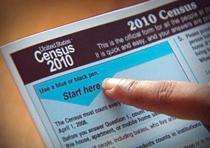
Every 10 years, the U.S. Census Bureau undertakes a mammoth task: counting all of the people living in the United States and recording basic information such as age, sex, and race. The United States' founders thought these data were so important they mandated it as part of the Constitution. But today, some people question the importance of the census, and some complain that it's an invasion of privacy.

So why do we have a , and what is the information used for?

"The census is most definitely important. Our whole representative democracy is based on it," said Gordon De Jong, professor of sociology and and senior scientist in Penn State's Population Research Institute. "The census ensures that each community gets the right number of representatives in government." Because representation is based on population, an up-to-date tally is essential.

The census also helps with the equitable distribution of public funds, De Jong said, as federal and state funding for educational programs, health care, law enforcement and highways is allocated based on population, in part. "Equitably distributing the billions of dollars of public money requires up-to-date population data."

In broad terms, the census helps us see how the United States is changing. In the 2000 census, 281.4 million people were counted in the , an increase of 13.2 percent from the 1990 census population of 248.7 million. The highest rates of population growth were reported in the South and West.

The Census Bureau is nothing if not persistent. "For the decennial [every 10 years] census, first, questionnaires are mailed out to every household," De Jong explained. "If these are not returned, then this is followed by a second mailing and phone calls. If there is no response, then a census worker will visit the household."

However, for a more accurate profile, demographers need more than the basic information mandated by the decennial census, De Jong said. The American Community Survey (ACS) fills the gap. This annual survey provides information on 46 topics, including income/poverty, employment status, and education level. "About 3 million households are chosen annually as a representative sample of the whole country," he said.

The information provided by the ACS can help lawmakers design new legislation, De Jong said. "I was involved in initiating the Children's Health Insurance Program in Pennsylvania, known as CHIP. To get that going, we had to know how many children in the state were uninsured, and the best way to get an accurate, trustworthy source of that information was from a Census Bureau survey."

While census data are useful to lawmakers, the same information may be of interest to marketing companies, political groups, and even nosy neighbors curious about the family next door. For this reason, some people are reluctant to participate in the census, including U.S. Representative Michele Bachmann (R-Minn.). Bachmann spoke out about her census concerns in a recent "Good Morning America" interview, commenting that the census has become "very intricate, very personal." She expressed fears that partisan political groups might be part of the Census Bureau's door-to-door information collection efforts.

Could census data fall into the wrong hands?

"The data from the decennial census and all Census Bureau surveys, including the American Community Survey, are protected by law," said De Jong. "Personal information like names and addresses can never be released. Statistical summaries of the data for geographic areas and political units are available on the Web, but there is no way that individual households could be identified based on their responses, and the Census Bureau has training to ensure that employees handle the data responsibly."

For De Jong, the civic duty of taking part in the census far outweighs other concerns. "The census was mandated by the Founding Fathers as the basis for our republic -- our way of government."

If civic duty isn't enough to motivate you, refusing to participate in the decennial census is punishable by a fine of up to $5,000.

Source: by Solmaz Barazesh, Research/Penn State

3.4 /5 (10 votes)  

Filter


Move the slider to adjust rank threshold, so that you can hide some of the comments.


Display comments: newest first

Avitar
Aug 07, 2009

Rank: not rated yet
Gathering the basic demographic information is vital. The current census is being used for gathering information that no government has any business gathering. Freedom begins with telling noisy Mrs. Soyoto to go to hell but it does not end there.
ssco00
Aug 07, 2009

Rank: not rated yet
The heading states:
"Every 10 years, the U.S. Census Bureau undertakes a mammoth task: counting all of the people living in the United States and recording basic information such as age, sex, and race. The United States' founders thought these data were so important they mandated it as part of the Constitution."
This is wildly false. The mandate for Congress (Article I, Section 2) to take a census every 10 years is stated only to enumerate people for the purpose of properly apportioning representatives at Congress. There are no other activities stated.
defunctdiety
Aug 07, 2009

Rank: not rated yet
I hope your grievances against the federal government don't end with the census. And I hope you have the courage to explain whatever grievances you have, to anyone you get the opportunity to do so with, and the conviction to take those grievances to the polls. Our government is walking all over us and nobody cares.
ChiRaven
Aug 08, 2009

Rank: not rated yet
What they don't say is that the GOVERNMENT can misuse the data. What do you think was used to round up American citizens of Japanese ancestry for Manzanar during World War II? You guessed it. The U.S. Census. If I were an Arab-American or of the Muslim faith, I would be VERY nervous about answering the census honestly.
Rank 3.4 /5 (10 votes)
Related Stories
Relevant PhysicsForums posts
  • Can I forget a language?
    createdFeb 10, 2012
  • The Biggest Lie Ever
    createdFeb 09, 2012
  • What are the limits of learning?
    createdFeb 06, 2012
  • Isn't that grammatically wrong?
    createdFeb 06, 2012
  • What does it mean when traders are indifferent?
    createdFeb 04, 2012
  • Peak of Our Civilization
    createdFeb 04, 2012
  • More from Physics Forums - Social Sciences

More news stories

A frank discussion of the power law and linking correlation to causation

(PhysOrg.com) -- Michael Stumpf a mathematics professor at Imperial College in London, and Mason Porter a lecturer at Oxford have teamed together to write and publish a perspective piece in Science regarding the in ...

Other Sciences / Mathematics

created Feb 10, 2012 | popularity 5 / 5 (5) | comments 11 | with audio podcast report

US workers are 'giving away the store,' costing firms billions

Nearly 70 percent of the nation's service employees give away free goods and services – from hamburgers to cable TV – costing companies billions of dollars a year, according to a groundbreaking study.

Other Sciences / Economics & Business

created Feb 09, 2012 | popularity 3 / 5 (5) | comments 11

Employers feel no love for unscrupulous practice of 'service sweethearting'

A new study led by two Florida State University marketing professors finds that some frontline service employees who are rewarded for hikes in customer loyalty and satisfaction also may engage in "service ...

Other Sciences / Economics & Business

created Feb 10, 2012 | popularity 3.3 / 5 (3) | comments 10

New insights into how to correct false knowledge

The abundance of false information available on the Internet, in movies and on TV has created a big challenge for educators.

Other Sciences / Social Sciences

created Feb 07, 2012 | popularity 4.9 / 5 (7) | comments 9 | with audio podcast

Neanderthal demise due to many influences, including cultural changes: study

As an ice age crept upon them thousands of years ago, Neanderthals and modern human ancestors expanded their territory ranges across Asia and Europe to adapt to the changing environment.

Other Sciences / Archaeology & Fossils

created Feb 07, 2012 | popularity 4.4 / 5 (5) | comments 8 | with audio podcast


Scientists discover molecular secrets of 2,000-year-old Chinese herbal remedy

For roughly two thousand years, Chinese herbalists have treated Malaria using a root extract, commonly known as Chang Shan, from a type of hydrangea that grows in Tibet and Nepal. More recent studies suggest that halofuginone, ...

New method to examine batteries -- MRI from the inside

There is an ever-increasing need for advanced batteries for portable electronics, such as phones, cameras, and music players, but also to power electric vehicles and to facilitate the distribution and storage of energy derived ...

Google might launch Drive for cloud storage soon

(PhysOrg.com) -- Google's next big move, according to the Wall Street Journal, is a cloud storage service called Drive. Hardly first to the plate, Google is simply catching up to introducing its cloud reposi ...

A mitosis mystery solved: How chromosomes align perfectly in a dividing cell

Although the process of mitotic cell division has been studied intensely for more than 50 years, Whitehead Institute researchers have only now solved the mystery of how cells correctly align their chromosomes during symmetric ...

Lab study raises questions over nano-particle impact

Tests involving chickens have raised questions about the impact on health from engineered nano-particles, the ultra-fine grains commonly used in drugs and processed foods, scientists said on Sunday.

Starve a virus, feed a cure? Findings show how some cells protect themselves against HIV

A protein that protects some of our immune cells from the most common and virulent form of HIV works by starving the virus of the molecular building blocks that it needs to replicate, according to research published online ...