Scientists make multiple types of white blood cells directly from embryonic and adult stem cells
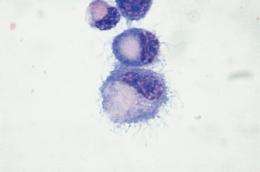
(PhysOrg.com) -- In an advance that could help transform embryonic stem cells into a multipurpose medical tool, scientists at the University of Wisconsin-Madison have transformed these versatile cells into progenitors of white blood cells and into six types of mature white blood and immune cells.
While clinical use is some years away, the new technique could produce cells with enormous potential for studying the development and treatment of disease. The technique works equally well with stem cells grown from an embryo and with adult pluripotent stem cells, which are derived from adult cells that have been converted until they resemble embryonic stem cells.
If the adult cells came from people with certain bone marrow diseases, the new technique could produce blood cells with specific defects. It could also be used to grow specific varieties of immune cells that could target specific infections or tumors.
The likely most immediate benefit is cells that can be used for safety screening of new drugs, says study leader Igor Slukvin, an assistant professor in the university's Department of Pathology and Laboratory Medicine.
"Toxicity to the blood-forming system is a key limit on drug development, so these cells could be used for safety testing in any drug development," says Slukvin, who performs research at the National Primate Research Center in Madison.
Bone marrow stem cells are already used to screen drugs, but the new technique promises to produce large quantities of cells in a dish that can be more exactly tailored to the task at hand, without requiring a constant supply of bone marrow cells from donors.
The development of stem cells into mature, specialized cells is governed by trace amounts of biological signaling molecules, so Slukvin and colleagues Kyung-Dal Choi and Maxim Vodyanik exposed two types of highly versatile stem cells to various compounds.
Eventually they found a recipe that would cause the cells to move through a process of progressive specialization into a variety of adult cells. Slukvin's study was published in the Journal of Clinical Investigation.
The result included osteoclasts, cells that play a role in osteoporosis, and eosinophils, which are involved in allergy and asthma. Other adult cells included dendritic and Langerhans cells, which direct other immune cells to attack infections, and neutrophils, the most common type of white blood cell.
"While we now can make almost all types of blood cells from embryonic and adult pluripotent stem cells, the next major challenge is to produce blood stem cells (called hematopoetic stem cells) that might be used in a bone marrow transplant," Slukvin says.
This life-saving procedure can replace the entire blood-forming system in a patient with blood cancer, but more than one-third of patients cannot find a well-matched bone marrow donor and thus risk graft-versus-host disease, a sometimes-fatal attack on the patient by the transferred immune system.
Compatibility problems should disappear if the blood-forming stem cells are based on the patient's own cells, Slukvin says. "Eventually, we want to make therapeutic cells that could be used instead of bone marrow transplants."
In the interim, Slukvin expects the new technique to produce cells that model a variety of medical conditions.
"We can take cells from patients with a disease of the blood system and explore the cause and treatment of that specific disease. We can generate blood cells which are normal or abnormal, and study the mechanisms and treatments of blood cancers," he says.
Scientists now suspect that many cancers have their own stem cells, a long-lived malefactor that spawns cells that form the bulk of the tumor.
"Cancer has these stem cells, and we need to target them for treatment. But when patients come to the clinic, they already have cancer, so the malignant transformation already started," says Slukvin. "By reprogramming blood cancer cells to pluripotent stem cells and differentiating these cells back to blood, we hope to generate cancer stem cells in a dish; that would be a good model for studying how these cells formed, to figure out what external factors make them go bad. This could be a crucial step in treating or preventing cancer."
Source: University of Wisconsin-Madison (news : web)


