High-fat diet affects physical and memory abilities of rats after 9 days
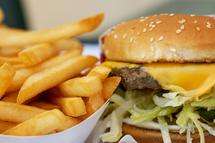
Rats fed a high-fat diet show a stark reduction in their physical endurance and a decline in their cognitive ability after just nine days, a study by Oxford University researchers has shown.
The research, funded by the British Heart Foundation and published in the FASEB Journal, may have implications not only for those eating lots of high-fat foods, but also athletes looking for the optimal diet for training and patients with metabolic disorders.
'We found that rats, when switched to a high-fat diet from their standard low-fat feed, showed a surprisingly quick reduction in their physical performance,' says Dr Andrew Murray, who led the work at Oxford University and has now moved to the University of Cambridge. 'After just nine days, they were only able to run 50 per cent as far on a treadmill as those that remained on the low-fat feed.'
High-fat diets, such as those that are prevalent in Western countries, are known to be harmful in the long term and can lead to problems such as obesity, diabetes and heart failure. They are also known to be associated with a decline in cognitive ability over long time spans. But little attention has been paid to the effect of high-fat diets in the short term.
Physical endurance - how long we can keep exercising -depends on how much oxygen can be supplied to our muscles and how efficiently our muscles release energy by burning up the fuel we get from the food we eat. In particular, using fat as a fuel is less efficient than using glucose from carbohydrates, but the metabolic changes induced by different diets are complex and it has been controversial whether high-fat feeding for a short time would increase or decrease physical performance.
The Oxford team set out to investigate whether rats fed a high-fat diet for just a few days showed any change in their physical and cognitive abilities.
All 42 rats were initially fed a standard feed with a low fat content of 7.5 per cent. Their physical endurance was measured by how long they could run on a treadmill and their short-term or 'working' memory was measured in a maze task. Half of the rats were then switched to a high-fat diet where 55 per cent of the calories came from fat. After four days of getting used to the new diet, the endurance and cognitive performance of the rats on the low- and high-fat diets was compared for another five days.
'With the standard feed, 7.5 per cent of the calories come from fat. That's a pretty low-fat diet, much like humans eating nothing but muesli,' says Dr Murray. 'The high-fat diet, in which 55 per cent of the calories came from fat, sounds high but it's actually not extraordinarily high by human standards. A junk food diet would come close to that.
'Some high-fat, low-carb diets for weight loss can even have fat contents as high as 60 per cent. However, it's not clear how many direct conclusions can be drawn from our work for these diets, as the high-fat diet we used was not particularly low in carbs,' he adds.
On the fifth day of the high-fat diet (the first day back on the treadmill), the rats were already running 30 per cent less far than those remaining on the low-fat diet. By the ninth day, the last of the experiment, they were running 50 per cent less far.
The rats on the high-fat diet were also making mistakes sooner in the maze task, suggesting that their cognitive abilities were also being affected by their diet. The number of correct decisions before making a mistake dropped from over six to an average of 5 to 5.5.
The researchers also investigated what metabolic changes the high-fat diet was inducing in the rats. They found increased levels of a specific protein called the 'uncoupling protein' in the muscle and heart cells of rats on the high-fat diet. This protein 'uncouples' the process of burning food stuffs for energy in the cells, reducing the efficiency of the heart and muscles. This could at least partly explain the reduction in treadmill running seen in the rats.
The rats that were fed a high fat diet and had to run on the treadmill also had a significantly bigger heart after nine days, suggesting the heart had to increase in size to pump more blood around the body and get more oxygen to the muscles.
While this research has been done in rats, the Oxford team and Andrew Murray's new group in Cambridge are now carrying out similar studies in humans, looking at the effect of a short term high-fat diet on exercise and cognitive ability.
The results will be important not only in informing athletes of the best diets to help their training routine, but also in developing ideal diets for patients with metabolic disorders such as diabetes, insulin resistance or obesity. People with such conditions can have high levels of fat in the blood and show poor exercise tolerance, some cognitive decline, and can even develop dementia over time.
'These are startling results,' says Professor Kieran Clarke, head of the research team at Oxford University. 'It shows that high-fat feeding even over short periods of time can markedly affect gene expression, metabolism and physical performance. By optimising diets appropriately we should be able to increase athletes' endurance and help patients with metabolic abnormalities improve their ability to exercise and do more.'
'In little more than a week, a change in diet appears to have made the rats' hearts much less efficient,' says Professor Jeremy Pearson, Associate Medical Director of the British Heart Foundation, who funded the research. 'We look forward to the results of the equivalent studies in human volunteers, which should tell us more about the short-term effects of high-fat foods on our hearts. We already know that to protect our heart health in the long-term, we should cut down on foods high in saturated fat.'
More information: 'Deterioration of physical performance and cognitive function in rats with short-term high-fat feeding' by Andrew J Murray and colleagues is published online in the FASEB Journal. Copy of the paper: www.fasebj.org/cgi/rapidpdf/fj.09-139691v1.pdf
Source: University of Cambridge (news : web)


