Helping Albacore tuna come out of the can
August 11, 2009 Helping Albacore tuna come out of the can

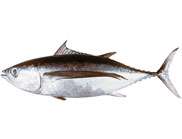
New information on the biology of albacore tuna will assist in stock assessments and providing advice on harvest levels in Australian and international waters. Photo by: CSIRO/FRDC

(PhysOrg.com) -- Scientists are set to study the earbones and organs of more than 2000 albacore tuna to better understand the growth, age and breeding patterns of this increasingly important species.

Albacore tuna are harvested from tropical to temperate waters, mainly for canning, but also to satisfy the growing market for fresh in Europe and the United States.

While previously caught as by-product, albacore have become a prime target of Australia’s Eastern Tuna and Billfish Fishery which operates from Cape York to Tasmania and on the adjacent high seas. Several Pacific island nations and distant water fleets, including Taiwan and Korea, also target albacore.

This rising catch of albacore has generated a need for more information about the species to assess stock levels and provide advice on harvest levels in Australian and international waters.

To meet this need, scientists from the CSIRO Wealth from Oceans Flagship are studying the biology of albacore stocks from eastern Australia and the wider south-western Pacific Ocean to determine their age, growth and reproductive characteristics.

The two-year study - funded by the Fisheries Research and Development Corporation and CSIRO, the Department of Agriculture, Fisheries and Forestry, and the Western and Central Pacific Commission - builds on earlier studies in 2007 and 2008-09.

Project leader, Jess Farley, says fishery-wide information about how albacore age, grow and reproduce is needed to provide reliable stock assessments and set appropriate levels for future catches.

The age of the albacore will be estimated by interpreting growth bands formed in their earbones (otoliths) and dorsal spines in a process similar to reading growth rings of trees. Albacore reproductive organs will be examined to determine the location, timing, frequency and magnitude of spawning.

“Previous studies have shown that albacore grow to 1.2 metres in length and at least 30 kilograms in weight, and live up to 14 years,” Ms Farley says.

“More detailed biological information will allow us to calculate growth rates, age at maturity and longevity, and to see whether these differ by gender and region.

“We aim to develop a ‘maturity schedule’ for female albacore across the south Pacific to help estimate their spawning output at different sizes and ages. This is the key to understanding the productivity of the stocks.”

CSIRO scientist Dr Campbell Davies says that, like other fish species, tunas release many thousands, if not millions, of eggs in a spawning season and individual spawning output increases with the size and age of the female fish.

“This needs to be quantified so that stock-assessment scientists can estimate how different levels of fishing will affect the spawning capacity of the whole population,” he says.

The CSIRO scientists will collaborate with the Secretariat of the Pacific Community (SPC) on the ageing and reproductive work, which will link with an SPC tagging program examining albacore movements in the Western and Central Pacific Ocean. The fishing industry will provide albacore samples and an archival reference collection will be established.

Provided by CSIRO (news : web)


print this article email this article download pdf blog this article bookmark this article     Stumble it Digg this share on Facebook retweet share on Reddit add to delicious
Rate this story - not rated yet


August 11, 2009 all stories

Comments: 0

not rated yet
  • Stumble this up

  • Digg this

  • share this

  • hide
  • Related Stories

  • Canada issues canned tuna guidelines
    created Feb 21, 2007 | popularity not rated yet | comments 0
  • Fish growth changes enhanced by climate change
    created Apr 27, 2007 | popularity not rated yet | comments 0
  • Greenpeace takes on tuna fishing
    created Apr 23, 2008 | popularity not rated yet | comments 0
  • Study: False killer whales declining off Hawaii
    created Apr 03, 2009 | popularity not rated yet | comments 0
  • Assessing levies for by-catch could fund conservation measures
    created Jul 18, 2007 | popularity not rated yet | comments 0


  • hide
  • Relevant PhysicsForums posts

  • What is transpulmonary pressure?
    created Nov 24, 2009
  • Is there a gay gene?
    created Nov 23, 2009
  • Super quick question about Starling forces?
    created Nov 22, 2009
  • Questions about diffusion
    created Nov 22, 2009
  • More from Physics Forums - Biology

Other News

Variable Temperatures Leave Insects wtih a Frosty Reception

Biology / Plants & Animals

created 9 hours ago | popularity not rated yet | comments 0

(PhysOrg.com) -- For the first time, scientists at The University of Western Ontario have shown that insects exposed to repeated periods of cold will trade reproduction for immediate survival.


When camouflage is a plant's best protection

Rare woodland plant uses 'cryptic coloration' to hide from predators

Biology / Plants & Animals

created 12 hours ago | popularity 4.3 / 5 (3) | comments 0

It is well known that some animal species use camouflage to hide from predators. Individuals that are able to blend in to their surroundings and avoid being eaten are able to survive longer, reproduce, and ...


Cells defend themselves from viruses, bacteria with armor of protein errors

Biology / Cell & Microbiology

created 13 hours ago | popularity 5 / 5 (7) | comments 0

When cells are confronted with an invading virus or bacteria or exposed to an irritating chemical, they protect themselves by going off their DNA recipe and inserting the wrong amino acid into new proteins to defend them ...


'Safety valve' protects photosynthesis from too much light

Biology / Cell & Microbiology

created 13 hours ago | popularity 4.7 / 5 (3) | comments 0

Photosynthetic organisms need to cope with a wide range of light intensities, which can change over timescales of seconds to minutes. Too much light can damage the photosynthetic machinery and cause cell death. Scientists ...


Researchers discover biological basis of 'bacterial immune system'

Biology / Cell & Microbiology

created 14 hours ago | popularity 4.7 / 5 (3) | comments 0

Bacteria don't have easy lives. In addition to mammalian immune systems that besiege the bugs, they have natural enemies called bacteriophages, viruses that kill half the bacteria on Earth every two days.