New study: Up to 90 percent of US paper money contains traces of cocaine
August 17, 2009 New study: Up to 90 percent of US paper money contains traces of cocaine

Enlarge

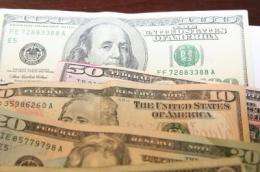
Traces of cocaine exist in up to 90 percent of banknotes in many large US cities, a new study reports. Credit: The American Chemical Society

You probably have cocaine in your wallet, purse, or pocket. Sound unlikely or outrageous? Think again! In what researchers describe as the largest, most comprehensive analysis to date of cocaine contamination in banknotes, scientists are reporting that cocaine is present in up to 90 percent of paper money in the United States, particularly in large cities such as Baltimore, Boston, and Detroit. The scientists found traces of cocaine in 95 percent of the banknotes analyzed from Washington, D.C., alone.

Presented here today at the 238th National Meeting of the American Chemical Society, the new study suggests that abuse is still widespread and may be on the rise in some areas. It could help raise public awareness about cocaine use and lead to greater emphasis on curbing its abuse, the researchers say.

The scientists tested banknotes from more than 30 cities in five countries, including the U.S., Canada, Brazil, China, and Japan, and found "alarming" evidence of cocaine use in many areas. The U.S. and Canada had the highest levels, with an average contamination rate of between 85 and 90 percent, while China and Japan had the lowest, between 12 and 20 percent contamination. The study is the first report about cocaine contamination in Chinese and Japanese currencies, they say.

"To my surprise, we're finding more and more cocaine in banknotes," said study leader Yuegang Zuo, Ph.D., of the University of Massachusetts in Dartmouth.

Zuo says that the high percentage of contaminated U.S. currency observed in the current study represents nearly a 20 percent jump in comparison to a similar study he conducted two years ago. That earlier study indicated that 67 percent of bills in the U.S. contained traces of cocaine.

"I'm not sure why we've seen this apparent increase, but it could be related to the economic downturn, with stressed people turning to cocaine," Zuo says. Such studies are useful, he noted, because the data can help law enforcement agencies and forensic specialists identify patterns of drug use in a community.

Scientists have known for years that paper money can become contaminated with cocaine during drug deals and directly through drug use such as snorting cocaine through rolled bills. Contamination can spread to banknotes not involved in the illicit drug culture because bills are processed in banks' currency-counting machines.

Previous studies on cocaine in banknotes, however, had several drawbacks. They often were based on sampling only a small number of banknotes, for instance. Some tests destroyed the currency.

In the new study, Zuo and colleagues describe use of a modified form of a standard laboratory instrument termed a gas chromatograph-mass spectrometer. It allows a faster, simpler and more accurate measurement of cocaine contamination than other methods, without destroying the currency. The researchers used the method to analyze banknotes of several different denominations from the five countries surveyed.

The U.S. had the highest levels. The scientists analyzed a total of 234 banknotes from the U.S. and found that up to 90 percent of the banknotes contain traces of cocaine. Amounts ranged from .006 micrograms (several thousands of times smaller than a single grain of sand) to over 1,240 micrograms of cocaine per banknote (about 50 grains of sand). For comparison: A grain of sand weighs approximately 23 micrograms; there are one million micrograms in a gram and 28 grams in an ounce.

The scientists collected U.S. banknotes from 17 U.S. cities and found that larger cities like Baltimore, Boston, and Detroit had among the highest average cocaine levels. Washington, D.C., ranked above the average, with 95 percent of the banknotes sampled contaminated with the drug. The lowest average cocaine levels in U.S. currency appeared in bills collected from Salt Lake City.

The researchers studied 27 banknotes from Canada and found that 85 percent were contaminated with cocaine, with amounts ranging from 2.4 micrograms to over 2,530 micrograms of coke per banknote. The researchers analyzed 10 banknotes from Brazil and found that 80 percent were contaminated with cocaine, still high but lower than the U.S. and Canada.

China and Japan had the lowest levels. The researchers analyzed 112 banknotes from China and found that about 20 percent were contaminated with cocaine. Of the 16 banknotes analyzed from Japan, only about 12 percent were contaminated with cocaine, the researchers say.

Despite the high percentage of cocaine-contaminated banknotes, Zuo points out that the amount of cocaine found on most notes was so small that consumers should not have any health or legal concerns about handling paper money.

"For the most part, you can't get high by sniffing a regular banknote, unless it was used directly in drug uptake or during a drug exchange," Zuo said. "It also won't affect your health and is unlikely interfere with blood and urine tests used for drug detection." This study was partly funded by the University of Massachusetts-Dartmouth.

Source: American Chemical Society (news : web)


print this article email this article download pdf blog this article bookmark this article     Stumble it Digg this share on Facebook retweet share on Reddit add to delicious
Rate this story - 2.9 /5 (8 votes)

Rank Filter

Move the slider to adjust rank threshold, so that you can hide some of the comments.


Display comments: newest first

  • Egnite - Aug 17, 2009
    • Rank: 2 / 5 (1)
    This rumour has been around for years but it's good to hear they've actually conducted a study to prove it.
  • mvg - Aug 17, 2009
    • Rank: 4.8 / 5 (4)
    It has been extraordinarily hot and humid here in Texas this week.

    When I leave my wallet in my back pocket on days like this, I end up with a wad of REALLY nasty, sweaty $20 and $100 dollar bills.

    I hope they think about that next time they use one of my bills to snort cocaine!
  • Doug_Huffman - Aug 17, 2009
    • Rank: 5 / 5 (1)
    I doubt that is the major source of the contamination. More likely it's due to counting large quantities of money while snorting (elite businessmen) or processing for packaging.
  • Simonsez - Aug 17, 2009
    • Rank: 5 / 5 (1)
    I doubt that is the major source of the contamination. More likely it's due to counting large quantities of money while snorting (elite businessmen) or processing for packaging.


    Having used cocaine when I was in college, I can very easily quash your doubts: coke users roll up dollar bills of any denomination (although larger denominations seem to be favored when available) and use these as a "straw" with which to snort the drug. This is the most common method as having cash in one's pocket is fairly common as opposed to having a plastic straw on hand.
  • getgoa - Aug 17, 2009
    • Rank: 1 / 5 (4)
    I can't believe the USA is so illegally drugged?? It forces me to think about Hitler and his intake of methamphetamines and cocaine and when Clinton bomb raided Columbian farmer plantations during his presidency. People need to wake up and realize the validity of religious consequences:
    Example: no schism of the Lutheran church from Germany to America?
    For columbian farmers their prayers must have been heard since it is directly out of the 1962 missal for Catholics: sins crying to heaven for vengeance-- Oppression of the poor, Defrauding laborers of their wages. I don't think the USA is realizing the problems and consequences-- and science is not believing it? Does anyone think that Roosevelt, an English president was conjured by another English group called the UEL(United Empire Loyalists) the same group Washington fought against in the Revolutionary War??
  • dtempleton - Aug 17, 2009
    • Rank: 5 / 5 (2)
    If you think that's bad, look at the fecal contamination rate.
  • otto1923 - Aug 17, 2009
    • Rank: 5 / 5 (1)
    Could money be refined somehow to extract this valuable commodity? Some sort of 'laundering' as an adjunct to the illegal narcotics industry? Am I the first person to think of this?
  • docknowledge - Aug 17, 2009
    • Rank: not rated yet
    "2.4 micrograms to over 2,530 micrograms of coke per banknote". Uh, and that's a lot or a little? How does that compare with deodorant, toothpaste, and residual dust from comets? Does anybody involved writing the article know what they are talking about? (As usual for "science reporters".)
  • ghidon - Aug 18, 2009
    • Rank: 1 / 5 (3)
    How about a study of traces of cocaine on credit cards ?
  • Egnite - Aug 18, 2009
    • Rank: not rated yet
    Could money be refined somehow to extract this valuable commodity? Some sort of 'laundering' as an adjunct to the illegal narcotics industry? Am I the first person to think of this?


    Very easily I guess as it would take a similar process as what's used to make "washed-back" coke, i.e. purer. That process is basically dissolve the coke in acetone and all the crap in the coke doesn't dissolve so when u dry it out ur left with stronger crystals. Think the downfall would be the degradation of the coke on the bills since it could've been on those bills for weeks/months/years and therefore it's stregth would suck. Plus you'd need thousands/millions of bills just to make a gram so it's hardly worthwhile imo.
  • Egnite - Aug 18, 2009
    • Rank: not rated yet
    hmm don't quote me on that process, it may be ammonia rather than acetone. I can't remember tbh as it's been a while since I've had that desire. There are plenty webbys that can help you should you wish to try tho ^^
  • sender - Aug 22, 2009
    • Rank: not rated yet
    This issue should be taken up to the supreme court, illegality of drug posession is challenged through precedent, hopefully licit use and criminal intent will be a major factor in drug movement. Let the doctors of the decades old rejoice :)

August 17, 2009 all stories

Comments: 12

2.9 /5 (8 votes)
  • Stumble this up

  • Digg this

  • share this

  • hide
  • Related Stories

  • 100 percent contamination of Euro notes with Cocaine
    created Jan 10, 2007 | popularity not rated yet | comments 0
  • How dirty is your money?
    created Sep 13, 2007 | popularity not rated yet | comments 0
  • Potential new drug for cocaine addiction and overdose
    created Sep 15, 2008 | popularity not rated yet | comments 0
  • Cocaine cravings are studied
    created Jun 15, 2006 | popularity not rated yet | comments 0
  • Research indicates that a common heart drug may reduce cocaine cravings
    created Feb 27, 2008 | popularity not rated yet | comments 0


  • hide
  • Relevant PhysicsForums posts

  • Putting every element in a box
    created Nov 25, 2009
  • a question in Lewis structure???
    created Nov 25, 2009
  • Paint Technology
    created Nov 24, 2009
  • About pH, Metallic electrodes
    created Nov 24, 2009
  • Rate Laws
    created Nov 21, 2009
  • why oxygen, cannot act as a pi-donor while NO can?
    created Nov 20, 2009
  • More from Physics Forums - Chemistry

Other News

Research sheds light on workings of anti-cancer drug

Chemistry / Analytical Chemistry

created 1hour ago | popularity not rated yet | comments 0

(PhysOrg.com) -- The copper sequestering drug tetrathiomolybdate (TM) has been shown in studies to be effective in the treatment of Wilson disease, a disease caused by an overload of copper, and certain metastatic cancers. ...


New chemical reaction offers opportunities for drug development

Chemistry / Biochemistry

created 5 hours ago | popularity not rated yet | comments 0

Researchers led by Conway Fellow, Professor Pat Guiry have solved a chemistry problem that has stumped researchers worldwide for more than a decade. The results have earned the group the cover story of the leading scientific ...


Sandia CR5

Machine Converts CO2 into Gasoline, Diesel, and Jet Fuel

Chemistry / Biochemistry

created Nov 23, 2009 | popularity 4.6 / 5 (30) | comments 19

(PhysOrg.com) -- Researchers at Sandia National Laboratories have built a machine that uses the sun's energy to convert carbon dioxide waste from power plants into transportation fuels such as gasoline, diesel, ...


New hydrogen-storage method discovered

New hydrogen-storage method discovered

Chemistry / Materials Science

created Nov 22, 2009 | popularity 4.3 / 5 (42) | comments 15

Scientists at the Carnegie Institution have found for the first time that high pressure can be used to make a unique hydrogen-storage material. The discovery paves the way for an entirely new way to approach ...


New on-off 'switch' triggers and reverses paralysis in animals with a beam of light

New on-off 'switch' triggers and reverses paralysis in animals with a beam of light (w/ Video)

Chemistry / Biochemistry

created Nov 18, 2009 | popularity 4.8 / 5 (5) | comments 4

In an advance with overtones of Star Trek phasers and other sci-fi ray guns, scientists in Canada are reporting development of an internal on-off "switch" that paralyzes animals when exposed to a beam of ultraviolet ...