Research indicates toddlers can become ageists by three
August 19, 2009 By Jamie Hanlon
Research indicates toddlers can become ageists by three

Enlarge

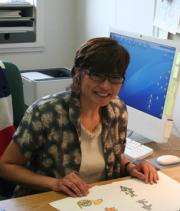
Sheree Kwong See's research indicates that children who spend more time around seniors are less likely to become ageist.

(PhysOrg.com) -- Sometimes inspiration comes from the strangest of places. For Sheree Kwong See, it happened during a testing session with a subject while conducting a study on language and cognitive changes in the elderly. Kwong See was explaining the test to the research participant who reacted to the instructions in a quite unexpected manner.

"She said, 'I can't do that. I'm old,'" said Kwong See.

But after Kwong See spent some time comforting and encouraging the participant, Kwong See and the woman were amazed to see that the woman who said she would be unable to complete the test scored significantly better than expected. And her initial reaction gave Kwong See the idea to research how beliefs about the elderly - specifically in terms of their perceived abilities - affect them and others.

As part of a Social Sciences and Humanities Research Council-funded study, Kwong See partnered with fellow University of Alberta researcher Elena Nicoladis to investigate the early beginnings of stereotypes about aging. They measured the reactions of young children after being quizzed on vocabulary words by, either an older or younger adult, in order to assess whether toddlers have a bias against older people.

The results, which are to be published in an upcoming issue of Educational Gerontology, proved to be unsettling. Kwong See's study revealed that negative stereotypes about cognitive ability in old age may be held by some children between the ages of two and three, which could adversely affect them when they are older.

"We've been able to show that even young children have beliefs about older people's abilities," said Kwong See. "We're seeing what we could call ageism by about age three."

The researchers assessed bias by making use of a tendency of children when learning words to assume a new world refers to something they do not already know.

"We gave them a word they do not know, a non-word such as 'dax,'" said Kwong See. "We were looking to see if they're going to say it's the thing they don't know."

With the younger person, children readily identified the unfamiliar object. However, with the older person, children were more hesitant in pointing out the unfamiliar object. Their uncertainty, says Kwong See, may be related to their perceptions of the older person as someone who is perhaps confused or not as competent as a younger person.

"They're making that shift where, all of a sudden, the older person isn't as good a teacher or they're not as reliable a source of information as a young person is," she said.

In analyzing the results, the researchers noted that children whose parents had declared that their children were frequently exposed to older adults reacted differently. These children showed a more positive bias toward the older person. They reacted as if the older person was more knowledgeable about words than the younger person.

"If you are interacting with 'nana' more frequently, you'll start to see that she's a pretty good teacher of words even though she's old," said Kwong See. "When you have little contact, dominant negative cultural stereotypes emerge. You think an older person isn't as alert or in-the-know as a young person and maybe is not as good a teacher."

However, before making frantic trips to grandmother's house to curb the bias, Kwong See cautions that this is not the sole factor from which these biases can develop.

"[Children] are getting negative images of aging from cartoons, from their storybooks, from watching how other people interact with seniors," she said. "But, they also start picking up some of the positive images as well if they get lots of good interactions."

The long-term implications for these negative biases can be damaging in their interaction with and treatment of the elderly throughout their lives and in their own self concept as they grow older, says Kwong See.

"Eventually those same , once they know those stereotypes, may find that the stereotypes become a self-fulfilling prophecy," said Kwong See. "They will become their stereotypes about themselves as they grow older."

Provided by University of Alberta (news : web)

Filter


Move the slider to adjust rank threshold, so that you can hide some of the comments.


Display comments: newest first

x646d63
Aug 19, 2009

Rank: not rated yet
Wow, so this article suggests that kids learn bias from their environment? I had never considered that before. Duh.
Birthmark
Aug 20, 2009

Rank: not rated yet
Wow, so this article suggests that kids learn bias from their environment? I had never considered that before. Duh.

It's why brainwashing is so effective.
Zweiundvierzig
Aug 20, 2009

Rank: 5 / 5 (1)
Only proves that toddlers can discern between young and old adults, and that they've learned that there are behavioral differences.

Maybe the ones unexpierienced with older adults are just more cautious, because they dont know what reaction is to be expected. Does that imply they regard olders as retarded?

Rank 4 /5 (7 votes)
Related Stories
Relevant PhysicsForums posts
  • Can I forget a language?
    createdFeb 10, 2012
  • The Biggest Lie Ever
    createdFeb 09, 2012
  • What are the limits of learning?
    createdFeb 06, 2012
  • Isn't that grammatically wrong?
    createdFeb 06, 2012
  • What does it mean when traders are indifferent?
    createdFeb 04, 2012
  • Peak of Our Civilization
    createdFeb 04, 2012
  • More from Physics Forums - Social Sciences

More news stories

A frank discussion of the power law and linking correlation to causation

(PhysOrg.com) -- Michael Stumpf a mathematics professor at Imperial College in London, and Mason Porter a lecturer at Oxford have teamed together to write and publish a perspective piece in Science regarding the in ...

Other Sciences / Mathematics

created Feb 10, 2012 | popularity 5 / 5 (5) | comments 11 | with audio podcast report

US workers are 'giving away the store,' costing firms billions

Nearly 70 percent of the nation's service employees give away free goods and services – from hamburgers to cable TV – costing companies billions of dollars a year, according to a groundbreaking study.

Other Sciences / Economics & Business

created Feb 09, 2012 | popularity 3 / 5 (5) | comments 11

Employers feel no love for unscrupulous practice of 'service sweethearting'

A new study led by two Florida State University marketing professors finds that some frontline service employees who are rewarded for hikes in customer loyalty and satisfaction also may engage in "service ...

Other Sciences / Economics & Business

created Feb 10, 2012 | popularity 3.3 / 5 (3) | comments 10

New insights into how to correct false knowledge

The abundance of false information available on the Internet, in movies and on TV has created a big challenge for educators.

Other Sciences / Social Sciences

created Feb 07, 2012 | popularity 4.9 / 5 (7) | comments 9 | with audio podcast

Neanderthal demise due to many influences, including cultural changes: study

As an ice age crept upon them thousands of years ago, Neanderthals and modern human ancestors expanded their territory ranges across Asia and Europe to adapt to the changing environment.

Other Sciences / Archaeology & Fossils

created Feb 07, 2012 | popularity 4.4 / 5 (5) | comments 8 | with audio podcast


Scientists discover molecular secrets of 2,000-year-old Chinese herbal remedy

For roughly two thousand years, Chinese herbalists have treated Malaria using a root extract, commonly known as Chang Shan, from a type of hydrangea that grows in Tibet and Nepal. More recent studies suggest that halofuginone, ...

New method to examine batteries -- MRI from the inside

There is an ever-increasing need for advanced batteries for portable electronics, such as phones, cameras, and music players, but also to power electric vehicles and to facilitate the distribution and storage of energy derived ...

Overeating may double risk of memory loss

New research suggests that consuming between 2,100 and 6,000 calories per day may double the risk of memory loss, or mild cognitive impairment (MCI), among people age 70 and older. The study was released today and will be ...

A mitosis mystery solved: How chromosomes align perfectly in a dividing cell

Although the process of mitotic cell division has been studied intensely for more than 50 years, Whitehead Institute researchers have only now solved the mystery of how cells correctly align their chromosomes during symmetric ...

Lab study raises questions over nano-particle impact

Tests involving chickens have raised questions about the impact on health from engineered nano-particles, the ultra-fine grains commonly used in drugs and processed foods, scientists said on Sunday.

Google might launch Drive for cloud storage soon

(PhysOrg.com) -- Google's next big move, according to the Wall Street Journal, is a cloud storage service called Drive. Hardly first to the plate, Google is simply catching up to introducing its cloud reposi ...