New Wi-Fi Technology Using White Spaces
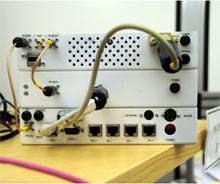
August 20, 2009 by John Messina Testing White Fi Protocol

White spaces: Accessing the Internet over unused portions of TV spectrum could provide good long-range connectivity in rural areas, and help fill in gaps in city networks. Microsoft researchers tested a new protocol, called White Fi, using the device shown here. Credit: Microsoft Research

(PhysOrg.com) -- A wireless internet network that uses portions of the old analog TV spectrum may one day become a reality. The plans for a computer network that uses "white spaces," which are empty fragments of the old analog TV spectrum scattered between used frequencies, will be presented at the ACM SIGCOMM 2009, a communications conference held in Barcelona, Spain.

Prior to the analog-to-digital TV conversion, earlier this year, TV stations broadcast over lower frequencies to carry the signal longer distances. With the ongoing transition from analog to digital broadcasts, more unused frequencies are opening up. By utilizing these lower frequencies it would now be possible to provide broadband Internet access in rural areas thereby completing their Wi-Fi network.

The spectrum between 512 megahertz and 698 megahertz that was originally used for channels 21 to 51, offers a longer range than conventional , networks that operate at 2.4 .

In November of 2008 the FCC ruled that companies could transmit over white spaces but also gave them strict requirements that they must not interfere with existing broadcasts, both from TV stations and from other wireless devices that operate within the same spectrum.

researchers are testing a new protocol, called White Fi, in their Redmond campus that uses UHF white spaces. The protocol would adaptively configure itself to operate in the most efficient part of the available white spaces.

A White Spaces Coalition group has been formed which consists of eight large technology companies that plan to deliver high speed broadband internet access in unused television frequencies between 54-698 MHz. The coalition expects speeds of 80 Mbps and above, and 400 to 800 Mbps for white space short-range networking.

Via: Dailywireless & Technology Review

© 2009 PhysOrg.com


print this article email this article download pdf blog this article bookmark this article     Stumble it Digg this share on Facebook retweet share on Reddit add to delicious
Rate this story - 5 /5 (3 votes)

Rank Filter

Move the slider to adjust rank threshold, so that you can hide some of the comments.


Display comments: newest first

  • Birthmark - Aug 20, 2009
    • Rank: 5 / 5 (1)
    I heard about this on a show on science channel, very interesting.

August 20, 2009 all stories

Comments: 1

5 /5 (3 votes)
  • Stumble this up

  • Digg this

  • share this

  • hide
  • Related Stories

  • Bills support broadband over TV spectrum
    created Feb 23, 2006 | popularity not rated yet | comments 0
  • Stations must warn if new TV signals lack reach
    created Mar 16, 2009 | popularity not rated yet | comments 0
  • Analog TV signals to be interrupted in 'soft test'
    created May 20, 2009 | popularity not rated yet | comments 0
  • TV stations struggling with viewer loss on DTV
    created Jul 02, 2009 | popularity not rated yet | comments 0
  • Verizon gives free Wi-Fi to Internet customers
    created Jul 27, 2009 | popularity not rated yet | comments 0


  • hide
  • Relevant PhysicsForums posts

  • Pushing the piston.
    created 3 hours ago
  • Do Camcorders/ Video camera have Sensors in them?
    created 8 hours ago
  • Aspiring Engineering major looking for general answers
    created Nov 19, 2009
  • Calculating max load of square tube (steel)
    created Nov 19, 2009
  • More from Physics Forums - General Engineering

Other News

Newspaper circulation may be worse than it looks (AP)

Newspaper circulation may be worse than it looks

Technology / Internet

created 4 hours ago | popularity not rated yet | comments 0

(AP) -- While U.S. newspapers are losing subscribers at a staggering rate, a few dailies stand out because their circulation is rising. But they aren't necessarily selling more copies.


Canadian woman loses benefits over Facebook photo

Technology / Internet

created 5 hours ago | popularity 5 / 5 (1) | comments 0

(AP) -- A Canadian woman on long-term sick leave for depression says she lost her benefits because her insurance agent found photos of her on Facebook in which she appeared to be having fun.


China is the world's largest emitter of the greenhouse gases blamed for global warming

China harnesses mountain wind power

Technology / Energy

created 14 hours ago | popularity 4.1 / 5 (7) | comments 0

In the mountains above the southwestern Chinese town of Dali, dozens of new wind turbines dot the landscape -- a symbol of the country's sky-high ambitions for clean, green energy.


Analysts say AmEx is most interested in the so-called peer-to-peer services of Revolution

American Express takes aim at PayPal with Revolution

Technology / Internet

created 11 hours ago | popularity 4.5 / 5 (2) | comments 0

With its deal to buy Revolution Money, American Express is taking aim at the growing market for online and alternative payments, in a challenge to recognized leader PayPal, analysts say.


Hackers leak e-mails, stoke climate debate

Technology / Internet

created Nov 21, 2009 | popularity 4.3 / 5 (30) | comments 26

(AP) -- Computer hackers have broken into a server at a well-respected climate change research center in Britain and posted hundreds of private e-mails and documents online - stoking debate over whether some scientists have ...