New test offers better diagnosis of asbestos cancer
(PhysOrg.com) -- A new test can significantly improve diagnosis of the asbestos-related cancer mesothelioma, a joint team from the University of Oxford and the Oxford Centre for Respiratory Medicine at the John Radcliffe Hospital has shown.
The test will now be added to the diagnostic options available to clinicians in Oxford, when patients come to them with excess fluid in the space around the lungs.
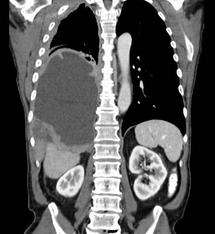
A build up of fluid around the lungs is called a pleural effusion, and can lead to difficulties in breathing and chest pain. The excess fluid can be the result of a large variety of different causes - some malignant, some benign - but most mesothelioma patients present with a pleural effusion.
The standard diagnostic test to determine the cause involves taking a sample of the pleural fluid and looking for cancerous cells (cytology). While this is good at identifying other types of lung cancer, it is not a very sensitive test for mesothelioma. Many patients with suspected mesothelioma are then subjected to more invasive procedures before getting a more definitive diagnosis.
The team investigated whether a new test that measures the amount of a protein called mesothelin in the pleural fluid can aid diagnoses in patients with effusions of unknown causes.
Mesothelioma cells produce the protein mesothelin and release it into the fluid around the lungs, but it was not known whether measuring levels of mesothelin in the pleural fluid would provide an accurate diagnostic test.
The researchers collected 429 samples of pleural fluid from 209 patients. They analysed samples from 167 of these patients who were being investigated for the possible presence of malignant cancers.
The study, published in the American Journal of Respiratory and Critical Care Medicine, found that testing for high levels of mesothelin was a simple and valuable addition to the usual cytology tests.
Levels of mesothelin in patients with mesothelioma are 6.9 times higher than those with other lung cancers, and 10.9 times higher than those with benign conditions.
Importantly, the test was found to be particularly useful where cytology gives an inconclusive or ‘suspicious’ result. One third of patients with mesothelioma fall into this category, so the pleural fluid mesothelin test may benefit up to 3,000 patients in Western Europe each year. The test also substantially improves the confidence of a negative result for informing people they don’t have cancer.
'We looked at the value this test added to the existing method of diagnosis and we found it was pretty good actually,’ says Professor Robert Davies of the Oxford Biomedical Research Centre and the Oxford Centre for Respiratory Medicine. ‘It consistently gives a negative result in people without cancer and when the cytology is indeterminate, it is particularly helpful in identifying mesothelioma.’
Mesothelioma is a devastating and fatal cancer of the surface of the lungs that, in the vast majority of cases, is caused by exposure to asbestos. More than 2,150 people are diagnosed with mesothelioma in the UK each year, with many cases occurring among those that have worked in construction and engineering.
Asbestos is a mineral that was used an insulating material for its heat and fire resistance. But dust and fibres can be breathed in, which then work their way into the membranes that line the lungs. Cancer can develop many years later.
The number of cases of mesothelioma in the UK is expected to rise sharply over the next 20 years before eventually decreasing because of the heavy use of asbestos in industry from the end of the Second World War up until the mid 1970s.
'Because it’s a ghastly tumour, levels of anxiety among people waiting to find out whether they have mesothelioma is very high,’ says Professor Davies. ‘Improving the speed and certainty of a diagnosis will be very beneficial.’
Professor Davies emphasises that the close collaboration between the University and the John Radcliffe was essential to this work. The study was dependent on the patients coming into the Oxford Centre for Respiratory Medicine and the research capabilities of the University. This was enabled by the Oxford Biomedical Research Centre, a partnership between the University and the Oxford Radcliffe Hospitals NHS Trust with funding from the National Institute for Health Research.
Provided by Oxford University (news : web)


