Small rodents encourage the formation of scrubland in Spain
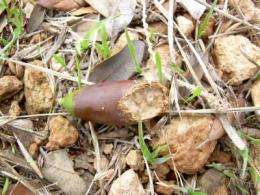
After two years of research over five degraded landscapes in the National Park of Sierra Nevada (Granada), scientists have established for the first time that field mice base their diet on holm oak and pine seeds, causing a deterioration of the habitats and an extension of scrubland in the forests.
The trees in the forests such as the holm oaks, rowans and pines have unexpected predators which are impeding their expansion over the mountains. In 98.5% of cases it is field mice and other rodents which eat a large proportion of the seeds which have been scattered before they are able to germinate.
Luis Matías is the main author of the work and a researcher for the Land Ecology Research Group at the University of Granada. "If the choice of the seeds they eat is not random, in other words, they eat the seeds of a determined species more often, this will be reflected in a greater emergence of seedlings among those species which are eaten less, which could alter the structure of the plant community", he told SINC.
Between 2004 and 2005, the research team exposed the seeds of six species to the predators and analyzed the numbers which were eaten. "Some species were ravaged much more than others, and this selection pattern was maintained in the different habitats throughout the two years of study", explained Matías.
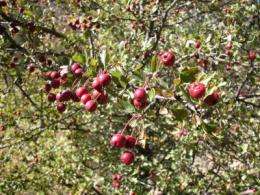
The new research, recently published in Plant Ecology, shows that this phenomenon is constant in time and in the different landscapes and habitats. In this sense, according to the researchers, "the species which undergo the highest rate of depredation are the dominant arboreal species (the pine, holm oak and rowan), while the scrubland species suffer much less consumption".
Pine and holm oak seeds, the favourite food
The rodents prefer the seeds from the holm oak, quercus ilex, of which a total of 77.4% are eaten, the pine, pinus sylvestris, (73.3%), and the rowan, sorbus aria, (69.2%). The mice prefer the seeds of these particular trees to those of the scrubland owing to their components, as those from the holm oak contain a high percentage of lipids.
As a result of eating fewer scrubland seeds, the rodents encourage the formation of a plant structure dominated by scrubland. "Curiously, it is the scrubland where the rodents are most abundant, as they find food and shelter from their predators there", the scientist clarified. In other words, the seed predators favour the habitat which is most propitious for them.
However, the scientists conclude that longer experiments are required because "the uses of the soil and the selection of food by the rodents may vary from year to year, depending on the availability of food resources, the abundance of rodents and their predators and the climatic conditions".
More information: Matías, Luis; Mendoza, Irene; Zamora, Regino. "Consistent pattern of habitat and species selection by post-dispersal seed predators in a Mediterranean mosaic landscape" Plant Ecology 203(1): 137-147 julio de 2009.
Source: FECYT - Spanish Foundation for Science and Technology


