Promising new target emerges for autoimmune diseases
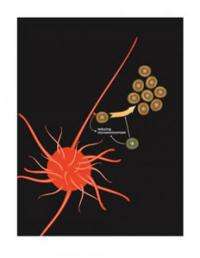
University of Michigan scientists say they have uncovered a fundamentally new mechanism that holds in check aggressive immune cells that can attack the body's own cells. The findings open a new avenue of research for future therapies for conditions ranging from autoimmune diseases to organ transplants to cancer.
The scientists discovered that the immune system's regulatory T cells, a topic of intense medical research, influence aggressive immune cells by regulating the chemical environment between cells. The results appear online ahead of print in Nature Chemical Biology.
"Now we know that the redox environment outside the cell is a very important dynamic. It regulates cell function," says U-M biochemistry professor Ruma Banerjee, the study's senior author and the Vincent Massey Collegiate Professor of Biological Chemistry and associate chair of biological chemistry at the U-M Medical School. Processes known as redox chemistry are fundamental to the way cells derive and consume energy.
Regulatory T cells appear to alter the chemical environment around their aggressive cousins, known as autoreactive T cells, in ways that either suppress them or cause them to proliferate, the study found. It is likely that this mechanism is involved in inflammatory bowel disease (IBD) and ulcerative colitis, Banerjee says.
After examining the process further, Banerjee's team would like to apply the insights in animal studies. The study results have implications for scientists looking for ways to enlist regulatory T cells to rein in misguided autoreactive T cells, and for other research areas as well. Regulatory T cells also influence the immune response in cancer, pregnancy, organ transplants and infection.
Context
Certain T cells in the immune system which normally attack invaders of the body can cause autoimmune diseases when they react instead against the body's own cells. These auto reactive T cells are thought to cause multiple sclerosis, Crohn's disease, rheumatoid arthritis, lupus and other diseases.
In these diseases, researchers want T regulatory cells to restrain excessive action by autoreactive T cells. But to control cancer, researchers would like to partially inhibit T regulatory cells, so that autoreactive T cells will be able to identify and vigorously attack cancer cells.
The U-M scientists found that redox chemistry, an emerging area of interest among scientists, plays a significant role in the way immune cells regulate each other. Redox chemistry plays a role in many diseases. Banerjee believes that the study's findings should heighten the chances of success in regulating T regulatory cells to curb disease.
"Redox chemistry is a mechanism that is fundamentally important in understanding T regulatory cell actions," says Zhonghua Yan, the graduate student who is first author of the study.
Research details
By studying live mouse immune cells cultured in lab dishes, the team found that important redox communication occurs between dendritic cells, which are the first immune cells to detect a foreign agent, and autoreactive T cells. The dendritic cells alter the chemical environment outside cells in a way that promotes activation of the T cells. But then T regulatory cells "intervene in the redox chatter" and suppress that effect, says co-author Sanjay Garg, Ph.D., a research investigator in the U-M Department of Biological Chemistry.
What's next
Banerjee says her team needs to do more work to fully understand the process before they can use their insights to block or encourage T regulatory cell activity in animal studies of IBD or another autoimmune disease.
"We are keen to move this into a disease model," she says, a step made easier because the pathway by which T regulatory cells appear to affect the redox chemistry outside cells is a well known one.
More information: DOI: 10.1038/nchembio.212
Source: University of Michigan Health System (news : web)


