New information about how fat increases blood pressure could help identify those at risk
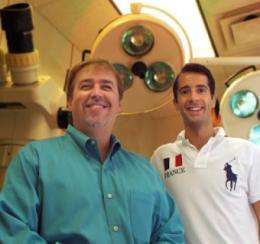
Some of the first information about how fat causes hypertension have been identified by researchers who say the findings should one day help identify which obese people - and maybe some thin ones too - are at risk for hypertension and which drugs would work best for them.
Medical College of Georgia researchers have found that deleting or mutating the gene PTP1B puts mice at risk for hypertension by interfering with an endogenous mechanism that should help prevent it. The findings are published in the Sept. 1 issue of the American Heart Association journal Circulation.
"In a normal individual gaining weight, PTP1B should increase and they would be protected in theory from hypertension," says Dr. David Stepp, vascular biologist at the MCG Vascular Biology Center, co-director of the Diabetes & Obesity Discovery Institute and the study's corresponding author.
"But if you don't have a good copy of PTP1B and you become obese, then you are going to have a problem. So in theory this gene can segregate the obese people who will become hypertensive and those who won't."
Knowing the gene's status could also one day help physicians better select an antihypertensive medication for those who do.
A key player is the hormone leptin, produced by fat cells. Overweight individuals generally produce more of the hormone that essentially revs up the body, suppressing appetite and increasing metabolism so you won't get fatter. But leptin also increases blood pressure by activating the sympathetic nervous system, the so-called fight-or-flight response. Mutated or missing PTP1B dramatically increases leptin's negative effects.
MCG scientists studying how blood pressure got the message to increase found leptin also provides protection against high pressures by turning off the signaling pathway that squeezes blood vessels and drive pressures up in a process called adrenergic desensitization.
"Normally, if you give someone leptin, his blood pressure would probably not go up because he would have this protective mechanism intact that would basically turn off his blood pressure signaling pathway," Dr. Stepp says. "His blood pressure would be regulated differently, but it would not be high."
But the combination of missing or mutated PTP1B and too much leptin means increases in constriction are too strong to turn off.
Mice missing PTP1B tend to have lower body fat but high blood pressure, not usually what you see in people, Dr. Stepp notes. While this single gene can't explain every combination of body size and blood pressure found in nature, it could help explain why some skinny people are hypertensive and why others who get fat are as well.
"It's a vulnerability gene," he says. "If you stimulate leptin in individuals who can't activate their protective mechanisms, they are going to get hypertension. This tells us there are a lot of people and diseases
And what about those people who have great blood pressure? They likely have well-functioning PTP1B, he notes. Interestingly, PTP1B often is over expressed in obese people, which is good for the blood pressure but bad for leptin's positive effect on metabolism.
"I think we have identified at least a couple of new pieces of information that clarify the relationship between obesity and hypertension," Dr. Stepp says. "We have identified a gene that, if it's not functional, will greatly increase the extent to which a metabolic signal from leptin translates into a cardiovascular signal. We also have identified a protective mechanism that, if it's not working, contributes to hypertension."
The MCG research helps illustrate the need to pay particular attention to the cardiovascular side effects of potential new anti-obesity drugs as well, experts say. In an accompany editorial, Dr. Allyn L. Mark, Carver Professor of Medicine, Center on Functional Genomics of Hypertension at the University of Iowa Carver College of Medicine, noted the irony that despite lower body fat, mice with disturbed PTP1B had higher blood pressure than control animals. "Unfortunately several of the interventions that inhibit appetite, increase metabolism and decrease adiposity (fat) may increase (not decrease) sympathetic activity and arterial pressure," he writes. "This may complicate the safety of potential anti-obesity drugs," and emphasizes the importance of evaluating the cardiovascular impact of potential new therapies.
Now MCG scientists want to develop markers so one day people determine their PTP1B expression through a blood test. They also want to learn more about exactly how leptin increases blood pressure to see if there are ways to target some of the downstream impact of missing or mutated PTP1B.
"We want to look the impact on the kidneys and angiotensin 2," says Dr. Eric J. Belin de Chamtemčle, postdoctoral fellow in Dr. Stepp's lab and the study's first author. The kidneys, which determine how much sodium and water are excreted from the body, are major players in blood pressure regulation. Renin, which is secreted by the kidneys, constricts blood vessels to help blood pressure increase when blood volume gets low.
They want to know if leptin is acting directly on the kidneys or whether it's an indirect result from leptin's action in the brain. They suspect it's primarily a brain effect that they want to pursue by using mice with leptin deficits localized to the brain.
Source: Medical College of Georgia


