West Coast fishermen embark on new wave of fishing
(AP) -- The West Coast groundfish fleet has struggled to stay afloat during major cutbacks to reverse long-standing problems with overfishing and to protect the seafloor from damage caused by bottom trawling gear.
They are now embarking, after years of work and negotiation, on the latest system in fisheries management, known as "catch share." Fishermen are given their own individual shares of the total catch, personal responsibility for not catching overfished species, and a promise of better prices for the fish they do haul up.
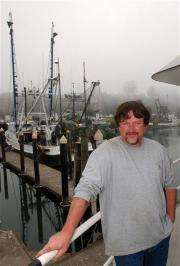
"In the short term it might hurt people. In the long term I think it's the way to go," said Todd Whaley, 46, part-owner and skipper of the Miss Sarah, a 102-foot trawler that he rigs for groundfish, Pacific whiting, and crab, depending on the market.
NOAA Fisheries Service, the federal agency that oversees commercial fishing, is pressing regional fishery councils that set harvest limits around the country to adopt catch share programs.
The agency is under a congressional mandate to end all overfishing in U.S. waters by 2011, the year that the West Coast groundfish accord goes into effect. It still has 41 fisheries to bring in line out of 244 that have been assessed.
"The scientific evidence is pretty clear that commercial fisheries that are managed with catch shares on balance perform better than traditionally managed fisheries," Jane Lubchenco, head of the National Oceanic and Atmospheric Administration, told The Associated Press on a recent visit to Newport.
"So we are encouraging every (regional fishery management) council to simply look at this tool and say, 'Is it appropriate for these fisheries, or is it not.'"
Chief among candidates for switching to catch share is the New England groundfish fishery, which has been struggling for 15 years to rebuild cod and haddock stocks.
The stakes are high. According to NOAA, commercial fishing contributes $28 billion a year to the economy. Meanwhile, the nation's appetite for fish outstrips domestic supply. Sixty percent of the seafood consumed comes from imports.
The scientific foundation for catch share comes from studies like one examining fisheries in New Zealand and Australia published in the journal Science in 2007. The report found that fishermen who owned a share of the harvest made more money fishing less while doing a better job of conserving the resource.
The idea is when they no longer have to race to fill their nets they can concentrate on quality and efficiency.
"There is nothing magical about catch shares rescuing overfished stocks, but they do change the incentives so that the fishermen who have a dedicated share of a stock know they will be the ones who benefit when stocks are rebuilt," said co-author Ray Hilborn, fishery sciences professor at University of Washington.
West Coast groundfish have been rebuilding since 2000, when harvests were cut in half to protect overfished rockfish. Despite limiting harvests and cutting the fleet through buybacks, several groundfish species remain overfished. They are still the region's most valuable fishery, with landings worth $55 million in 2007.
The classification covers 82 species, caught mostly by trawlers - also known as draggers - hauling nets along the ocean bottom. The fish are sold as sole, flounder, lingcod, black cod, snapper, and imitation crab.
For five years fishermen and conservation groups have been working with the Pacific Fishery Management Council to adopt a catch share system, already in force with a dozen U.S. fisheries including Alaskan halibut, Gulf red snapper and Atlantic surf clams. The council approved the move last year. The rules go into effect Jan. 1, 2011.
Catch share gets rid of the traditional race for fish, where fishermen go full-bore until they fill an overall quota, or inadvertently catch too many overfished species - known as bycatch.
With their own quota, fishermen can fish when the weather and market are best. With that comes individual responsibility for not exceeding limits on bycatch. Those who do can buy shares to cover the excess. To reward captains who avoid bycatch, and penalize those who don't, each West Coast groundfish trawler will have an observer on board to count every fish hauled up in the net.
The New England Fishery Management Council is headed in the same direction. In July they approved a plan giving fishermen the option of a catch share fishery, with sectors rather than individuals allocated shares. NOAA Fisheries is seeking $18.6 million from Congress to implement the switch.
Among the first to feel the pain of declining cod harvests - and the first to opt for catch share - were small-boat fishermen on Cape Cod, Mass., who still fish with hooks and lines the way their forefathers did.
"We were almost like the canary in the coal mine," said Eric Brazer, sector manager for the Cape Cod Commercial Hook Fishermen's Association, which went to catch share in 2004. "We'll live within the limits set by science. Other fishermen are willing to go toe-to-toe with the scientists. We're most interested in preserving our community and making sure we get through the next few years till we start seeing the fish populations come back."
Not everyone in the 120-boat West Coast groundfish fleet will be a winner under the new rules. An analysis estimates 50 to 70 boats will be left with fishing permits after things sort out. The remainder will have to stop groundfishing.
Don Taylor, captain of the Little Joe, has built his knowledge of where and when to find fish on decades of trial and error, and fears that now even one bad tow could shut him down if the net comes up with a single canary rockfish, an overfished species with no bycatch quota.
As for Whaley, he is confident that he will be able to figure out how to succeed under the new rules.
"Instead of the race for fish, lately, it's been the race for bycatch," he said. "A person who has his own bycatch quota is going to be fishing much more carefully."
©2009 The Associated Press. All rights reserved. This material may not be published, broadcast, rewritten or redistributed.


