Medicine wheel model for nutrition shows promise for control of type 2 diabetes
American Indian populations experience significant nutrition-related health disparities compared to other racial and ethnic groups within the US. American Indian adults have the highest age-adjusted rates for cardiovascular disease, diabetes and obesity of any racial or ethnic group. Age-adjusted rates of diabetes among Native people vary from 14% to 72%, which are 2.4 to more than 6 times the rate of the general US population.
In a study published in the September 2009 issue of the Journal of the American Dietetic Association, researchers from the South Dakota State University, Brookings, report that a culturally-sensitive educational program based on the Medicine Wheel Model for Nutrition shows promise in changing dietary patterns in an American Indian population and impacting glycemic control.
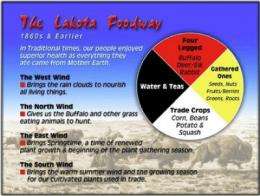
During a 6-month period from January 2005 through December 2005, participants from the Cheyenne River Sioux Reservation were randomized to an education intervention or to a usual care control group. The education group received six nutrition lessons based on the Medicine Wheel Model for Nutrition, a diet patterned after the traditional consumption of macronutrients for Northern Plains Indians: protein (25% of energy), moderate in carbohydrate (45% to 50% of energy) and low in fat (25% to 30% of energy). The usual care group received the usual dietary education from their personal providers.
The education group experienced a significant weight loss and decrease in body mass index (BMI) from baseline to completion. The usual care group had no change in weight or BMI. There were no between group differences due to intervention in energy, carbohydrate, protein and fat intake and physical activity.
Writing in the article, Kendra K. Kattelmann, PhD, RD, Professor and Director, Didactic Program in Dietetics, Nutrition, Food Science and Hospitality Department, South Dakota State University, Brookings, states, "A diet patterned after the historical hunter-gatherer type diet, or even the early reservation diet (with the higher proportion of energy being supplied from protein), may provide better blood glucose control and lower the circulating insulin levels in Northern Plains Indians with type 2 diabetes. Tribal leaders are interested in preserving the history of their food patterns and embrace the development of educational tools depicting their historical consumption patterns. This trial is one of the first studies reported that attempts to measure the influence of the traditional Northern Plains Indians diet on control of type 2 diabetes."
In a commentary, Jamie Stang, PhD, MPH, RD, LN, Chair of the Public Health Nutrition Program at the University of Minnesota, School of Public Health, cites some of the dietary challenges faced by the American Indian population. "Limited access to grocery stores that offer low fat, low sugar or whole grain food products and a variety of fruits and vegetables is the most frequently cited barrier to healthy eating…The loss of hunting and fishing rights, unavailability of traditional foods such as wild game, loss of traditional agriculture due to water scarcity and poor soil condition and loss of traditional ways of procuring and preparing foods have also been identified as reasons for poor food choices. Many urban American Indians live in neighborhoods that lack large, well-stocked grocery stores which limits their availability of healthful foods…Even the most culturally competent, evidence-based programs cannot improve eating behaviors among individuals or populations who live and work in an environment that does not support or provide healthy food choices."
More information: The article is "The Medicine Wheel Nutrition Intervention: A Diabetes Education Study with the Cheyenne River Sioux Tribe" by Kendra K. Kattelmann, PhD, RD; Kibbe Conti, MS, RD; Cuirong Ren, PhD. The commentary is "Improving Health among American Indians through Environmentally-focused Nutrition Interventions" by Jamie Stang, PhD, MPH, RD, LN. Both appear in the Journal of the American Dietetic Association, Volume 109 Issue 9 (September 2009), published by Elsevier.
Source: Elsevier


