NOAA Locates U.S. Navy Ship Sunk in World War II Battle
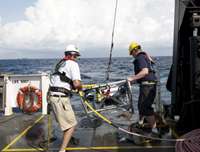
(PhysOrg.com) -- A NOAA-led research mission has located and identified the final resting place of the YP-389, a U.S. Navy patrol boat sunk approximately 20 miles off the coast of Cape Hatteras, NC, by a German submarine during World War II.
Six sailors died in the attack on June 19, 1942. There were 18 survivors. The wreck is located in about 300 feet of water in a region off North Carolina known as the "Graveyard of the Atlantic," home to U.S. and British naval vessels, merchant ships, and German U-boats sunk during the Battle of the Atlantic.
NOAA and its expedition partners mapped and shot video of the wreck using high-resolution camera equipment, multibeam sonar and an advanced remotely operated vehicle deployed from the NOAA ship Nancy Foster. Researchers were able to locate and positively identify the YP-389 by reexamining data from the Duke Marine Laboratory expedition that discovered the USS Monitor in 1973.
Today, the relatively intact remains of the YP-389 rest upright on the ship's keel. The wreck site is home to a variety of marine life. Much of the outer-hull plating has fallen away, leaving only the intact frames exposed.
"She rests now like a literal skeleton, a reminder of a time long ago when the nation was at war," said Joseph Hoyt, Monitor National Marine Sanctuary archaeologist and principal investigator for the project.
Built originally as a fishing trawler, the YP-389 was converted into a coastal patrol craft and pressed into service after the Japanese attack on Pearl Harbor. The ship was equipped with one 3-inch deck gun to protect the ship from enemy aircraft and surfaced submarines and two .30-caliber machine guns. However, on the day of the attack by the German submarine U-701, the ship's deck gun was inoperative, and the YP-389 could return fire only with its machine guns.
Weeks after the attack on the YP-389, the U-701 was sunk by Army aircraft in the same vicinity as the YP-389.
"The story of the YP-389 personifies the character of the Battle of the Atlantic along the East Coast of the United States, where small poorly armed fishing trawlers were called to defend American waters against one of Germany's most feared vessels," said David W. Alberg, expedition leader and superintendent of the Monitor National Marine Sanctuary. "It is one of the most dramatic accounts of an engagement between Axis and Allied warships during the dark days of World War II."
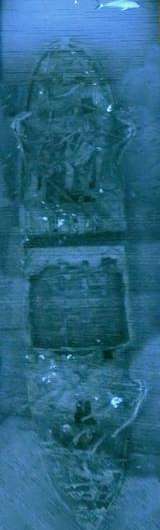
"Though this loss occurred many years ago for the Navy, we offer our sincere condolences to the families of those who gave their lives in this action," said Rear Admiral Jay A. DeLoach, USN (Ret), director, Naval History and Heritage Command. "The U.S. Navy considers the YP-389 discovery a grave site and, by law, it is to be left undisturbed."
The three-week research expedition also included a survey of the wreck of HMT Bedfordshire, a retrofitted British fishing trawler that was sent to the United States to combat the German submarine threat early in the war. On May 12, 1942, the Bedfordshire was struck by a torpedo from the U-558. All 37 British and Canadian crew members were killed. Four of the dead British sailors who washed ashore along the beaches of North Carolina are buried in the British cemetery on Ocracoke, NC.
Consistent with U.S. and international policy, both the Bedfordshire and the YP-389 wreck sites are considered war graves and are protected by U.S. and international laws, including the Sunken Military Craft Act, which prohibits removal of artifacts and any alteration or disruption of the wreck site.
Alberg said this year's Battle of the Atlantic expedition continues work conducted by NOAA's Office of National Marine Sanctuaries and the Maritime Heritage Program in 2008 to document and preserve historic shipwrecks lost during World War II. The wrecks of three sunken U-boats were the focus of last summer's expedition. The project is also dedicated to raising public awareness about our nation's maritime heritage.
Source: NOAA


