Barcoding endangered sea turtles
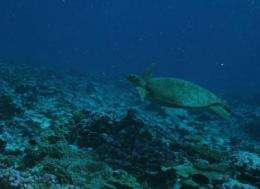
Conservation geneticists who study sea turtles have a new tool to help track this highly migratory and endangered group of marine animals: DNA barcodes. DNA barcodes are short genetic sequences that efficiently distinguish species from each other -- even if the samples from which the DNA is extracted are minute or degraded. Now, a recently published research paper by scientists from the American Museum of Natural History and the University of Canberra, among other organizations, demonstrates that this technology can be applied to all seven sea turtle species and can provide insight into the genetic structure of a widely-dispersed and ancient group of animals.
"This is the first study to document DNA barcodes of all species of sea turtles from around the world," says Eugenia Naro-Maciel, Marine Biodiversity Scientist at the Center for Biodiversity and Conservation at the Museum and first author of the paper published in the early online edition of Molecular Ecology Resources. "These barcodes can be used to document biological diversity in a standardized fashion and for the conservation of these charismatic and ecologically important marine animals."
DNA barcodes are relatively short segments of mitochondrial DNA. A region of the COI, or cox1 gene (cytochrome c oxidase subunit 1) has been agreed-upon by researchers as appropriate for barcoding, given that it is both highly variable and very specific. This portion of the genome mutates quickly enough to distinguish many closely related species but also slowly enough so that individuals within a species may have similar barcodes. Barcoding has been used to check the accuracy of caviar and red snapper labeling and to identify the presence of endangered whales in Asian markets, as well as other applications.
Through the current study, the research team found that all seven sea turtle species can be consistently distinguished from each other by DNA barcodes. Samples were collected from 249 individuals from the Atlantic and Pacific Oceans, as well as from the Mediterranean Sea. Variation between species ranged from 1.68% to 13%, while variation within each species was relatively low, ranging from 0 to 0.9%. The genetic sequence from green turtles of the Eastern Tropical Pacific population, which can be distinguished from other green turtles by their darker coloration, was identical to one found in Australia.
Analysis of the barcodes in this study used a comprehensive method based on diagnostic characters developed by co-author Rob DeSalle, curator in the Sackler Institute for Comparative Genomics at the Museum, and colleagues. This method contrasts with common approaches also employed in this study, which assign sequences to the most similar genetic group (and which may not be accurate because of the sometimes arbitrary thresholds for species identity). "With diagnostic characters, we can use gene sequences to compare different groups in a manner similar to classifying animals in the field based on their unique attributes, and in line with classical taxonomy," notes DeSalle.
Naro-Maciel adds that "by identifying these animals to species and providing a standardized registry for documenting genetic diversity within this group, DNA barcoding promises to advance conservation and research." Highly migratory sea turtles face a myriad of threats worldwide from overharvest, fisheries interactions, habitat loss, climate change, pollution, disease, and other factors, and effective conservation measures are needed. The potential for DNA barcoding applications is significant: trade in the meat, eggs, leather, shell, and bone often means that the species identity or geographic origin of a product is difficult to ascertain using conventional means. Barcoding items collected by wildlife management could provide critical information and tools to those tracking international trade in wildlife products. In addition, animals trapped as fisheries bycatch or stranded onshore may be damaged beyond recognition, but identifiable through DNA barcoding. To assist in these efforts, barcode sequences from this study have been supplied to the Barcode of Life database and GenBank so that the data are freely available.
Source: American Museum of Natural History


