Figures of speech -- understanding idioms requires both sides of the brain
September 14, 2009 brain

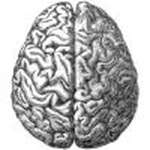
Is it better to treat someone with kid gloves or to treat them carefully? Researchers in Italy have investigated how the brain recognises that the first phrase means the same as the second. Publishing in the open access journal BMC Neuroscience, the researchers suggest that we use both hemispheres to understand idioms.

Dr Alice Proverbio from the University of Milano-Bicocca and colleagues used electrophysiological and LORETA source reconstruction analysis to investigate the role of the two cerebral hemispheres in idiom comprehension. By analysing the brain activity of 11 students, they found that idiomatic sentences activated the right middle temporal gyrus (after 350ms) and the right medial frontal gyrus (at 270-300 and 500-780ms).

All phrases were matched for length and familiarity, yet the students took longer to associate an idiomatic phrase with a linked word than to associate a literal phrase with its linked word. This suggests that idioms are more difficult to understand and denote superior levels of language use and processing.

The findings also shed light on whether the brain tries to understand a familiar idiom literally before it understands it as a metaphor. The left inferior frontal gyrus, the part of the thought to be used to suppress literal meaning, was not specifically activated by idiom comprehension; however, the limbic regions, which are involved in emotional responses, were (at 400-450ms).

Dr Proverbio concludes, "though the interpretation of language involves widespread activation bilaterally, the right hemisphere has a special role in the comprehension of idiomatic meaning."

More information: The role of left and right hemispheres in the comprehension of idiomatic language: an electrical study; Alice M Proverbio, Nicola Crotti, Alberto Zani and Roberta Adorni; BMC Neuroscience (in press); http://www.biomedcentral.com/bmcneurosci/

Source: BioMed Central (news : web)


print this article email this article download pdf blog this article bookmark this article     Stumble it Digg this share on Facebook retweet share on Reddit add to delicious
Rate this story - 4.3 /5 (6 votes)

Rank Filter

Move the slider to adjust rank threshold, so that you can hide some of the comments.


Display comments: newest first

  • docknowledge - Sep 14, 2009
    • Rank: not rated yet
    Um. Not much of a discovery. They've been telling writers for years that idioms are difficult for foreign language speakers to understand.

    As for "needing both sides of the brain" ... did they check against people with impared functions?
  • Mandan - Sep 15, 2009
    • Rank: 5 / 5 (1)
    Um. Maybe you should change your name to "knocknowledge"? That seems to be your favorite role here. This is the second time I've noticed you taking an attitude of "been there, done that" towards some new information at physorg.com. If you don't like this site and the "knowledge" it provides, why do you come here?

    Besides, nothing was even mentioned in the article about foreign language speakers-- what's your point there? It is apparent that this study pertains to native speakers, and shows involvement by the right middle temporal gyrus and the right medial frontal gyrus in understanding idiom-- and actually this is quite an important contribution since rarely if ever has much language ability been shown to reside outside the left hemisphere.

    Or perhaps the fact that the research also shows that some people have "superior levels of language use and processing" might have some significance here.

    Hmmm.

September 14, 2009 all stories

Comments: 2

4.3 /5 (6 votes)
  • Stumble this up

  • Digg this

  • share this

  • hide
  • Related Stories


  • hide
  • Relevant PhysicsForums posts

  • Can you help me ?
    created Dec 08, 2009
  • Nociceptors
    created Dec 05, 2009
  • Nanomaterials destroy cancer!
    created Nov 30, 2009
  • Nuclear Medicine
    created Nov 30, 2009
  • More from Physics Forums - Medical Sciences

Other News

Brain Seizure Implant

Epilepsy Patients Are Given New Hope With Brain Implant

Medicine & Health / Neuroscience

created 48 minutes ago | popularity not rated yet | comments 1

(PhysOrg.com) -- A startup company, Neuropace in Mountain View Ca., has developed a device that offers new hope for epilepsy patients. The device is designed to neutralize the abnormal electrical activity ...


Consumers overpredict the use of holiday gifts

Medicine & Health / Psychology & Psychiatry

created 25 minutes ago | popularity not rated yet | comments 0

Before you add that fancy "it" gadget to your holiday wish list, you should know you're not going to use it as much as you think you will. For a better estimate of the use you'll get out of your new toy, ask a stranger.


Why cancer cells just won't die (w/ Video)

Medicine & Health / Cancer

created 38 minutes ago | popularity not rated yet | comments 0

When cells experience DNA damage, they'll try to repair it. But if that fails, the damaged cells are supposed to self-destruct, a process called apoptosis. A cancer researcher at Robarts Research Institute at The University ...


People affected by autism believe increase is 'real,' not diagnostic

Medicine & Health / Diseases

created 30 minutes ago | popularity not rated yet | comments 0

There has been a major increase in the number of children diagnosed with autistic spectrum disorders over the last two decades - the question is why? Researchers have found a sharp difference between the beliefs of ordinary ...


Study confirms association between tobacco smoke and behavioral problems in children

Medicine & Health / Health

created 5 minutes ago | popularity not rated yet | comments 0

The scientists observed that the impact of tobacco smoke was especially detrimental during gestation. The results of the study have been published in the current online issue of the renowned journal Environmental Health Pe ...