Via Tiburtina -- an interdisciplinary journey through Rome's urban landscape
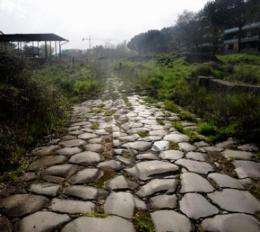
Via Tiburtina is the name of the ancient road that is still in use, connecting Rome with the town of Tivoli. Architect Hans Bjur, a professor at the University of Gothenburg, Sweden, and professor Barbro Santillo Frizell, director of the Swedish Institute in Rome, have spent six years travelling along this road as the leaders of a unique interdisciplinary research project, which aims to chart the cultural layers that were created during the course of the road's three-thousand year history.
The results are presented in the book, Via Tiburtina - Space, Movement and Artefacts in the Urban Landscape, which unites ancient, mediaeval and Renaissance Rome with today's super-modern city development.
Travelling along a road that was originally laid by ancient Romans, and which two thousand years later remains a pulsating thoroughfare in the hectic traffic to and from Italy's capital, is like moving through history. But it's more than that. A journey along Via Tiburtina shows the key role that a road can play in relation to city development, and raises questions about how modern city planning interacts with the city's historical layers.
In the book about Via Tiburtina, Hans Bjur and Barbro Santillo Frizell, professor in Classical Archaeology, launch a new approach to modern city development: urban landscape archaeology. Historical Rome is united with today's intensive urban transformations in thirteen, handsomely illustrated chapters written by archaeologists, cultural heritage experts, ancient history experts, architects, art experts and building conservationists.
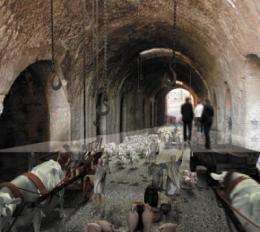
The main theme: the intact and at the same time constantly changing road.
With its constant motion, Via Tiburtina gives rise to the development of new settlements, which add traffic, buildings and new features to the landscape, the residue of which in turn becomes a part of the cultural heritage and must be incorporated into modern social structures. It was this background that provided the impetus for the Via Tiburtina research project, which was launched in 2003 as a collaboration between the Department of Conservation at the University of Gothenburg, and the Swedish Institute of Classcial Studies in Rome. Today the project has created a genuine interdisciplinary research environment at the institute in Rome, which lays the foundations for urban landscape archaeology as a field of research. But the results and the questions raised by the book will also be of practical use in the modern town planning process, both in Italy and Sweden.
The book Via Tiburtina - Space, Movement and Artefacts in the Urban Landscape has been published by the Swedish Institute in Rome with the support of the Swedish Research Council, and is being distributed by eddy.se AB. The book will be launched on the Swedish market at the Göteborg Book Fair, 24-27 September, and will be launched internationally in Rome in December.
Source: University of Gothenburg (news : web)


