Makers hope new 'ultrathin' notebooks fill a niche
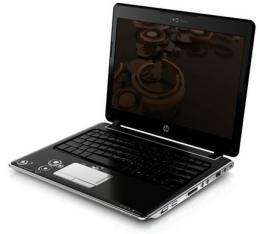
Those in the market for a laptop this fall will find a batch of new, mid-priced models that promise less weight and longer battery life than traditional notebook computers, but more performance -- and a bigger screen and keyboard -- than they'd get with a netbook.
The new "ultrathin" models take advantage of low-voltage processor designs that draw less power and throw off less heat, which allows computer makers to put them in laptops that are under an inch thick and weigh less than five pounds.
A few models were introduced earlier this year, including Hewlett-Packard's Pavilion dv2 and Acer's Timeline series. Dell has launched its own line, the Inspiron Z series, in recent weeks. Dozens of other ultrathin offerings from just about every computer maker are expected to hit retailers before the winter holidays.
Their sleek frames are intended to be reminiscent of premium laptops from Apple and other makers, although they may not offer all the features or souped-up performance. "It's not a MacBook Air," said PC analyst Mika Kitagawa of the Gartner research group, "but they're thin and nice looking.
At prices between $500 and $800, the new laptops will cost several hundred dollars less than those premium models. And they will do more than netbooks, which often sell for under $500 but have low processing speeds that are primarily suited for checking e-mail and surfing the Web. The ultrathins' low-voltage chips are variations on the processors used in traditional laptops, so they pack more computing power than the low-cost chips, such as Intel's Atom, that are found in most netbooks.
Analysts say the notable success of netbooks, which generally have screens under 11 inches and keyboards that are smaller than standard, suggests there's also demand for an intermediate computer that blends attributes from both ends of the spectrum. The new ultrathins have screens ranging from 12 to 15 inches, with a standard-size keyboard.
The IDC research firm predicts netbook sales will more than double this year, from 11.6 million units in 2008 to 26.5 million in 2009. That's a big surge since their introduction in late 2007, but some consumers have been disappointed by their performance.
"When people try to do 3-D games on these netbooks or try to run their office applications, they tend to think it's a bit slow," Intel CEO Paul Otellini acknowledged in a conference call last month. Many netbooks are built with the Atom, a lower-power and lower-cost processor from Intel; they also have limited memory and other features.
Some manufacturers also are concerned that netbooks have a lower profit margin than full-size laptops, analysts say. Overall, as the recession has cramped consumer spending, some computer makers have reported selling more laptops than a year ago but at lower average prices, to the detriment of their bottom line.
That's led to worries over whether consumers are steering away from full-size laptops. While most computer makers have tried to promote netbooks as a "secondary" computer for those who already have one PC, some companies have begun to use the lower-margin Atom chip in netbooks with increasingly large screens, Kitagawa said. She said chip makers may now see the ultrathin models, with the new low-voltage processors that deliver more computing power than the Atom chip, as a way to shore up sales of traditional laptops, which carry a higher profit margin.
The new ultrathins are built around technical innovations by chip makers like Intel and AMD, which have designed lower-voltage versions of some of their popular processors.
Advanced Micro Devices was first on the consumer market when HP used its Athlon Neo processor in the ultrathin dv2, according to IDC analyst Richard Shim. Acer and Dell are using Intel processors in their ultrathins, and both chip makers say their low-voltage processors will be found in many more makes and models this fall.
The low-voltage design doesn't require a big cooling system, which allows for a thinner frame while extending battery life to seven hours or more. Manufacturers say the ultrathins have enough memory and speed for "casual" game-playing, multi-tasking, editing photos or uploading video. The thin frame means some models don't have room for a built-in optical drive, however, so you may need an exterior drive for watching DVDs.
But analysts also warn that the proliferation of new models could lead to some confusion for consumers.
"You could have a situation where you have three notebooks on the same store shelf" -- a netbook, an ultrathin and a traditional laptop -- "with the same screen sizes but widely different prices," Shim warned.
And the choices won't end there. There are also smart-phones and soon there will be "smart-books" -- minicomputers designed for continuous connection to a network, built on processors originally designed for mobile phones.
With so many choices available, some analysts say it's unclear whether the ultrathins will have lasting appeal. For now, however, both Intel and AMD are promoting them as "stylish" options for consumers who want both performance and mobility.
"You may not get all the performance of a traditional notebook and you don't get all the portability of a mini-notebook," said Shim, using an alternative term for netbook. "But you're not paying the higher price of a traditional notebook and you're getting more performance than a mini."
A NEW BREED OF LAPTOPS
Specifications vary, but the new ultrathin models generally are less than 1 inch thick, weigh under five pounds and promise a battery life of seven hours or more. Unlike netbooks, they have full-size screens (11 to 13 inches) and keyboards. They also have more processing power than most netbooks, but may not have as much capability or as many features as more expensive traditional notebooks. Prices are midrange, from $500 to $800.
___
(c) 2009, San Jose Mercury News (San Jose, Calif.).
Visit Mercury Center, the World Wide Web site of the Mercury News, at www.bayarea.com/mld/mercurynews
Distributed by McClatchy-Tribune Information Services.


