Fanged frog, 162 other new species found in Mekong
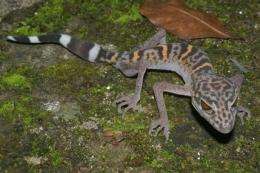
(AP) -- A gecko with leopard-like spots on its body and a fanged frog that eats birds are among 163 new species discovered last year in the Mekong River region of Southeast Asia, an environmental group said Friday.
WWF International said that scientists in 2008 discovered 100 plants, 28 fish, 18 reptiles, 14 amphibians, two mammals and one bird species in the region. That works out to be about three species a week and is in addition to the 1,000 new species catalogued there from 1997 to 2007, the group said.
"After millennia in hiding these species are now finally in the spotlight, and there are clearly more waiting to be discovered," said Stuart Chapman, director of the WWF Greater Mekong Program.
Researchers working for WWF warned that the effects of climate change, including an upsurge in droughts and floods, threaten the diverse habitat that supports these species. That is on top of traditional threats such as poaching, pollution and habitat destruction.
"Some species will be able to adapt to climate change, many will not, potentially resulting in massive extinctions," Chapman said in a statement. "Rare, endangered and endemic species like those newly discovered are especially vulnerable because climate change will further shrink their already restricted habitats."
Among the stars in the new list is a fanged frog in eastern Thailand. Given the scientific name Limnonectes megastomias, the frog lies in wait along streams for prey including birds and insects. Scientists believe it uses its fangs during combat with other males.
Another unusual discovery was the Cat Ba leopard gecko found on Cat Ba Island in northern Vietnam. Named Goniurosaurus catbaensis, it has large, orange-brown catlike eyes and leopard spots down the length of its yellowish brown body.
Lee Grismer, of La Sierra University in California, said he found a tiger-stripped pit viper in Vietnam described in the report while he was attempting to capture a second gecko species.
"We were engrossed in trying to catch a new species of gecko when my son pointed out that my hand was on a rock mere inches away from the head of a pit viper," Grismer said in a statement. "We caught the snake and the gecko and they both proved to be new species."
That gecko species was not included in the WWF report because it hasn't been published in a peer-reviewed journal yet. All the other species listed by the WWF have been described in journals.
Simon Mahood, a conservation adviser for BirdLife International in Indochina, welcomed WWF's attention to the new species and said more could be discovered if additional money is put into conservation and countries make it easier to do field work.
"We are seeing more reports of new discoveries and populations because this region is relatively poorly known, particularly when it comes to cryptic and less fashionable groups like fish and amphibians," said Mahood, whose group this year announced finding the first nest of white-eared night heron in Vietnam and the discovery of a baldheaded song bird in Laos called the barefaced Bulbul Pycnonotus hualon.
On Friday, it announced that it discovered three more sites where the endangered, grey-crowned crocias or Crocias langbianis can be found in Vietnam. The bird has a white underbelly and brown and slate feathers.
Other new species found are a tube-nosed bat named Murina harpioloides that lives in southeastern Vietnam and a new bird species called the Nonggang babbler that favors walking to flying and is found in the karst rainforest on the Chinese-Vietnamese border, an area of limestone fissures, sinkholes and underground streams.
Experts said a range of factors contributed to the upsurge in new species, including better access to regions that have seen decades of war and political unrest and more spending by governments on research to protect and identify plants and animals.
The WWF, which plans to publish yearly tabulations of newly discovered species in the Mekong, called for increased efforts to ensure new species are protected by preserving the large areas of forest and the free-flowing river networks they need to survive.
---
On the Net:
WWF: http://www.panda.org
©2009 The Associated Press. All rights reserved. This material may not be published, broadcast, rewritten or redistributed.


