People playing the odds on health care over costs
(AP) -- Call it a health care gamble: the decision by some people to opt out of health insurance, paying cash for routine care while playing the odds that an accident or catastrophic illness won't plunge them into financial ruin.
President Barack Obama's goal of requiring everyone to carry health insurance has drawn a great deal of skepticism from this group. Many pay far less for health care than they would on premiums, and doubt that insurance would even cover them if they needed it.
It's unknown how many of the nearly 50 million uninsured in the United States voluntarily go without coverage. Researchers at the Kaiser Family Foundation, which studies the uninsured, said most are young, generally healthy adults who are self-employed or in relatively low-wage jobs that do not offer insurance coverage and don't pay enough for workers to afford individual policies.
"Income is key and most of the uninsured have low incomes," foundation researcher Karyn Schwartz said. "If you look at your budget and think you can't afford it or can afford it if you eat only ramen noodles, you may choose not to get it."
All the health care plans that have emerged from the Democratic-controlled Congress would require everyone to have insurance, the way drivers in nearly every state must purchase auto insurance. Proponents say that by bringing everyone into the system, medical risk is spread over a broader population, bringing costs down.
Those who opt out voluntarily might have to pay a penalty. Sen. Max Baucus, D-Mont., who drafted the Senate Finance Committee's plan, set the penalty at $3,800 for a family but cut it to $1,900 amid complaints that the original level was too high.
Republicans have called the insurance mandate a new tax on the middle class. Obama disputes that, saying that whatever plan emerges from Congress must offer subsidies to lower-income people that will make coverage affordable.
In exchange for the requirement that everyone buys coverage, Obama wants a guarantee from insurers that they no longer will deny coverage based on an individual's health or drop coverage when a person gets sick. The insurance industry has signaled it will accept that trade-off, but needs to convince skeptical consumers that it actually means it.
Doubts about what insurers will cover - coupled with the high cost of premiums - have driven some to opt out and take their chances.
Krista Neher, who's starting her own social media and marketing venture, is one.
The 30-year-old from Cincinnati recently left Procter & Gamble Co., where she was covered by the company's health care plan. After researching the costs of an individual policy, she decided to remain uninsured.
"I want to have health coverage, I think it's important. It bothers me that I could be hit by a car," Neher said. "But I have really low confidence that any insurance company would even cover me in that case, even after I paid all the high premiums. It just seems like a lose-lose situation."
Many people who go without coverage have found that health care providers often will cut the price of a procedure if they know they'll be paid in cash rather than through insurance.
Jason Jepson, a self-employed communications consultant based in Southern California, decided against buying an individual policy he said would have cost twice as much as his $1,250 monthly rent. He pays out of pocket for all medical treatment, saving money even after being treated for a broken ankle and severe strep throat.
"If you pay with cash, they do give you a discount - it's the big secret of not having insurance," Jepson, 35, said.
But Jepson said his lack of insurance has meant lifestyle adjustments, such as driving less and staying off freeways to avoid accidents. He says he supports Obama's requirement that everyone carry insurance if it can be made affordable.
"I would pay for it. I'm just not sure it will really cover everything," Jepson said.
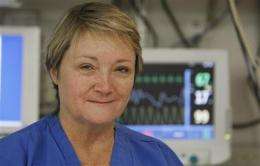
To ease fears of an unexpected medical crisis, registered nurse Mary Pitman of Vero Beach, Fla., refuses health insurance and takes the extra cash in her paycheck. Pitman, 54, puts $3,000 per year into a pretax flexible spending account for routine care and another $300 per month in an emergency fund in the event of a major illness.
"I have more control over my money this way, and there's a tax advantage," she said.
As skeptical as many are about insurers, some are equally doubtful about government's ability to do a better job managing health care.
Laura Silverthorn of Tampa, Fla., left a nursing job to start her own business designing and selling temporary tattoos. She and her toddler son have gone without health coverage for nearly two years.
While Silverthorn, 36, said she wishes she could afford insurance - "Just one accident and you're done," as she put it - she's also grown disillusioned with government-run programs after working part time reviewing medical charts for Medicaid.
"I don't know if I want the government running health care when I see how they run Medicaid - there is so much fraud," she said.
The only test case for Obama's plan to bring everyone into the health insurance system is Massachusetts. In 2006, it enacted a program to cover all state residents. Those who opt out must pay a $912 annual tax penalty.
Michael Widmer, president of the nonpartisan Massachusetts Taxpayer Foundation, which researched the effectiveness of the state's health insurance mandate, said most people chose to buy insurance rather than pay the penalty - even those who are "young, healthy and immortal."
"Most are saying, 'If I'm going to have to pay this much in any case, I should be covered,'" he said.
While about 65,000 people in Massachusetts were allowed for financial reasons to opt out of the mandate last year, the state now has the lowest rate of uninsured residents in the country - 4.1 percent, according to the latest census data.
---
On the Net:
Kaiser Family Foundation: http://www.kff.org/uninsured/index.cfm
©2009 The Associated Press. All rights reserved. This material may not be published, broadcast, rewritten or redistributed.


