10 percent of world's major species at threat: report
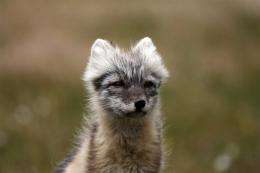
September 29, 2009 An Arctic Fox near Kangerlussuaq, Greenland

Enlarge

An Arctic Fox near Kangerlussuaq, Greenland. Polar bear cubs, the Arctic fox and caribou herds are among the victims of dramatic changes in the Arctic due to climate change. Almost 10 percent of the world's mammals, birds, reptiles, amphibians and fish are in danger of extinction due to climate change and other factors, according to an Australian report released Tuesday.

Almost 10 percent of the world's mammals, birds, reptiles, amphibians and fish are in danger of extinction due to climate change and other factors, according to an Australian report released Tuesday.

The "Number of Living in Australia and the World" study found 0.9 percent of the world's 1.9 million classified species were at threat, including 9.2 percent of major vertebrate species.

Australia's government-funded Biological Resources Study, the world's only census of animal and plant life, found 20.8 percent of mammals were endangered, as were 12.2 percent of birds and 29.2 percent of amphibians.

Of reptiles, 4.8 percent were considered threatened, along with 4.1 percent of fish species.

"In Australia and around the world, is under huge and growing pressure," said environment department secretary Robyn Kruk.

"The pressures are pervasive and chronic in many places; invasive species, and climate change in particular."

Australia was found to be home to 7.8 percent of the world's known species. Environment Minister Peter Garrett said the study had shown its wildlife was highly unique, with 87 percent of mammals and 93 percent of reptiles found nowhere else in the world.

However, the study also showed Australian species accounted for 9.1 percent of the world's threatened flora and , and Garrett said vigilance was essential.

"We have a long way to go, we have discovered and named only about a quarter of Australia's estimated number of and fauna," said Garrett.

"We need this essential information to do a better job of managing our biodiversity against the threats of invasive species, habitat-loss and climate change."

According to the report there were likely to be some 11 million species on Earth of which only 1.9 million had been discovered, with millions of invertebrates, fungi and other organisms yet to be found and named.

(c) 2009 AFP


print this article email this article download pdf blog this article bookmark this article     Stumble it Digg this share on Facebook retweet share on Reddit add to delicious
Rate this story - 3.7 /5 (3 votes)


September 29, 2009 all stories

Comments: 0

3.7 /5 (3 votes)
  • Stumble this up

  • Digg this

  • share this

  • hide
  • Related Stories

  • List of threatened species still growing
    created May 02, 2006 | popularity not rated yet | comments 0
  • Extinction alert issued for 800 species
    created Dec 13, 2005 | popularity not rated yet | comments 0
  • Extinction crisis looms in Oceania: study
    created Jul 28, 2009 | popularity not rated yet | comments 0
  • Flying frog among 353 new Himalayan species: WWF
    created Aug 10, 2009 | popularity not rated yet | comments 0
  • One in six Mediterranean mammals face extinction
    created Sep 15, 2009 | popularity not rated yet | comments 0


  • hide
  • Relevant PhysicsForums posts

  • Selenocysteine in pH=7
    created Nov 26, 2009
  • What is the formula for calculating the speed of thought?
    created Nov 26, 2009
  • What does word "absorption" mean in the intestine?
    created Nov 26, 2009
  • What is transpulmonary pressure?
    created Nov 24, 2009
  • More from Physics Forums - Biology

Other News

Golden Oldie: Key Role for Ancient Protein in Algae Photosynthesis

Golden Oldie: Key Role for Ancient Protein in Algae Photosynthesis

Biology / Biotechnology

created 3 hours ago | popularity not rated yet | comments 1

The discovery that an ancient light harvesting protein plays a pivotal role in the photosynthesis of green algae should help the effort to develop algae as a biofuels feedstock. Researchers with the Lawrence ...


Hammerhead shark

Wide heads give hammerheads exceptional stereo view

Biology / Plants & Animals

created 12 hours ago | popularity 4.4 / 5 (5) | comments 4

Hammerhead sharks are some of the Ocean's most distinctive residents. 'Everyone wants to understand why they have this strange head shape,' says Michelle McComb from Florida Atlantic University. One possible ...


Indonesia rejects Bali plan for turtle sacrifices (AP)

Indonesia rejects Bali plan for turtle sacrifices

Biology / Ecology

created 10 hours ago | popularity not rated yet | comments 0

(AP) -- Indonesia has rejected a push by the resort island of Bali for rare turtles to be legally slain in Hindu ceremonies, siding with conservationists of the protected reptiles against religious advocates, ...


Tough yet stiff deer antler is materials scientist's dream

Biology / Plants & Animals

created 12 hours ago | popularity not rated yet | comments 2

Prized for their impressive antlers, red deer have been caught in the hunters' sights for generations. But a deer's antlers are much more than decorative. They are lethal weapons that stags crash together when duelling. John ...


Ecologists sound out new solution for monitoring cryptic species

Biology / Ecology

created 12 hours ago | popularity not rated yet | comments 0

Ecologists have at last worked out a way of using recordings of birdsong to accurately measure the size of bird populations. This is the first time sound recordings from a microphone array have been translated into accurate ...