Longer-lived, healthier mice offer promise of drug treatments for age-related diseases
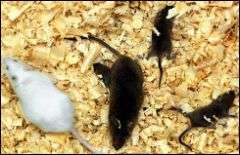
Scientists have managed to extend the lifespan of mice by up to a fifth and reduce the number of age-related diseases the animals suffer. The research, which involved blocking a key molecular pathway, mimics the health benefits of reducing calorie intake and suggests that drug treatments for ageing and age-related diseases are feasible.
As far back as the 1930s scientists showed that reducing the calorie intake of laboratory rats whilst maintaining sufficient quantities of vitamins, minerals and other important nutrients can have health benefits. So-called 'calorie restriction' appeared to increase the life-span of the animals, and a recent study showed that this may be the case for primates, though it is not understood why. Evidence also suggests that calorie restriction can have health benefits for humans, too, though it is unclear whether it can increase longevity.
In research primarily funded by the Wellcome Trust, scientists from the Institute of Healthy Ageing at UCL (University College) London have discovered changes in the ageing process in a strain of knockout mice which were unable to produce a particular protein known as S6 Kinase 1 (S6K1). The results of their study are published today in the journal Science.
S6K1 is involved in the body's response to changes in levels of the food that we eat. Such nutrient sensing systems are crucial in enabling the body to respond appropriately to changing food levels in terms of growth and reproduction, and also, it seems, ageing.
Professor Dominic Withers and colleagues demonstrated that deleting the S6K1 protein in mice has a wide range of health benefits which appear to mimic the action of calorie restriction. However, whilst the effect was dramatic in female mice, their male counterparts showed little difference in lifespan but showed some of the health benefits, though the reasons for these differences between the two sexes is unclear.
"Blocking the action of the S6K1 protein helps prevent a number of age-related conditions in female mice," explains Professor Withers. "The mice lived longer and were leaner, more active and generally healthier than the control group. We added 'life to their years' as well as 'years to their lives'."
The researchers compared the knockout mice with the 'wild-type' (i.e. normal) mice at age 600 days - the equivalent of middle age in humans. The female knockout mice were leaner, and had stronger bones; they did not show the usual age-related decline in insulin sensitivity and were therefore protected from type 2 diabetes; they performed better at motor performance tasks, a measure of attributes such as balance, strength and coordination; and were more inquisitive and exploratory, suggesting that their senses and cognition were better. Even their T-cells, an important part of the immune system, appeared more 'youthful', implying slowing of the usual age decline in immunity.
The male knockout mice were also leaner than their wild-type equivalents, had less insulin resistance and had healthier T-cells.
On average, the female knockout mice lived for 950 days, over 160 days longer than the control group - in other words, their lifespan increased by twenty per cent.
The findings suggest that calorie restriction acts via the S6K1 pathway. Further studies showed that the beneficial effects of blocking S6K1 were mediated via increased activity of a second molecule, AMPK which has been called a master 'fuel gauge' as it regulates energy levels within cells. In particular, it is activated when cellular energy levels fall such as can occur when calorie intake is reduced.
Drugs that activate AMPK are already in use in human patients to treat type 2 diabetes - metformin, a widely-used drug for the disease, is thought to work by activating AMPK. Recent studies by Russian scientists appear to show that the drug can extend the life-span of mice.
Metformin is not the only drug in use that may affect the ageing process. A recent study in the journal Nature showed that the drug rapamycin extended the lifespan of mice. Rapamycin is used in humans as an immunosuppressant (to prevent organ rejection after transplant) and so could not be administered as an anti-ageing drug in its current form. However, rapamycin blocks the activity of S6K1 and may therefore extend lifespan through its effects on S6K1.
Together these studies provide evidence that this is a drug-sensitive pathway controlling mammalian ageing and suggest new approaches for the treatment of age-related diseases.
"We are suddenly much closer to treatments for ageing than we thought," says Dr David Gems, one of the study's authors. "We have moved from initial findings in worm models to having 'druggable' targets in mice. The next logical step is to see if drugs like metformin can slow the ageing process in humans."
"If we are lucky we will age, but if not so lucky, ageing will bring with it chronic diseases such as diabetes, heart disease and dementia," says Sir Mark Walport, Director of the Wellcome Trust. "This study reveals a biological pathway that may prove key to understanding the relationship between ageing and chronic illness."
Source: Wellcome Trust (news : web)


