Money woes threaten Romanian protected areas
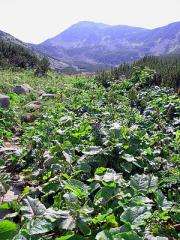
(PhysOrg.com) -- Dwindling resources and bureaucratic hurdles are threatening to destroy Romania’s protected area system - home to some of Europe’s largest remaining natural forests.
The protected area system, which on paper covers 20 percent of Romania, also houses more than half of Europe’s populations of bears, wolves, and other large carnivores.
Despite these natural riches, salaries of many park rangers and other staff have not been paid for months, and telephone and internet connections are being cut as operational funds disappear.
Although the Romanian Government has committed to ensuring the protection of these lands, both as a member of the European Union and through its signature on several international agreements such as the Convention on Biological Diversity, it has failed to stand by these pledges, citing fiscal difficulties.
“The Romanian government must take immediate action to address the crisis faced by the country’s protected areas and their tremendous natural wealth,” said Andreas Beckmann, Director of WWF’s Danube-Carpathian Programme. “Priorities should be setting up and properly financing a single national agency to oversee and manage the areas.”
Back to "paper parks"?
The protection afforded by the Romanian protected area network is impressive - at least on paper.
Significant support for protection activities has been financed through EU and various governmental and private funds, including the Dutch MATRA programme. An ongoing WWF programme supported by the MAVA Foundation has been providing significant training and support for protected area professionals in Romania and other parts of the Carpathian Mountains.
According to the Romanian legislation, Protected Area management can be subcontracted to institutions, companies or organizations that have the interest and resources to support active management and implementation of management plans.
Based on this legislation, in 2005 the Ministry of Environment subcontracted the National Forest Administration to manage most of the nation’s national and nature parks, including flagship areas such as Retezat, Rodna and Piatra Craiului National Parks, with no contribution to the management costs from the state budget.
The National Forest Administration provided funding to Protected Area administrations allowing for the management teams to function at a minimal capacity and carry out some management activities. Although the support provided was limited, it nevertheless was critically important for at least the basic functioning of the protected areas.
This system worked, even if not with maximum efficiency, until 2009 when the National Forest Administration began facing major financial difficulties.
As a result, many PA staff have not received salaries for months or are receiving salaries with very significant delays; office costs are not covered, leading to situations where PA staff have no access to telephone or internet service, and have major problems meeting basic costs.
Situation critical
The situation is now critical, WWF said.
Many of the PA staff are planning to leave or have left already, and there are no possibilities to hire new people. Work in previous years to build an effective protected area system in Romania is quickly unraveling.
The current state of Romania's protected area system is proving a liability not only for the future of the country's natural treasures but also for local development.
For example, many of the areas in Romania that have been designated as part of the EU's Natura 2000 network of specially protected sites often cover very large areas of 150,000-250,000 ha, including numerous communities and their administrative land. Approval of various local development projects is being held up by the lack of management plans and guidelines for the protected areas.
Although the Ministry of Environment has overall responsibility for protected areas, including Natura 2000 sites, there is very limited capacity within the Ministry to coordinate and support protected area management.
The previous government planned for and issued a governmental decision for the establishment of a National Agency for Protected Areas, with dedicated staff for PA related issues.
However, the present government has decided not to establish the agency, citing the financial crisis.
Unfortunately, even those funds that are available for nature protection are not being effectively used. More than €250 million in EU regional development funds have been allocated for Natura 2000 and Protected Areas.
But bureaucratic restrictions imposed largely by Romanian authorities have made it difficult if not impossible for institutions and organizations to access this support.
European and global treasures
Some 20 percent of Romanian territory is covered by one form of protected area or another, ranging from relatively strictly protected areas such as national parks to areas with fewer restrictions such as nature parks and biosphere reserves.
It also contains the globally important Carpathian Mountains and Danube Delta ecoregions.
This tremendous natural capital is of national and even European and global significance, and provides a host of ecosystem benefits, including food and fiber, growing opportunities for tourism and recreation as well as flood protection and carbon sequestration.
Romania's protected area system goes back to the early 20th century.
The first nature reserves were established in the 1920’s, followed by Retezat as the country's first national park in 1935. But few if any measures were taken for the management of protected areas in Romania until the mid 1990s, when the Global Environmental Facility (GEF), the global financing instrument for the Convention on Biological Diversity among other conventions, supported the establishment of the Danube Delta Biosphere Reserve Administration.
In 1999-2000, with GEF support, the first national and nature park administrations were established and management plans developed and partly implemented for Retezat National Park, Piatra Craiului National Park as well as Vanatori Neamt Nature Park. GEF support continued and some financial resources were allocated from the National Forest Administration and other institutions, permitting the establishment of management teams for most of the national and nature parks by 2006.
Provided by WWF


