Solving the Period Problem: Researchers Develop Sanitary Pads from Local, Organic Materials
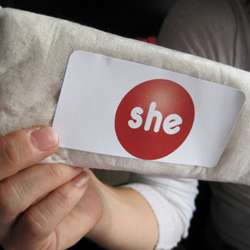
(PhysOrg.com) -- For most American women, their "time of the month" is seen as a hindrance to daily life. In impoverished and developing countries, however, monthly periods are a major cause for concern among women. The lack of affordable, quality sanitary pads results in females missing up to 50 days of school annually - thereby compromising their educational and professional potential. Researchers at North Carolina State University are helping to combat the problem by designing affordable pads made from natural, available materials that will allow for local production and sale.
“This is the kind of project I’ve wanted to be involved with for a long time - using my knowledge of textiles and the sciences to make a real impact in the underserved parts of the world,” says Dr. Marian McCord, associate professor of textile engineering chemistry, science and biomedical engineering at NC State. McCord was contacted by Sustainable Health Enterprises (SHE), a social enterprise dedicated to developing a franchise model led by young women to manufacture and distribute affordable, high-quality and environmentally friendly sanitary pads in underserved parts of the world.
Former President Bill Clinton recently named the SHE project one of the “commitments to action” at the Clinton Global Initiative’s annual meeting in September. Established in 2005, the Clinton Global Initiative brings together a community of global leaders to devise and implement innovative solutions to some of the world’s most pressing challenges.
McCord and colleagues across NC State are using their knowledge in areas such as nonwovens, wood and paper science, and medical textiles to develop a sanitary pad from materials readily available in local areas - such as the fiber from banana stems in Rwanda. The pads will be sold by community health workers for 30 percent less than the available brand.
“In some of these areas of Africa, a month’s supply of imported sanitary pads cost more than a day’s worth of wages. The donations they receive from individuals help, but they simply are not a long-term solution to the problem,” says Elizabeth Scharpf, founder and CEO of SHE. “Our goal is to create affordable pads that are able to be easily manufactured for a low cost at the local level - and the research being conducted at NC State helps us do that.”
Researchers in the Department of Wood and Paper Science at NC State - Drs. Lucian Lucia, Medwick Byrd and Hasan Jameel - took banana stem fibers, which are easily accessible in Rwanda, and put them through a series of chemical treatments and mechanical actions in order to change their composition from coarse, waxy fibers into soft, billowy materials that are more amenable to absorbing liquid. Students in a textile engineering senior design course, led by Dr. Russell Gorga, associate professor of textile engineering, then incorporated the material into comfortable, effective and environmentally benign covers to create the prototypes currently under evaluation. The final prototype was produced by David W. Allen, a senior in textile engineering at NC State.
“The idea behind our research was to keep this process extremely simple - we employed materials that were cheap and easy to work with,” Lucia says. “In order for this project to be successful, it was imperative that the process could be replicated in other parts of the world - and that the average person, not necessarily a scientist, could create these sanitary pads. Our part in this important project was to show that turning banana stem fiber into an absorbent material is possible - and we’re very pleased that was exactly what we were able to do.”
“Our hope is that through this research, we’ll take a step toward improving the lives of millions of impoverished women in Rwanda, and perhaps all of Africa,” McCord says. “This project is just one of many examples of how a university without a medical school like NC State can have a major impact on global health.”
Provided by North Carolina State University (news : web)


