Matter in hand: Jugglers have rewired brains
October 11, 2009 Matter in hand: Jugglers have rewired brains

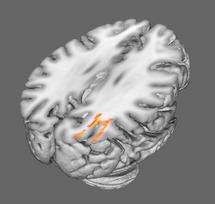
Learning to juggle enhances part of the white matter of the brain.

(PhysOrg.com) -- Learning to juggle leads to changes in the white matter of the brain, an Oxford University study has shown.

The research, funded by the Wellcome Trust and Medical Research Council and published in the journal Nature Neuroscience, appears to show improved connectivity in parts of the brain involved in making movements necessary to catch the balls.

‘We tend to think of the brain as being static, or even beginning to degenerate, once we reach adulthood,’ says Dr Heidi Johansen-Berg of the Department of Clinical Neurology, University of Oxford, who led the work. ‘In fact we find the structure of the brain is ripe for change. We’ve shown that it is possible for the brain to condition its own wiring system to operate more efficiently.’

The researchers at the Oxford Centre for Functional Magnetic Resonance Imaging of the Brain (FMRIB) set out to see if changes in the white matter of the brain could be seen in healthy adults on learning a new task or skill.

White matter consists of the bundles of long nerve fibres that conduct electrical signals between nerve cells and connect different parts of the brain together, while the grey matter consists of the nerve cell bodies where the processing and computation in the brain is done. Changes in grey matter following new experiences and learning have been shown. But enhancements in white matter have not previously been demonstrated.

Measuring changes in white matter relied on assessing diffusion MRI images using new methods pioneered by the FMRIB centre at Oxford. The methods are able to compare anatomical features of white matter between individuals or over time.

‘We have demonstrated that there are changes in the white matter of the brain - the bundles of nerve fibres that connect different parts of the brain - as a result of learning an entirely new skill,’ explains Dr Johansen-Berg.

A group of young healthy adults, none of whom could juggle, was divided into two groups each of 24 people. One of the groups was given weekly training sessions in juggling for six weeks and asked to practice 30 minutes every day. Both groups were scanned using diffusion MRI before and after the six-week period.

Juggler, postgraduate student at FMRIB, and first author on the paper, Jan Scholz, said: ‘We challenged half of the volunteers to learn to do something entirely new. After six weeks of juggling training, we saw changes in the white matter of this group compared to the others who had received no training. The changes were in regions of the brain which are involved in reaching and grasping in the periphery of vision, so that seems to make a lot of sense.’

After the training, there was a great variation in the ability of the volunteers to juggle. All could juggle three balls for at least two cascades, but some could juggle five balls and perform other tricks. All showed changes in white matter, however, suggesting this was down to the time spent training and practising rather than the level of skill attained.

‘This exciting new result raises a lot of questions,’ says Dr Johansen-Berg, ‘MRI is an indirect way to measure brain structure and so we cannot be sure exactly what is changing when these people learn. Future work should test whether these results reflect changes in the shape or number of nerve fibres, or growth of the insulating myelin sheath surrounding the fibres.’

Dr Johansen-Berg says: ‘Of course, this doesn’t mean that everyone should go out and start juggling to improve their brains. We chose juggling purely as a complex new skill for people to learn. But there is a ‘use it or lose it’ school of thought, in which any way of keeping the brain working is a good thing, such as going for a walk or doing a crossword.’

‘There are potential clinical applications of this work, although they are a long way off,’ adds Dr Johansen-Berg. ‘Knowing that pathways in the brain can be enhanced may be significant in the long run in coming up with new treatments for neurological diseases, such as multiple sclerosis, where these pathways become degraded.’

Provided by Oxford University


print this article email this article download pdf blog this article bookmark this article     Stumble it Digg this share on Facebook retweet share on Reddit add to delicious
Rate this story - 4.9 /5 (22 votes)

Rank Filter

Move the slider to adjust rank threshold, so that you can hide some of the comments.


Display comments: newest first

  • poi - Oct 11, 2009
    • Rank: 3 / 5 (1)
    any way of keeping the brain working is a good thing, such as going for a walk or doing a crossword.


    Please help. How does going for a walk keep the brain working being comparable to doing a crossword?
    A zen walk?
  • mauinut - Oct 12, 2009
    • Rank: 5 / 5 (1)
    i guess it depends where your walking? or maybe they think if you stop walking you'll forget how! but--- the science does work i do it differently
    start writing with your "off" hand then try it in cursive get good at it then try it with both hands at the same time your brain will immediately convince you to put the "off" pen down resist and persist after you get that one go back to one hand and write in "mirror" image then try it cursive and repeat the dual hand experiment then for desert try to write one above the other one backwards and one normal so when folded in half they superimpose i have done this with a lot of people and it is amazing i did notice with girls around 3 or 4 writing numbers with their off hand they naturally flipped them mirror and did not notice interesting have fun
  • abhishekbt - Oct 13, 2009
    • Rank: 5 / 5 (1)
    For old people,& otherwise for diseases like Alzheimer's etc, Doctors suggest to do anything to keep our brain active.
    Most old people I believe, spend time just sitting all day. Compare this with a very simple activity like walking.

    Imagine the amount of exercise you are giving to your brain.
    Your brain needs to coordinate, see, smell, hear, feel and then match these feeling and sights with your master database.
    Think about it, when you see someone or something like a car on the road, your brain has to match the image with the hundreds of thousands of people you know and millions of objects you have seen in your entire lifetime to tell which is which. All your senses are working simultaneously probably thousands of times a second.

    Now, think about sitting in the same room with the same stuff and with the same people day after day after day...
    It may seem simple as walking comes to us naturally, but when you think about it, our brain may be in hyperdrive!
  • murray - Oct 18, 2009
    • Rank: not rated yet
    Perhaps "walking and chewing bubble gum" might be a new skill that would enhance white matter.

October 11, 2009 all stories

Comments: 4

4.9 /5 (22 votes)
  • Stumble this up

  • Digg this

  • share this

  • hide
  • Related Stories

  • Brain's white matter -- More 'talkative' than once thought
    created May 07, 2007 | popularity not rated yet | comments 0
  • Brain abnormalities discovered in people who have trouble reading fast
    created Dec 03, 2007 | popularity not rated yet | comments 0
  • Cognitive 'fog' of normal aging linked to brain system disruption
    created Dec 05, 2007 | popularity not rated yet | comments 0
  • Milestone in the regeneration of brain cells
    created Aug 20, 2007 | popularity not rated yet | comments 0
  • Brain physiology of prenatal alcohol exposure uncovered
    created Aug 27, 2008 | popularity not rated yet | comments 0


  • hide
  • Relevant PhysicsForums posts

  • Obsessive Compulsive Disorder
    created Nov 20, 2009
  • West's zone 2 starling resistor respiratory physiology
    created Nov 18, 2009
  • 50-0-50 rule
    created Nov 18, 2009
  • What is the evidence in support of the anti-vaccine movement?
    created Nov 17, 2009
  • Chemical Burns
    created Nov 16, 2009
  • How to prevent another stroke?
    created Nov 11, 2009
  • More from Physics Forums - Medical Sciences

Other News

Swine flu vaccine effective despite mutations: experts

Medicine & Health / Diseases

created 10 hours ago | popularity 1 / 5 (1) | comments 1

Swine flu vaccines are still effective despite reported cases of mutations in the A(H1N1) virus, health experts in Europe and North America said Saturday.


Study raises concerns about outdoor second-hand smoke

Medicine & Health / Health

created Nov 18, 2009 | popularity 2 / 5 (4) | comments 21

Indoor smoking bans have forced smokers at bars and restaurants onto outdoor patios, but a new University of Georgia study in collaboration with the Centers for Disease Control and Prevention suggests that these outdoor smoking ...


smoking, cigarette

Vaccine being developed to help smokers quit

Medicine & Health / Medications

created Nov 20, 2009 | popularity 4.5 / 5 (11) | comments 10

(PhysOrg.com) -- Glaxo-SmithKline has joined forces with Nabi Pharmaceuticals to produce a vaccine to help smokers give up their addiction permanently.


Pilot study relates phthalate exposure to less-masculine play by boys

Medicine & Health / Research

created Nov 16, 2009 | popularity 4.8 / 5 (9) | comments 9

A study of 145 preschool children reports, for the first time, that when the concentrations of two common phthalates in mothers' prenatal urine are elevated their sons are less likely to play with male-typical toys and games, ...


GOP: Health test recommendations could affect care (AP)

GOP: Health test recommendations could affect care

Medicine & Health / Health

created 21 hours ago | popularity not rated yet | comments 0

(AP) -- Republicans are seizing on this week's recommendations for fewer Pap smears and mammograms to fuel concern about government-rationed medical care - and to try to chip away support by women for President ...