Student Rewards Often Ineffective And Unnecessary, Authors Say
(PhysOrg.com) -- It seems so natural to many teachers and parents: give children rewards for doing well in school and that will motivate them to achieve more. Not so fast, according to the authors of a new book on motivating students. Research shows that rewards can actually be counterproductive if used incorrectly, and may lead to less learning and even more cheating, in some instances.
“We think teachers and parents should use rewards less often, use them more carefully and emphasize learning over rewards,” said Lynley Hicks Anderman, associate professor of educational policy and leadership at Ohio State University.
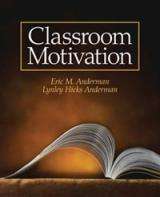
Lynley and her husband Eric Anderman, a professor of educational policy and leadership at Ohio State, are authors of the book Classroom Motivation (Pearson, 2009), which provides practical, research-based advice on how teachers can motivate students.
The book focuses on many commonly held beliefs of teachers and parents regarding how to “motivate” students that simply are not supported by research.
“Motivation is complicated,” Eric Anderman said. “A lot of teachers and a lot of administrators don’t really understand how and why students are motivated, even though they know it is important.”
Many teachers and parents assume that motivation rests solely within the students themselves, and students need to be self-motivated to succeed. But research shows that teachers have a lot of control over students’ motivation, even if they don’t realize it, he said.
“A lot of teachers believe that anything they do to motivate students is separate from everything else they do in the classroom,” Lynley Anderman said.
“Whether it is some kind of reward, or a game or fun activity, they see it as an add-on to the regular instruction. Instead, students’ motivation is influenced by all aspects of the design and delivery of instruction.”
Teachers need to learn how to structure classes, evaluate students and choose classroom activities in such a way that they motivate students. The book focuses on how teachers can use research-based practices to implement small changes that can have huge motivational benefits for students.
“Teachers can make a big difference,” Eric Anderman said.
Rewards are one of the more common ways teachers use to motivate students, but teachers are often unaware of the research that shows how and when to use rewards, and how to motivate students in general, said Eric Anderman.
“Rewards are used haphazardly, and given out for everything and anything,” he said. “Rewards don’t have a lot of value when they’re used that way. They should be used sparingly and with a lot of thought.”
In many cases, rewards probably aren’t even necessary to get students to do good work in school, according to the authors. If teachers give rewards for achieving goals that students would have achieved anyway, the students may lose interest in achieving those goals.
If teachers or parents do give rewards to students, they should be clear that the reward is for learning and personal growth, and not for receiving a particular grade or for simply complying with teacher instructions.
“Students need to know what they did right and why they are getting the reward,” Lynley Anderman said. “It should be based on personal growth and improvement and not for being better than the kid next to them or for following the teacher’s directions.”
If students are rewarded for achieving certain grades or for doing better than others, they may lose sight that learning should be their true aim.
“If the ultimate goal is just to get the reward, children and adolescents will take short-cuts to get it,” Eric Anderman said. “They are going to learn things as quickly as possible, memorize it for a test, and two months later will have forgotten it. It can also encourage cheating, because students are no longer interested in learning - they are just aiming to get the reward.”
Provided by The Ohio State University (news : web)


