Researchers discover mechanism that helps humans see in bright and low light
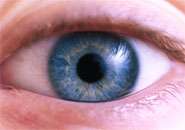
Ever wonder how your eyes adjust during a blackout? When we go from light to near total darkness, cells in the retina must quickly adjust. Vision scientists at Washington University School of Medicine in St. Louis have identified an intricate process that allows the human eye to adapt to darkness very quickly. The same process also allows the eye to function in bright light.
The discovery could contribute to better understanding of human diseases that affect the retina, including age-related macular degeneration, the leading cause of blindness in Americans over 50. That's because the disease and the pathway the researchers have identified both involve cells called cone cells.
Age-related macular degeneration may be modulated, perhaps, through this pathway we've identified in the retina, says principal investigator Vladimir J. Kefalov, Ph.D. Deficiencies in this pathway affect cone cells, and so does macular degeneration, so it's possible that if we could enhance activity in this pathway, we could prevent or reverse some of that damage to cone cells.
The retina's main light-sensing cells are called rods and cones. Both use similar mechanisms to convert light into vision, but they function differently. Rods are highly sensitive and work well in dim light, but they can quickly become saturated with light and stop responding. They don't sense color either, which is why we rarely see colors in dim light. Cones, on the other hand, allow us to see colors and can adapt quickly to stark changes in light intensity.
The researchers began with studies of salamanders because their cone cells are abundant and easy to identify. Cones rely on light-sensing molecules that bind together to make up visual pigments. The pigments get destroyed when they absorb light and must be rebuilt, or recycled, for the cone cells to continue sensing light. After exposure to light, key components of pigments called chromophores can leave the cells and travel to the nearby pigment epithelium near the retina. There the chromophore is restored and returned to the photoreceptor cells.
Earlier this year, the research team removed the pigment epithelium layer in salamander retinas, so that pigment molecules could not be recycled that way. Then they exposed retinal cells both to bright light and to darkness. The rods no longer worked, but the cones continued to function properly, even without the eye's pigment epithelium.
Exposure to bright light destroyed visual pigments in rods, and those cells could not recycle chromophores, says principal investigator Vladimir J. Kefalov, Ph.D., assistant professor of ophthalmology and visual sciences. Pigments in cones, by contrast, quickly regenerated and continued to detect light even without the pigment epithelium, so it was clear a second pathway was involved.
In the new study, Kefalov did the same experiments in cells from mice, primates and humans with the same result.
To learn how cones were able to recycle pigments without pigment epithelium, Kefalov's team has focused on a particular type of cell in the retina. Called Müller cells, these cells support and interact with rods and cones. The researchers treated mouse retinas with a chemical that destroyed the Müller cells, then exposed the retina to bright light, followed by darkness.
When we blocked the function of Müller cells, the retinal visual pathway could not function because cones ran out of photopigment and could not adapt to dark, Kefalov says.
The new paper, published in the journal Current Biology, suggests Müller cells are key to this pathway in mammals, including humans.
When those cells function properly, cones in the mouse, primate and human retinas are able to function in bright light and adapt to darkness, independently of the pigment epithelium, Kefalov says.
He says this discovery means it may one day be possible to manipulate this pathway in the retina to improve vision when the other pathway, involving pigment epithelium, has been interrupted by injury or disease, such as age-related macular degeneration.
More information: Wang JS, Kefalov VJ. An alternative pathway mediates the mouse and human cone visual cycle. Current Biology vol. 19 (19), Oct. 13, 2009.
Eelated paper:
Wang JS, Estevez ME, Cornwall MC Kefalov VJ. Intra-retinal visual cycle required for rapid and complete cone dark adaptation. Nature Neuroscience, vol. 12, pp. 295-302, online Feb. 1, 2009
Source: Washington University School of Medicine (news : web)


