Researchers Studying How Genetic Disorder Develops -- In a Petri Dish (w/ Video)
(PhysOrg.com) -- With new stem cell lines generated directly from the cells of patients, researchers are able to study how the genetic disorder known as Angelman syndrome develops.
UConn researchers have generated 10 new stem cell lines from the cells of patients with a genetic disorder called Angelman syndrome, that enable them to watch how the disorder unfolds in petri dishes.
It is hoped that the study of these cell lines will provide clues into the root causes of Angelman syndrome by revealing what goes right or wrong as the cells develop. This information could then be utilized in searching for and developing new therapies for treating the disorder.
The research offers dramatic evidence of the use of stem cells in human medicine for drug screening and diagnosing patients.
“We are generating individualized stem cells to create in vitro models of human disease,” says Marc Lalande, director of UConn’s Stem Cell Institute. “This allows us to investigate a disease such as Angelman’s by creating cells from a patient and monitoring their behavior in the laboratory. This type of information is absolutely necessary to improve our ability to diagnose and treat human diseases and neurological disorders.”
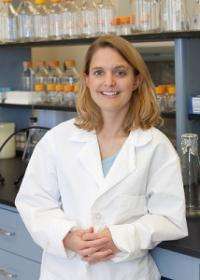
Stormy Chamberlain, a research assistant professor working in Lalande’s lab at the UConn Health Center, adds, “Our ultimate goal is to be able to figure out what’s wrong with the cells in order to evaluate drugs that could offer a treatment, possibly even a potential cure for AS.” Chamberlain leads the team that generated the new stem cell lines.
Angelman syndrome is one among a small group of single gene, autism-related neurodevelopmental disorders that affects about one in 15,000 live births. Children with the condition suffer severe mental retardation, lack of speech, seizures, hand flapping, and motor and balance disorders.
Chamberlain notes that patients with the disorder live for the full lifespan, which means they are in constant need of caregivers.
Humans typically have 23 pairs of chromosomes - all of which have a maternal and paternal side - that convey the hereditary traits parents pass to their offspring. Sometimes faulty gene imprinting leads to devastating disorders such as Angelman syndrome, which occurs when individuals, before birth, inherit a damaged or partly missing gene on the maternal copy of chromosome 15.
To generate the 10 new stem cell lines, Chamberlain’s research team inserted a cocktail of genes into skin cells taken from Angelman syndrome patients. This triggered a process that turned back the skin cells’ developmental clock, making them regress to their early embryonic-like or pluripotent state from which they could become any of the body’s 220 different cell types.
These new so-called iPS cells - induced pluripotent stem cells - were then carefully cultured, using a variety of growth factors that turned them into functional brain cells called neurons.
The process took about 10 weeks.
“With live colonies of neurons in a dish, we can study what might go wrong during their development that leads to Angelman syndrome,” Chamberlain says. “If we discover nothing is wrong with their development, then we can study precisely what is wrong within the neurons - and therein probably lies the defect that we need to find.
“The ultimate goal,” she adds, “is to take the neurons, figure out what’s wrong with them, and develop drugs that can fix that defect.”
Chamberlain speculates that Angelman syndrome is not likely to be repaired by cell replacement therapy, which is what a lot of stem cell research is aiming towards these days.
”In our case, we think a better use of Angelman syndrome stem cells is to study the disease and design drugs for this disorder,” she says.
Using automated high-throughput instruments, the team will focus on using the iPS cells from Angelman patients to test multiple compounds at the same time and compare them to one another.
That skin cells can be taken from a patient and transformed into stem cells that can be used to test the efficiency of a specific drug against a given disease is something Chamberlain says “I still haven’t quite wrapped my brain around. This is really new,” she added, “putting the patient at the front of the drug delivery process.”
Provided by University of Connecticut (news : web)


