Migrating Microbes
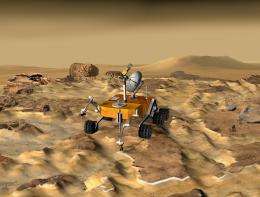
With every spacecraft that leaves Earth, millions of microbes hitch a ride into space. As astrobiologists search for life in other worlds, preventing forward and back contamination remains a key priority.
In the ongoing quest for extraterrestrial life, imagine the day scientists discover life on another planet. Then imagine finding out that those life forms actually originated on Earth.
With every spacecraft that leaves Earth, millions of microbes try to hitch a ride into outer space. NASA hopes to launch a Mars Sample Return Mission in the future, and preventing cross-contamination of Mars and the Earth in such a mission would be a top priority. A paper published in the September issue of Trends in Microbiology takes a look at NASA’s current planetary protection policies and procedures.
“If terrestrial bugs make it to Mars can they survive and grow, or would they be able to thrive in extreme environments?” asks lead author of the paper Wayne Nicholson, who is a professor at the Department of Microbiology & Cell Science at the University of Florida, Kennedy Space Center. "So far, our results show that they wouldn't be able to grow.”
Even so, NASA’s planetary protection program is working to improve procedures to make sure hitchhiker microbes traveling on robotic or crewed vehicles don’t contaminate new worlds. Of primary concern is “back contamination,” or the transferring of extraterrestrial life forms back to Earth where they could harm the biosphere. “Forward contamination” is when microbes from the Earth get transported on outbound spacecraft to other planetary bodies, potentially colonizing those environments.
“The highest priority is to prevent contamination of the Earth,” says Catharine Conley, NASA’s planetary protection officer. “We have never brought samples back from places where we think (life could exist). So from a practical point, we are concerned with forward contamination.”
Cautious From the Start
Back contamination was the main concern when the planetary protection program first began. After the Soviet Union commenced space exploration with the launching of the first Earth satellite Sputnik in 1957, the International Council for Science established the Committee on Space Research (COSPAR) to promote international space research. One of its responsibilities was the planetary protection program.
The 1967 Outer Space Treaty formally outlined global guidelines for any nation engaging in space exploration. It stated that any activities in outer space, including the moon and other planetary bodies, must be carried out in a manner that avoids biological contamination.
Though the scientific community is expected to act responsibly in exploring new frontiers, Larry Esposito, professor of astrophysical and planetary sciences at the University of Colorado, Boulder, feels that back contamination is ultimately more important.
“The greatest dangers are back contamination even though the probability might be lower,” says Esposito. “The fact is that we're living on the Earth and determining our livelihoods, and we're part of the ecological (system), which could potentially be affected by back contamination.”
In recent times, forward contamination also has become a priority, particularly with the exploration of Mars and the potential for finding life there.
In March of this year, astronauts on the International Space Station conducted the LOCAD-PTS Exploration experiment, the first test of planetary protection technology. This involved swabbing the astronauts’ gloves with a high-tech Q-tip and testing that Q-tip for microbes. The astronauts found almost no bacteria but they found glucan, a marker for fungi, at 15 sites.
No Ticket to Ride
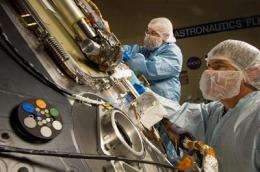
The protection procedures are determined by two factors: the type of mission (flyby, orbiter, lander or rover) and how likely the destination is to harbor life. A mission can fall into one of five categories, with Category V consisting of “return to Earth” missions. Once the mission is categorized, NASA uses a variety of procedures to reduce microbial material on spacecrafts. All procedures take place in clean rooms, designed with special air-flow systems to filter out contaminants.
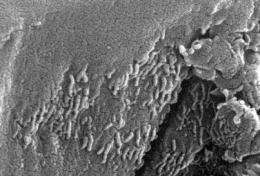
Prior to cleaning, scientists sample the number of spores on the spacecraft. Sterile cotton swabs are used to sample areas on the spacecraft to obtain microbial samples. The collected samples are incubated to cultivate spore colonies, and using complex algorithms, scientists then calculate the total level of contamination.
NASA’s current method for spacecraft sterilization is a process called dry heat microbial reduction. It involves cleaning the spacecraft and then baking it in an oven at 233 degrees Fahrenheit (112 degrees Celsius) for 30 hours. It’s the same process that was used on the Viking Mars landers in 1970s. Conley says the cleaning reduces the initial 300 spores per square meter to 0.03 spores per square meter. Statistically, since 0.03 doesn’t consist of a whole spore, the spacecraft is deemed safe from microbial contamination.
NASA expects future missions to require more stringent cleaning measures and is considering two particular methods for use in the near future.
One method - the Limulus Amebocyte Lysate (LAL) assay - searches for the presence of microbial cell wall materials. A method originally used in the pharmaceutical industry, this has the advantage of being highly sensitive, fast and reactive to both live and dead organisms.
The second method - Adenosine Triphosphate (ATP) assay - detects ATP, which is an essential energy source generated by all living cells. This method, too, detects both live and dead cells so it is a good indication of biological contamination.
Proof of Life
Even with the rigorous cleaning procedures currently in place, millions of microbes still get launched from Earth. How can scientists be certain that any life found on another planetary body is not a result of contamination?
“When searching for life, we don't want to have a false positive,” explains Esposito. “That would confuse identification of life on another planet or location.”
For identification of potential alien life, NASA has an inventory of samples collected on previous missions (like Viking) to which new life forms can be compared. Conley says current DNA-based testing methods allow scientists to rule out the possibility that extraterrestrial life forms did not originate on Earth. This means that scientists expect alien life to have DNA different from any known organism on Earth (if they have DNA at all).
As astrobiologists continue the search for life in other worlds, safeguarding the environment here on Earth and elsewhere in the universe remains a key priority.
“We're concerned about life everywhere, and we don't want to pollute or invade other locations with Earth life,” says Esposito. “In the same way, we don't want to infect life on Earth with species from other planets.”
Source: Astrobio.net, by Anuradha K. Herath


