Replacing Platinum in Fuel Cell Technology
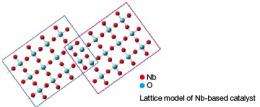
October 20, 2009 by Miranda Marquit New fuel cell

Enlarge

Image source: Nikkei Electronics Asia

(PhysOrg.com) -- One of the biggest hindrances to the development of fuel cell technology is its cost. In order to work properly, polymer electrolyte fuel cells require a catalyst. So far, though, the most efficient catalyst for use with these fuel cells is platinum. And, as you probably know, platinum is one of the most expensive materials out there. The high cost of platinum is stunting the further development of fuel cells for use on a broader basis. Help may be coming, however, in the form of niobium and titanium.

A Japanese company, Showa Denko, has developed a catalyst meant for polymer electrolyte fuel cells that use and as the main components, with the addition of carbon and . A catalyst made from the new blend could replace platinum catalysts in the fuel cells. These new catalysts also have the advantage of not oxidizing, as platinum does in the air electrode. And, of course, both niobium and titanium are less expensive than platinum.

Everything isn't set, however. Catalysts based on niobium or titanium have not shown the same level of performance in fuel cells as platinum. Nikkei Electronics Asia reports on the performance issues faced by Showa Denko:

"Platinum performance is still four or five times higher," says a source at Showa Denko. The firm joined the NEDO project in July 2008, and says there is still considerable room for improvement. For example, the catalyst particles are large at about 40nm, but they expect performance to rise with smaller particle sizes.

Even with some of the kinks to be worked out, though, this is still a step forward for technology. Being able to reduce the cost of fuel cells would enable the technology to be more widely adopted going forward.

© 2009 PhysOrg.com


print this article email this article download pdf blog this article bookmark this article     Stumble it Digg this share on Facebook retweet share on Reddit add to delicious
Rate this story - 2.8 /5 (5 votes)

Rank Filter

Move the slider to adjust rank threshold, so that you can hide some of the comments.


Display comments: newest first

  • enantiomer2000 - Oct 20, 2009
    • Rank: not rated yet
    And my prediction is that almost nobody will be using fuel cells in 20 years. It just doesn't make sense.
  • Velanarris - Oct 20, 2009
    • Rank: not rated yet
    And my prediction is that almost nobody will be using fuel cells in 20 years. It just doesn't make sense.

    Are you serious or sarcastic?
  • vika_Tae - Oct 20, 2009
    • Rank: not rated yet
    Are you serious or sarcastic?


    I read that as 'spastic' when my eyes skimmed over it. Ahem.

    As for fuel cells, if the issues can be ironed out, I can easily see them being used to power all manner of small devices.
  • holoman - Oct 21, 2009
    • Rank: not rated yet
    Hydrogen as an environmentally friendly energy
    source is picking up speed.
  • enantiomer2000 - Nov 03, 2009
    • Rank: not rated yet
    For the most part i was being serious. You lose more than half of the energy when you split water to attain hydrogen. That is wasted energy which is already scarce enough thank you. So yes, you will probably never see fuel cells driving cars as it doesn't make sense.

    There are other technologies which show much more promise.
  • Velanarris - Nov 07, 2009
    • Rank: not rated yet
    Hydrogen isn't energy generation. It's energy storage, and the only loss would come about from not having a proper ratio of oxygen to hydrogen on recombination, or having inefficient energy capture.

    Name one more efficient energy storage mechanism.

October 20, 2009 all stories

Comments: 6

2.8 /5 (5 votes)
  • Stumble this up

  • Digg this

  • share this

  • hide
  • Related Stories

  • Less expensive fuel cell may be possible
    created Oct 03, 2006 | popularity not rated yet | comments 0
  • Carbon Nanotubes Make Fuel Cells Cheaper
    created Feb 09, 2009 | popularity not rated yet | comments 0
  • Nano World: Methanol fuel cell thru nano
    created Feb 21, 2006 | popularity not rated yet | comments 0
  • Argonne to study fuel cell catalysts
    created May 26, 2005 | popularity not rated yet | comments 0
  • Fuel cells gearing up to power auto industry
    created Oct 30, 2007 | popularity not rated yet | comments 0


  • hide
  • Relevant PhysicsForums posts

  • Goddard
    created 1hour ago
  • Rate Laws
    created 3 hours ago
  • why oxygen, cannot act as a pi-donor while NO can?
    created 20 hours ago
  • Aspirin
    created Nov 19, 2009
  • More from Physics Forums - Chemistry

Other News

Accidental discovery produces durable new blue pigment for multiple applications

Accidental discovery produces durable new blue pigment for multiple applications

Chemistry / Biochemistry

created Nov 16, 2009 | popularity 4.5 / 5 (30) | comments 6

An accidental discovery in a laboratory at Oregon State University has apparently solved a quest that over thousands of years has absorbed the energies of ancient Egyptians, the Han dynasty in China, Mayan ...


One word: bioplastics

One word: bioplastics

Chemistry / Materials Science

created Nov 17, 2009 | popularity 4.5 / 5 (11) | comments 4

(PhysOrg.com) -- Every year, more than 250 billion pounds of plastic are produced worldwide. Much of it ends up in the world's oceans, a fact that troubles MIT biology professor Anthony Sinskey.


New on-off 'switch' triggers and reverses paralysis in animals with a beam of light

New on-off 'switch' triggers and reverses paralysis in animals with a beam of light (w/ Video)

Chemistry / Biochemistry

created Nov 18, 2009 | popularity 5 / 5 (4) | comments 3

In an advance with overtones of Star Trek phasers and other sci-fi ray guns, scientists in Canada are reporting development of an internal on-off "switch" that paralyzes animals when exposed to a beam of ultraviolet ...


Ethanol

Microbes to Take Over Ethanol Production?

Chemistry / Biochemistry

created Nov 20, 2009 | popularity 3.8 / 5 (5) | comments 0

(PhysOrg.com) -- Not too long ago, it seemed that ethanol production was the wave of the future. The use of trash, wood chips or different types of plants -- usually grass or corn -- to make ethanol was considered ...


New research provides blueprint for molecular basis of global warming

New research provides blueprint for molecular basis of global warming

Chemistry / Materials Science

created Nov 17, 2009 | popularity 4 / 5 (4) | comments 3

A new study indicates that major chemicals most often cited as leading causes of climate change, such as carbon dioxide and methane, are outclassed in their warming potential by compounds receiving less attention.