October 22, 2009 weblog
Sony Unveils 360-Degree 3D Display (w/ Video)
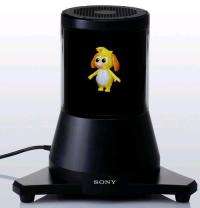
(PhysOrg.com) -- Today at the DC Expo in Tokyo, Sony has introduced a new 3D display that can be viewed from any direction. Unlike many 3D displays, the new display does not require glasses to view the 3D images, and several people can view the display simultaneously from multiple angles.
The cylindrical display case is 27 cm tall with a base of 13 cm in diameter, and features a 96 by 128-pixel resolution that looks better than might be expected. The screen displays 3D objects including a cartoon character, car, globe, and people. Sony created these objects either in 3D on a computer or by taking photographs of them from various angles. The result is that the objects appear to have depth, and can be viewed from any angle on the horizontal plane by walking around the display screen.
Sony is not explaining how the technology works, other than mentioning that it uses an LED light source. The company said that it took about three years to develop the two prototypes that are on display at the DC Expo, and it hopes to make versions with larger screens in the next year or so.
The 360-degree 3D display could have a variety of applications in education and entertainment, and Sony vice chairman Ryoji Chubachi said the company will listen to application ideas from visitors. There are currently no plans to market the device until applications are developed.
via: Network World
© 2009 PhysOrg.com


