Biosensor to help enlist cancer resistance fighters?
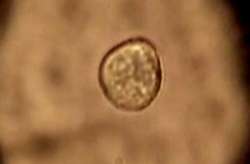
(PhysOrg.com) -- A powerful new biosensor developed by European researchers will help identify cells in the immune system that actively suppress tumour growth, then put them to use. Enlisting the patient?s own immune system would be like sending reinforcements for resistance fighters.
Cancer is a major killer and an intractable problem confronting medical science, but now European researchers have developed a biosensor that will help doctors to use the patient’s own immune system to combat the disease.
And during their work the Cochise team discovered that the breakthrough technology could be used in a host of other applications, from biotech, to green tech to industrial processes. The biosensor for cancer therapy was the primary focus of the group, however.
Currently, many cancer therapies in the domain of immuno-oncology use immune system boosting drugs like interferon, interleukin 2, or various types of colony stimulating factors. Unfortunately, they can cause a reaction.
A better approach would be to select the “active cells”, which are successfully fighting the cancer cells, amplify them in a test tube, and then re-inject them into the body.
Here doctors would merely be assisting the patient’s own immune system to combat the tumour, with no risk of rejection or side effects. It is like sending reinforcements to help successful resistance fighters behind enemy lines.
But there is a problem. With current technology, there is no easy, cost effective and reliable way to identify the active cells.
Enter the biosensor
That has changed thanks to the work of the Cochise project, which stands for ‘cell-on-chip biosensor’. The Cochise team developed a biosensor capable of identifying interactions between single cells. A biosensor is simply an instrument designed to detect signals from biological activity.
The Cochise biosensor uses a combination of microfluidics and electronics to first isolate immune system cells and cancer cells in a microwell, and then identify the active cells. Key to this analysis are the electronics, firstly the dielectrophoresis which forces the cells together so doctors can observe interactions between them. Active cells are then separated from the rest.
“The procedure we identified for measuring cell activity is at the core of the technology,” says Massimo Bocchi, CTO at MindSeeds Laboratories, a researcher with the project.
“Basically, we demonstrated, using reference cell lines, that the expected interactions between cells of the immune system and tumour cells can be reproduced in microstructures, such as the microwell, at the single-cell level.
“When an event of interest is measured... [say] a cell of the immune system kills a target tumour cell, the cell of interest can be retrieved from the platform, transferred to a standard plate and cultured. This complete workflow allows doctors to study the behaviour of cells because we are able to isolate them on the basis of their functional activity. This is a key innovative concept in this field.”
Mission accomplished
The group achieved their aim, and achieved a number of research successes along the way, notably the development of a new fabrication process and finding appropriate biocompatible materials.
“This was carried out during the project, demonstrating the possibility to fabricate disposable devices with a production technology which can be industrialised, thus supporting large-volume production,” Bocchi stresses.
It is an impressive result, because the biosensor’s usefulness goes way beyond identifying active cells. The technology could introduce new methods for producing targeted cancer vaccines, introducing a sort of “tuning of the patient’s immune system”, suggests Bocchi.
Another problem in therapeutic protocols today is the difficulty in determining the effect of a therapy on the tumour. Often feedback comes too late, when additional therapeutic steps cannot be undertaken. This technology has the potential to improve therapeutic protocols, thanks to earlier monitoring of the patients’ responses.
The prototype works, delivering live, active cells from the biosensor for amplification, but there is more work required before it is ready for commercialisation, and the partners are looking to develop a larger European integrated project to achieve that.
Scaling up
The biosensor works well, but testing one cell at a time for “useful interactions” is too slow - because the Cochise project expects that in any sample there will be very few cells that interact helpfully and medical labs need to be able to test thousands of cells at a time.
“This level of parallelism is a key issue, we need to explore up to 10,000 interactions before finding an interesting one,” Bocchi reveals. Further development is necessary to reach that sort of processing capacity in parallel. For this reason Bocchi believes it could be three to five years before this biosensor reaches medical labs.
But the project is already generating a lot of interest from industry and peers. “Several research institutes and hospitals [showed interest] in this platform for studying the mechanisms of the immune system with a single-cell resolution, and to see the potential applicability to gene-therapy applications.
“Many pharmaceutical companies, instead, see a potential application in the field of industrial biotechnology and have [shown] interest in using this technology to improve some critical steps commonly found, for instance, in the production of monoclonal antibodies,” notes Bocchi.
A start-up company, Mindseeds Laboratories, was founded with the aim of commercialising the work, but that will take time and further research. Cochise has shown, however, that biosensors have an important role to play in the development of novel therapeutic paradigms, where the patients do the healing.
More information: cochise.arces.unibo.it/
Provided by ICT Results


