Probing Question: What is citizen journalism?
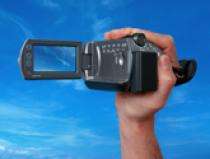
The last time you watched CNN or read The New York Times online, you might have been surprised to see reporting by ordinary people. From photos uploaded instantly of the earthquake in Indonesia to video of the tsunami in American Samoa to live-blogging from a student protest at the California State University at Fullerton, all of these reports represent a new kind of news reporting. What is citizen journalism -- also called "participatory" or "street" journalism -- and why are increasing numbers of people playing reporter?
"Citizen-journalists are regular people who contribute to news reporting, not for monetary reward, but because they have a particular interest in a topic," said Curt Chandler, senior lecturer in communications at Penn State. Chandler teaches future journalists how to adapt to a changing media environment, where the audience doesn't just read the news, but helps make it.
"Sometimes they write stories for blogs, tweet on Twitter, upload photos to Flickr and post video on YouTube. Or they can simply contact a reporter with a tip or a correction," Chandler said. "Citizen journalists care about news and want to help make it better, and the explosion of ever-smaller and affordable mobile devices for recording and communicating gives everyone the power to capture and relay news as it happens."
Many established news organizations have harnessed this eagerness to participate, said Chandler. CNN recently established iReport, a Web site devoted entirely to user-reported stories, along with an iPhone application allowing readers to become reporters from virtually anywhere. Following the 2007 London subway bombings, the BBC received thousands of text messages, photographs, videos and e-mails from citizens -- news that reporters couldn’t have gotten on their own. Richard Sambrook, director of the BBC’s Global News Division, said "We know now that when major events occur, the public can offer us as much new information as we are able to broadcast to them. From now on, news coverage is a partnership."
Chandler agrees.
"Citizen journalism is useful because there are more users than there are traditional journalists," he said. "More eyes and ears means a better chance of getting information, as long as there's an effective way for the information to be organized and displayed. The best (and earliest) photos of U.S. Airways flight 1549 landing on the Hudson River this January were taken on an iPhone and distributed via Twitter. Similarly, Twitter allowed Iranian protestors to evade government censorship by posting their photos and videos directly to the public. The venues for citizen journalism vary, from established news sites like CNN and The New York Times to the aggregator blogs like The Huffington Post (which brings original content together with posts from around the Web) to social networks such as Facebook and Twitter."
Even with the rapid growth of inexpensive, ubiquitous means of distributing information, Chandler believes journalists still have a role to play.
"The rapid flow of information is a fact," he said. "Journalists need to adapt to it and help their audiences understand it. This summer’s swine flu scare, for example, set social networking sites atwitter as thousands of people posted messages about it. However, many health officials note that those messages contained little useful information. Many simply repeated rumors or already-refuted misinformation. While Twitter and Facebook gave people a worldwide 'water-cooler' to talk about swine flu, it sometimes made it all the more complicated for people to separate important facts from mere speculation."
In Chandler’s view, the world still needs professional journalistic analysis to turn that wealth of information into useful knowledge by providing context and expertise.
"News is very immediate, sometimes flowing to the viewer at a volume that can be overwhelming or incomprehensible. This immediacy can be used to thwart censorship, but it can also obscure the importance of unfolding events," he said. "The future of journalism -- whether practiced by professionals or simply well-intentioned citizens -- belongs to those who cut through the noise to reveal what's really important in our world."
Provided by Pennsylvania State University (news : web)


