Like mother, like daughter, at least around the eyes
October 28, 2009 by Lin Edwards eye

(PhysOrg.com) -- New research suggests the old saying commonly told to husbands-to-be is true, that if you want to know what your wife will look like, look at her mother.

A group of plastic surgeons from the Loma Linda University Medical Center in California scanned the faces of mothers and their daughters. They found that the daughters' faces were beginning to sag, wrinkle, thin, and lose elasticity around the eyes in exactly the same patterns as their mothers' faces, with the effect becoming more noticeable after daughters reached their mid 30s.

One of the surgeons, Dr Matthew Camp, said the study was the first to prove scientifically that like their mothers. Until now, Camp said, studies of facial aging have mostly been subjective and observational.

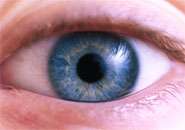
The team studied ten similar looking mother/daughter pairs ranging in age from 15 to 90, using facial imaging and 3-D computer modeling. The most pronounced similarities of sagging and loss of volume occurred around the tear ducts and the lower eyelids, which are areas where loss of elasticity and slackening of muscles is common as people age.

As a face ages and the lower eyelid muscles slacken, the fat beneath the tends to bulge out, causing "bags" under the eyes. A loss of elasticity results in loose skin accumulating as folds in the upper eyelids and creases under the eyes. According to a leading British facelift surgeon, Norman Waterhouse, past president of the British Association of Aesthetic Plastic Surgeons, aging in women's faces is more noticeable because women's faces change from oval to square as the skin sags, whereas men's tend to be square even when they are younger. A facelift is designed to offset the effect.

The American researchers said their results may be a useful aid for cosmetic surgery on the region, which is one of the commonest cosmetic surgery procedures. The American Society of Plastic Surgeons (ASPA) figures suggest surgery on the eyelids was the fourth most common plastic surgery operation in 2008.

One of the authors of the study, Dr Subhas Gupta, said that knowing exactly how a woman's lower eyelids will change with age can help surgeons plan a surgical "correction" that will prevent the changes seen in her mother.

The results of the study were presented last weekend to the annual American Society of Plastic Surgeons (ASPS) conference in Seattle, Washington in the US.

© 2009 PhysOrg.com


print this article email this article download pdf blog this article bookmark this article     Stumble it Digg this share on Facebook retweet share on Reddit add to delicious
Rate this story - 3.3 /5 (4 votes)


October 28, 2009 all stories

Comments: 0

3.3 /5 (4 votes)
  • Stumble this up

  • Digg this

  • share this

  • hide
  • Related Stories


  • hide
  • Relevant PhysicsForums posts

  • nesfatin
    created 7 hours ago
  • Obsessive Compulsive Disorder
    created Nov 20, 2009
  • West's zone 2 starling resistor respiratory physiology
    created Nov 18, 2009
  • 50-0-50 rule
    created Nov 18, 2009
  • More from Physics Forums - Medical Sciences

Other News

New cancer target for non-Hodgkin's lymphoma

Medicine & Health / Cancer

created 7 hours ago | popularity 5 / 5 (1) | comments 0

Physician-scientists from Weill Cornell Medical College have discovered a molecular mechanism that may prove to be a powerful target for the treatment of non-Hodgkin's lymphoma, a type of cancer that affects lymphocytes, ...


Surface bacteria maintain skin's healthy balance

Medicine & Health / Research

created 8 hours ago | popularity 5 / 5 (3) | comments 0

On the skin's surface, bacteria are abundant, diverse and constant, but inflammation is undesirable. Research at the University of California, San Diego School of Medicine now shows that the normal bacteria living on the ...


Gene mismatch influences success of bone marrow transplants

Medicine & Health / Genetics

created 7 hours ago | popularity not rated yet | comments 0

A commonly inherited gene deletion can increase the likelihood of immune complications following bone marrow transplantation, an international team of researchers reports in the November 22 advance online issue of Nature Ge ...


New understanding about mechanism for cell death after stroke leads to possible therapy

Medicine & Health / Research

created 8 hours ago | popularity not rated yet | comments 0

Scientists at the Brain Research Centre, a partnership of the University of British Columbia Faculty of Medicine and Vancouver Coastal Health Research Institute, have uncovered new information about the mechanism by which ...


Cancer metabolism discovery uncovers new role of IDH1 gene mutation in brain cancer

Medicine & Health / Cancer

created 7 hours ago | popularity not rated yet | comments 0

Agios Pharmaceuticals today announced that its scientists have established, for the first time, that the mutated IDH1 gene has a novel enzyme activity consistent with a cancer-causing gene, or oncogene. This breakthrough ...