Researchers use drug-radiation combo to eradicate lung cancer
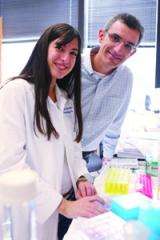
Researchers at UT Southwestern Medical Center have eliminated non-small cell lung (NSCL) cancer in mice by using an investigative drug called BEZ235 in combination with low-dose radiation.
In a study appearing in the October issue of Cancer Research, UT Southwestern researchers found that if they administered BEZ235 before they damaged the DNA of tumor cells with otherwise nontoxic radiation, the drug blocked the pro-survival actions of a protein called PI3K, which normally springs into action to keep tumor cells alive while they repair DNA damage.
Researchers tested this novel therapeutic strategy in mice transplanted with NSCL cancers obtained from patients.
They found that tumors in the mice treated with BEZ235 alone were significantly smaller than those in mice not given the drug. Although the tumors stopped growing, they did not die.
By contrast, tumors were completely eradicated in mice treated with a combination of BEZ235 and radiation.
"These early results suggest that the drug-radiation combination might be an effective therapy in lung cancer patients," said Dr. Pier Paolo Scaglioni, assistant professor of internal medicine at UT Southwestern and senior author of the study.
NSCL cancer is a leading cause of cancer-related deaths worldwide. The cancer cells often harbor mutations in a gene called K-RAS. Patients with such K-RAS mutations typically are more resistant to treatment with radiation and have a poor prognosis.
K-RAS mutations lead to the activation of networks, or pathways, of several so-called signaling proteins, which in turn play key roles in the regulation of tumor growth. One of these proteins, called PI3K, is activated to keep cells alive that have sustained DNA damage.
Several components of the signaling pathways, including PI3K, have been investigated as possible anti-cancer drug targets. The investigational drug BEZ235 is currently being tested in clinical trials against PI3K and another signaling protein called mTOR.
"To date, no effective targeted therapy exists for NSCL cancer tumors that harbor K-RAS mutations," Dr. Scaglioni said.
Dr. Scaglioni and his team first tested the effectiveness of BEZ235 alone and found that it inhibits the proliferation of both lung cancer cells cultured in vitro and the growth of lung-cancer tumors in mice.
"The results were striking, but we wanted to find a strategy to precipitate cell death of these tumors," said Dr. Georgia Konstantinidou, a postdoctoral researcher at UT Southwestern and the lead author of the study. "We did it with radiation, which is a standard form of treatment for lung cancer."
Dr. Scaglioni's team exposed isolated cancer cells to BEZ235 followed by low doses of radiation, which induced small breaks in the DNA of the cells but otherwise would have no effect on cell survival. When this type of DNA damage occurs, cancer cells rely on the PI3K signaling pathway to survive while they repair their DNA.
"We stressed the cells in such a way that they needed this signaling pathway to survive," Dr. Scaglioni said. "Without the PI3K response, they will die."
When the researchers then treated the cells with BEZ235, which blocks PI3K, the stressed NSCL cancer cells readily underwent programmed cell death.
Dr. Scaglioni said that the next step is to use BEZ235 or similar drugs in clinical trials on NSCL cancer patients as well as other cancers, including pancreatic, colon and thyroid cancers, where the PI3K signaling pathway also plays a role.
Source: UT Southwestern Medical Center (news : web)


