Lessons from oil industry may help address groundwater crisis
Although declining streamflows and half-full reservoirs have gotten most of the attention in water conflicts around the United States, some of the worst battles of the next century may be over groundwater, experts say - a critical resource often taken for granted until it begins to run out.
Aquifers are being depleted much faster than they are being replenished in many places, wells are drying up, massive lawsuits are already erupting and the problems have barely begun. Aquifers that took thousands of years to fill are being drained in decades, placing both agricultural and urban uses in peril. Groundwater that supplies drinking water for half the world's population is now in jeopardy.
A new analysis by researchers at Oregon State University outlines the scope of this problem, but also points out that some tools may be available to help address it, in part by borrowing heavily from lessons learned the hard way by the oil industry.
"It's been said that groundwater is the oil of this century," said Todd Jarvis, associate director of the Institute for Water and Watersheds at OSU. "Part of the issue is it's running out, meaning we're now facing 'peak water' just the way the U.S. encountered 'peak oil' production in the 1970s. But there are also some techniques developed by the oil industry to help manage this crisis, and we could learn a lot from them."
Jarvis just presented an outline of some of these concepts, called "unitization," at a professional conference in Kyoto, Japan, and will also explore them in upcoming conference in Stevenson, Wash., and Xi'an, China. Other aspects of the issue have been analyzed in a new documentary film on the special problems facing the Umatilla Basin of eastern Oregon, a classic case of declining groundwater problems.
The problems are anything but simple, Jarvis said, and are just now starting to get the attention needed.
"In the northern half of Oregon from Pendleton to the Willamette Valley, an aquifer that took 20,000 years to fill is going down fast," Jarvis said. "Some places near Hermiston have seen water levels drop as much as 500 feet in the past 50-60 years, one of the largest and fastest declines in the world.
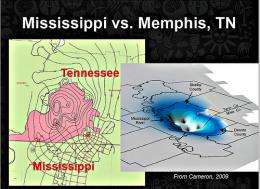
"I know of a well in Utah that lost its original capacity after a couple years," he said. "In Idaho people drawing groundwater are being ordered to work with other holders of stream water rights as the streams begin to dwindle. Mississippi has filed a $1-billion lawsuit against the City of Memphis because of declining groundwater. You're seeing land subsiding from Houston to the Imperial Valley of California. This issue is real and getting worse."
In the process, Jarvis said, underground aquifers can be irrevocably damaged - not unlike what happened to oil reservoirs when that industry pumped them too rapidly. Tiny fractures in rock that can store water sometimes collapse when it's rapidly withdrawn, and then even if the aquifer had water to recharge it, there's no place for it to go.
"The unitization concept the oil industry developed is built around people unifying their rights and their goals, and working cooperatively to make a resource last as long as possible and not damaging it," Jarvis said. "That's similar to what we could do with groundwater, although it takes foresight and cooperation."
Water laws, Jarvis said, are often part of the problem instead of the solution. A "rule of capture" that dates to Roman times often gives people the right to pump and use anything beneath their land, whether it's oil or water. That's somewhat addressed by the "first in time, first in right" concept that forms the basis of most water law in the West, but proving that someone's well many miles away interferes with your aquifer or stream flow is often difficult or impossible. And there are 14 million wells just in the United States, tapping aquifers that routinely cross state and even national boundaries.
Regardless of what else takes place, Jarvis said, groundwater users must embrace one concept the oil industry learned years ago - the "race to the pump" serves no one's best interest, whether the concern is depleted resources, rising costs of pumping or damaged aquifers.
One possible way out of the conundrum, experts say, is maximizing the economic value of the water and using it for its highest value purpose. But even that will take new perspectives and levels of cooperation that have not often been evident in these disputes. Government mandates may be necessary if some of the "unitization" concepts are to be implemented. Existing boundaries may need to be blurred, and ways to share the value of the remaining water identified.
"Like we did with peak oil, everyone knows were running out, and yet we're just now getting more commitment to alternative energy sources," Jarvis said. "Soon we'll be facing peak water, the only thing to really argue over is the date when that happens. So we will need new solutions, one way or the other."
Source: Oregon State University (news : web)


