For the tiger, a year closer to extinction
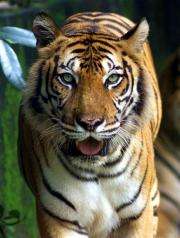
Next year, according to the Chinese calendar, is the Year of the Tiger but conservationists say the omens are inauspicious for an animal on the brink of extinction.
If anything, the tiger's year in the Chinese zodiac may hasten its demise, conservationists fear, with festive demand for its skin and body parts encouraging poachers to hunt the few animals that still remain in the wild.
"The Year of the Tiger will put more pressure on wild tigers," Michael Baltzer, head of the WWF Tiger Initiative, told AFP during a tiger conservation conference held in Kathmandu which wound up on Friday.
"The use of tiger parts in traditional Chinese medicine has fallen, but the trend of giving tiger parts as gifts and souvenirs is growing," Baltzer said, adding that he expected this demand to increase next year.
"There is a certain consumer group who want to use tiger parts to show how wealthy they are, as a status symbol, and this group of people is increasing."
Experts from the lobby group Save the Tiger Fund estimate that only 3,200 tigers survive in the wild, down from 100,000 a century ago, mainly due to poaching and loss of habitat in south and southeast Asia.
Although tiger hunting is illegal worldwide and the international trade in tiger parts is banned under a treaty binding 167 countries -- including China -- experts say the illicit trade is still flourishing.
Despite officially banning the trade in tiger body parts in 1993, China has 6,000 tigers on 14 farms across the country, said Li Zhang, programme director of Conservation International in Beijing.
These farms are able to produce around 1,000 cubs annually.
China has been pushing for an agreement to resume trade in tiger products and delegates at Kathmandu conference say its officials raised the issue at the conference.
Chinese officials at the conference, which was organised by the Global Tiger Initiative, an alliance of governments, NGOs and the private sector, declined to comment to the media.
Tiger skins, which fetch high prices in China and elsewhere in Asia, are used for furniture and decoration, while body parts are used in traditional medicine and aphrodisiacs. In China, the animal is also a symbol of power, energy and bravery, as well as good luck.
Huang Lixin, president of the American College of Traditional Chinese Medicine in San Francisco, told AFP in Kathmandu that the threat to tigers posed by the Year of the Tiger, which will start on February 14, was real.
"Owning tiger skins in China is becoming a status symbol, a luxury item," she said. "Chinese consumers will want tiger bones or tiger wine and liquor, or tiger skins, to celebrate the year."
At last week's conference, which drew more than 200 delegates from 20 countries, delegates said Chinese officials had argued that tiger farming could reduce pressure on the wild population, which in China is a mere 50 animals.
The idea is that body parts from captive tigers would satisfy domestic demand and reduce the market for poachers who hunt wild tigers.
But conservationists opposed to this say it would send the wrong signal by suggesting that the use of tiger parts is acceptable.
"The tiger farms in China pose a grave danger to the last remaining wild tigers. Every day there are more tigers on the farms and fewer in the wild," Judy Mills, coordinator of the International Tiger Coalition, told AFP.
"Their mere existence encourages demand for tiger parts. It is causing poachers and traders to stockpile skins and bones of wild tigers," she said.
"If China ever decides to lift the ban, it will stimulate market demand and the world will lose all the tigers in the wild," said Mahendra Shrestha, programme director of Save the Tiger Fund.
"If you commercialise tigers, it will create bigger demand. That's the end of wild tigers because we simply don't have the resources to protect them," said John Seidensticker, a scientist from the Smithsonian Institution's National Zoological Park.
"China holds the key to tiger conservation. If China cracks down on illegal trade, they will save wild tigers and we know they have the capacity to do that."
(c) 2009 AFP


