AIDA Robot Aims To Change The Way We Interact With Our Car (w/ Video)
November 1, 2009
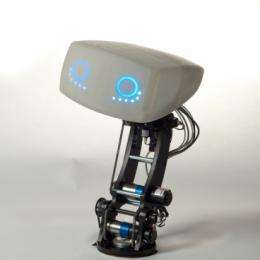
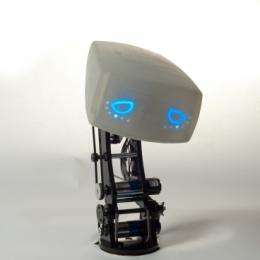
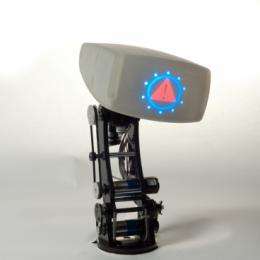
Affective Intelligent Driving Agent (AIDA) Aims To Change The Way We Interact With Our Car

Enlarge

AIDA. Photo - Courtesy of the SENSEable City Lab

(PhysOrg.com) -- MIT researchers and designers are developing the Affective Intelligent Driving Agent (AIDA) - a new in-car personal robot that aims to change the way we interact with our car. The project is a collaboration between the Personal Robots Group at the MIT Media Lab, MIT’s SENSEable City Lab and the Volkswagen Group of America’s Electronics Research Lab.

“With the ubiquity of sensors and mobile computers, information about our surroundings is ever abundant. AIDA embodies a new effort to make sense of these great amounts of data, harnessing our personal electronic devices as tools for behavioral support,” comments professor Carlo Ratti, director of the SENSEable City Lab. “In developing AIDA we asked ourselves how we could design a system that would offer the same kind of guidance as an informed and friendly companion.”
Affective Intelligent Driving Agent (AIDA) Aims To Change The Way We Interact With Our Car
Enlarge

Credits - Courtesy of the SENSEable City Lab

AIDA communicates with the driver through a small embedded in the dashboard. "AIDA builds on our long experience in building sociable robots,” explains professor Cynthia Breazeal, director of the Personal Robots Group at the MIT Media Lab. “We are developing AIDA to read the driver's mood from facial expression and other cues and respond in a socially appropriate and informative way."

This video is not supported by your browser at this time.

AIDA communicates in a very immediate way: with the seamlessness of a smile or the blink of an eye. Over time, the project envisions that a kind of symbiotic relationship develops between the driver and AIDA, whereby both parties learn from each other and establish an affective bond.

To identify the set of goals the driver would like to achieve, AIDA analyses the driver’s mobility patterns, keeping track of common routes and destinations. AIDA draws on an understanding of the city beyond what can be seen through the windshield, incorporating real-time event information and knowledge of environmental conditions, as well as commercial activity, tourist attractions, and residential areas.
Affective Intelligent Driving Agent (AIDA) Aims To Change The Way We Interact With Our Car
Enlarge

Credits - Courtesy of the SENSEable City Lab

“When it merges knowledge about the city with an understanding of the driver’s priorities and needs, AIDA can make important inferences,” explains Assaf Biderman, associate director of the SENSEable City Lab. “Within a week AIDA will have figured out your home and work location. Soon afterwards the system will be able to direct you to your preferred grocery store, suggesting a route that avoids a street fair-induced traffic jam. On the way AIDA might recommend a stop to fill up your tank, upon noticing that you are getting low on gas," says Biderman. “AIDA can also give you feedback on your driving, helping you achieve more energy efficiency and safer behavior.”

AIDA was developed in partnership with Audi and the Volkswagen Group of America's Electronics Research Lab. The AIDA team is directed by Professor Cynthia Breazeal, Carlo Ratti, and Assaf Biderman.

Provided by Massachusetts Institute of Technology (news : web)

3.9 /5 (17 votes)  

Filter


Move the slider to adjust rank threshold, so that you can hide some of the comments.


Display comments: newest first

Crossrip
Nov 01, 2009

Rank: 3.7 / 5 (3)
This would be great as long as it had a mute button for when I am driving 30mph over the speed limit. But seriously, the other day I asked my co-pilot to read the map I had outlined and they asked me where was my GPS? My response was "what do you mean you cant read a map". Do all these aids make us dumer? I mean dumber?
Going
Nov 01, 2009

Rank: 1 / 5 (2)
Ever so gentle the robots will take over all the driving responsibilities simply because they will be better at them than a human. Driving will be a recreational activity which takes place on special tracks where the humans can do little harm.
plasticpower
Nov 01, 2009

Rank: not rated yet
This is a very cool idea. I'm a member of mp3car.com website (for those that don't know, it's a website about in-car PC's) and I've had a PC in my car for quite some time. I've been pondering the possibility of making it voice-interactive, but this is way way cooler.
donl1
Nov 01, 2009

Rank: 1 / 5 (1)
I already have one of those. She's called a 'Wife'!!
BTW: Someone should feel really, really bad, hurting Aida's feelings there in the second photo :(
Arikin
Nov 01, 2009

Rank: not rated yet
The navigational help is a great idea! The facial expressions aren't really needed though.

I would want a mute button too. Sometimes, I change my mind mid-way and go off on another errand. And I don't want a piece of plastic frowning at me for being human.
ScottyB
Nov 02, 2009

Rank: not rated yet
agreed crossrip. too many aids will help in one way, making people dumb.

Map reading is an essential skill, what will happen when your GPS runs flat becuse you forgot the incar adapter and you get lost. Look at your A-Z and go... UMPPPPFHHHH?!!?

This AIDA sound sliek it woudl be a cool gadget to have aslong as peopel dont become to relient on it.
fixer
Nov 07, 2009

Rank: not rated yet
I already know where I live and shop etc, and a gps can tell me anything else I need.
It cannot possibly inform me of realtime traffic events if it doesn't know about them!It can't see the future or around the next bend so if you rely on it to inform you of traffic situations your reaction time will be slower.
Unless it can take active control of the vehicle it is a waste of money.
LuckyBrandon
Nov 07, 2009

Rank: 5 / 5 (1)
I already know where I live and shop etc, and a gps can tell me anything else I need.
It cannot possibly inform me of realtime traffic events if it doesn't know about them!It can't see the future or around the next bend so if you rely on it to inform you of traffic situations your reaction time will be slower.
Unless it can take active control of the vehicle it is a waste of money.


fixer-
it would be linked to the net and pull real time traffic information (as real time as it can be anyways), as well as likely containing GPS capabilities itself, and could quite easily access traffic cams as well (which would be in real time)...it will know of an issue long before you get to it.
the exception of course would be if a wreck occurred right in front of you...then youd hear it say "oh sh*t!!!" :D
antialias
Nov 09, 2009

Rank: not rated yet
Current nav computers do all that. They give you alternate routes and redirect you around traffic jams automatically.

Likely you know where your grocery store is without help. After 'a month or two' (as in the video) you also know all alternate routes to frequently visited locations. Anything else you store in your nav computer.

What I DONT need is a computer looking at me. That's a pointless distraction and certainly gives me no useful information in a hectic traffic situation. I don't need a Tamagochi sitting on my dasboard.

And I can check the level of my gas tank myself, thank you very much. My car informs me already if it's dangerously low by blinking a light at me. This has never failed to grab my attention, why go for a more elaborate system?

Emo-robots have their possible uses. Navigating you around town is not one of them.
fixer
Nov 09, 2009

Rank: not rated yet
And thats the way it should be!
We paid for the damn driving licence as well as the car so leave us in charge.
When we are incompetent we will walk.
Rank 3.9 /5 (17 votes)
Related Stories
Relevant PhysicsForums posts

More news stories

Lenovo 3Q profit up by half, warns of disk supply

(AP) -- Lenovo Group Ltd., the world's second biggest personal computer maker, said Thursday that quarterly profit grew by more than half but warned hard drive costs would remain high amid a global shortage.

Technology / Business

created 14 minutes ago | popularity not rated yet | comments 0

Facebook discloses details on bonuses

Facebook's top executives, including CEO Mark Zuckerberg, are eligible for twice-a-year bonuses of up to 45 percent of their base salaries and other earnings, according to a Wednesday regulatory filing.

Technology / Business

created 43 minutes ago | popularity 1 / 5 (1) | comments 0

Windows 8 preview set for February 29

Microsoft on Wednesday revealed plans to unveil a test version of its latest Windows computer operating software later this month.

Technology / Software

created 14 hours ago | popularity 3.8 / 5 (5) | comments 6

Darpa's Legged Squad Support System (LS3) to lighten troops' load

Today’s dismounted warfighter can be saddled with more than 100 pounds of gear, resulting in physical strain, fatigue and degraded performance. Reducing the load on dismounted warfighters has become a ...

Technology / Engineering

created 20 hours ago | popularity 4.9 / 5 (7) | comments 12

Groupon fails to turn profit as revenue grows

Daily deals site Groupon on Wednesday issued its first earnings report as a publicly traded company, saying it failed to turn a profit despite revenue nearly tripling from a year earlier.

Technology / Business

created 12 hours ago | popularity not rated yet | comments 0


Amazing skin gives sharks a push

Shark skin has long been known to improve the fish's swimming performance by reducing drag, but now George Lauder and Johannes Oeffner from Harvard University show that in addition, the skin generates thrust, giving the fish ...

Fruit flies drawn to the sweet smell of youth

Aging takes its toll on sex appeal and now an international team of researchers led by Baylor College of Medicine and the University of Michigan find that in fruit flies, at least, it even diminishes the come-hither ...

Life in Antarctic lake? It's everywhere else

If scientists find microbes in a frigid lake two miles beneath the thick ice of Antarctica, it will illustrate once again that somehow life finds a way to survive in the strangest and harshest places.

New study shows high cost of defensive medicine

Vanderbilt University Medical Center researchers estimate that U.S. orthopaedic surgeons create approximately $2 billion per year in unnecessary health care costs associated with orthopaedic care due to the practice of defensive ...

Continental mosquito with 'vector' potential found breeding in UK after 60 year absence

A species of mosquito has been discovered breeding in the UK that has not been seen in the country since 1945. Populations of the mosquito, found across mainland Europe and known only by its Latin name Culex modestus, were r ...

Presdisposition to common heart disease 'passed on from father to son'

A common heart disease which kills thousands each year may be passed genetically from father to son, according to a study led by the University of Leicester.