Cucumber genome published
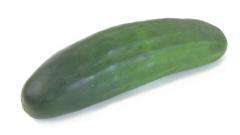
The genome of the cucumber has been sequenced by an international consortium lead by Chinese and U.S. institutions. The annotated genome is published online Nov. 1 by the journal Nature Genetics.
The cucumber genome will give insight into the genetics of the whole cucurbit family, which includes pumpkins and squash, melon and watermelon, and be a platform for research in plant biology, said William Lucas, professor and chair of the Department of Plant Biology at the University of California, Davis. Lucas helped with the development and management of the project.
"This is going to help a large community -- we can now go ten times faster than we could before," Lucas said.
Lucas studies the vascular transport systems, phloem and xylem, that plants use to move nutrients, minerals and signaling molecules throughout the body of the plant. Pumpkins and cucumber are model plants for studying vascular transport, because their vascular system is large and easy to access.
The Lucas research group has shown that plants use both proteins and RNA -- molecules copied or transcribed from DNA -- as signaling molecules that are transported around the plant through the phloem. These signals can affect plant growth, coordinate activity through the plant and help it fight infection. For example, in 2007 they showed that "florigen," the signal that tells the growing tips of plants to make flowers in response to seasonal changes, is a protein transmitted through the phloem.
The new study identified 800 phloem proteins in the cucumber genome. With the help of the genome data, researchers will be able to rapidly identify and characterize all the protein, RNA and other molecules in the phloem sap, Lucas said.
There are already indications that far more is going on in the phloem than anybody, "including me," had previously expected, he said.
The study shows that five of the seven chromosomes in cucumber arose from ten ancestral chromosomes shared with melon, and gene-coding stretches of DNA share about 95 percent similarity to melon. Preliminary studies in the Lucas lab at UC Davis have established comparable similarity between cucumber and pumpkin.
The cucumber genome will also provide insights into traits such as disease and pest-resistance, the "fresh green" odor of the fruit, bitter flavors and sex expression.
The cucumber is the seventh plant to have its genome sequence published, following the well-studied model plant Arabidopsis thaliana, the poplar tree, grapevine, papaya, and the crops rice and sorghum.
The sequencing effort, begun earlier this year, was coordinated by Professor Sanwen Huang of the Chinese Academy of Agricultural Science and included the Genome Center at the Beijing Genome Institute-Shenzhen and UC Davis as well as several laboratories in China and others in the U.S., Denmark, the Netherlands, Australia and South Korea.
Part of the effort relied on new methods developed by the Beijing Genome Institute to assemble short pieces of DNA, about 50 base pairs, into the sequence. The Beijing Genome Institute-Shenzhen can now sequence and assemble genomes much faster, and at lower cost, than previously possible, Lucas said.
"This will be the forerunner for many genomes done at a cost-effective rate," he said.
Source: University of California - Davis


