Jumping on the bandwagon: Introducing the next generation multi-band radio to emergency responders
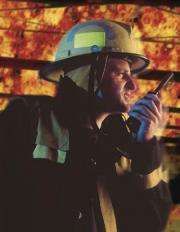
Tom Chirhart knows a lot about radios, but over the last year, he's gotten a real life lesson in supply and demand.
When he put out an "APB" on behalf of the Homeland Security's Science and Technology Directorate (S&T) looking for volunteers to test a new radio that allows first responders to talk to one another across different frequency bands, the line of interested agencies was long and very eager.
The challenge of aligning communications among different first responders - such as fire fighters, police officers, and emergency medical teams - has grown in step with the size and sophistication of response teams and plans. As the construction of public safety systems consumed all the available channels in a single radio band, the government logically opened up other bands. But radio equipment lagged behind, continuing to operate on just one spectrum band. This limitation did indeed create communications hurdles during the most serious emergencies---natural disasters and terrorist attacks.
"The issue of being able to talk to each other has been such a prominent one for so long, responder agencies were jumping at the opportunity to test the new radios we were evaluating," said Chirhart, who manages S&T's three-and-a-half-year-old multi-band radio (MBR) research project.
Starting in November, 14 agencies across the country will have the opportunity to try out this leading edge technology with fellow first responders through 30-day pilot projects.
Ashley Strickland, a captain at the Pittsboro Fire Department in Indiana who tested out an early multi-band radio prototype, observes that interoperability issues have become more important in the last decade as first responders now routinely respond to emergencies outside their official jurisdiction.
"Ten to fifteen years ago you wouldn't see many fire departments cross their borders on a daily basis," said Strickland. "Today, these 'border drops' are more common than not. Whoever is the closest fire department goes on the run. To have that happen you need interoperable equipment that works so you can talk to different agencies."
Boise Fire Department Captain Paul Roberts thinks about multi-band radio innovation much in the way he thinks about his smartphone. Once upon a time (not too long ago, actually), if you wanted to make a few phone calls, listen to your favorite tunes, edit your calendar, download emails, and surf the web, you had to tote around five separate, bulky devices and all but wear a utility belt. The extra weight slowed you down, the extra screens cut down on your efficiency, and the extra cash you spent burned a hole in your pocket. Then, along came a device on which you could do all of these things at one time, boosting productivity and saving money.
Many first responders today are stuck working in a similar prehistoric era, lugging around multiple radios on their belts, just so that they can listen and talk to other first responders at different agencies.
Although amateur radio operators are able to communicate across different bands, unfortunately, their products aren't sturdy or reliable enough to be used by first response professionals.
"The value in a multi-band radio is that you don't have to carry three or four different radios---or buy three or four radios at a cost of $4,000 each," said Roberts, whose fire department is one of the 14 that will participate in the pilot projects.
Right now, the new multi-band radio to be piloted this fall rings in at about the same cost ($4,000-$6,000), size (10 inches tall), and weight (less than two pounds) of top-of-the-line single-band radios. It works on the five frequency bands currently used by state and local first responders, and, if necessary, can work on four other bands used exclusively by the federal government, the Department of Defense, National Guard and the Coast Guard. It even provides weather reports from the National Oceanic and Atmospheric Administration. The battery is expected to last in excess of 10 hours in order to meet the realities of longer shifts.
Did we mention it will still work if it's sprayed with a fire hose?
"If the multi-band radio can be credited with ensuring that just one first responder goes home to his or her family at the end of their shift, then the whole effort has paid for itself," Chirhart added.
S&T hopes that the introduction of these radios will spur manufacturers to develop their own professional quality versions - much like what happened with smartphones - along with accessories like alternative batteries or GPS chips that departments can purchase separately.
A final version of the radios could be ready for the mass market by the middle of 2010. By that time, supply should meet demand, as many companies are now jumping on the virtual bandwagon to develop these new radios. S&T launched the MBR project with the goal of stimulating the marketplace so that multiple vendors would see the value in developing this technology to provide greater options that meet public safety requirements.
If the technology is as successful as S&T thinks that it could be, interoperability challenges, like cell phones that only make phone calls, may become forgotten relics of the past.
Source: US Department of Homeland Security (news : web)


