New findings bring hope for possible Parkinson's disease cure
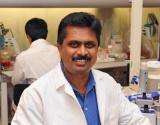
Researchers at Iowa State University have found an essential key to possibly cure Parkinson's disease and are looking for others.
Anumantha Kanthasamy, a distinguished professor of biomedical sciences and W. Eugene and Linda R. Lloyd Endowed Chair in Neurotoxicology at the ISU College of Veterinary Medicine, has been working to understand the complex mechanisms of the disease for more than a decade and thinks he has found hope for the cure.
Parkinson's disease sufferers lack a sufficient amount of a brain chemical called dopamine.
Kanthasamy's research shows that there is specific protein that is naturally present in human brains that -- for no known reason -- kills the brain cells that make dopamine.
The cells that are being killed are the ones that produce the needed dopamine.
"We have millions of cells in our brains," said Kanthasamy, "In Parkinson's, about 10,000 of these brain cells die; no one knows why."
Kanthasamy discovered that a novel protein -- known as protein kinase-C (specifically PKCδ) - is killing the dopamine-producing cells.
Kanthasamy and his research staff discovered a compound that neutralizes the cell-killing kinase-C and allows the dopamine-producing cells to survive and function.
"With a lot of hard work, and little bit of luck, we found something important," he said. "And when you find something like this you say, 'This is great because it can be a target for developing new drugs.'"
Now, Kanthasamy's group is looking for additional compounds that also can serve to neutralize protein kinase-C. By identifying more compounds that perform the function of neutralizing kinase-C, researchers are more likely to locate one that works well and has few side effects.
This discovery is expected to provide new treatment options to stop the progression of the disease or even cure it.
The study is being funded by a Grow Iowa Values Fund grant. The goal of the grant program is to support development of technologies with commercial potential and to support the growth of companies using those technologies. Kanthasamy is working on this research with PK Biosciences Corp., an Iowa-based startup company. Funding was also provided by the National Institutes of Health.
"Once we find the compound, we need to make sure it's safe. If everything goes well, it could take about 10 years, and then we might be able to see something that will truly make a difference in the lives of people with this disorder," said Kanthasamy.
Parkinson's disease strikes around 50,000 people each year, and there are approximately 1 million people with the disease. Parkinson's sufferers include actor Michael J. Fox and former boxing champion Muhammad Ali.
As people grow older, the cells that produce dopamine naturally die, causing dopamine levels to fall gradually over time. When the levels continue to drop below 60 to 70 percent, the person will start to have Parkinson's disease symptoms, according to Kanthasamy.
"Everybody has a little Parkinson's in theory," he said. "But you can't see it until the level of dopamine gets too low."
Eliminating the symptoms of Parkinson's disease doesn't require people to be restored to 100 percent of previous dopamine levels, but only to a fraction of that.
"If you can bring dopamine up to the 40-50 percent level, you'll see a functioning, normal person," he said.
Currently, there is no cure for Parkinson's and available therapies only treat the symptoms.
Major contributing factors for getting Parkinson's disease include prolonged exposure to metals or pesticides and other environmental chemicals, according to Kanthasamy.
Symptoms of Parkinson's disease include trembling in hands, arms, legs, jaw, and face; rigidity or stiffness of the limbs and trunk; slowness of movement; and impaired balance and coordination. As these symptoms become more pronounced, patients may have difficulty walking, talking, or completing other simple tasks. Because the disease typically affects people over the age of 50, the National Institutes of Health anticipates the incidence of Parkinson's will increase as the nation's population ages.
Source: Iowa State University


