Scientists are first to 'unlock' the mystery of creating cultured pearls from the queen conch
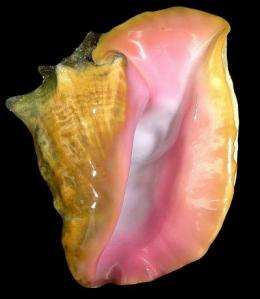
For more than 25 years, all attempts at culturing pearls from the queen conch (Strombus gigas) have been unsuccessful—until now. For the first time, novel and proprietary seeding techniques to produce beaded (nucleated) and non-beaded cultured pearls from the queen conch have been developed by scientists from Florida Atlantic University's Harbor Branch Oceanographic Institute (HBOI). With less than two years of research and experimentation, Drs. Héctor Acosta-Salmón and Megan Davis, co-inventors, have produced more than 200 cultured pearls using the techniques they developed. Prior to this breakthrough, no high-quality queen conch pearl had been cultured. This discovery opens up a unique opportunity to introduce a new gem to the industry. This significant accomplishment is comparable to that of the Japanese in the 1920s when they commercially applied the original pearl culture techniques developed for pearl oysters.
HBOI has been working with the Gemological Institute of America (GIA) to conduct extensive laboratory testing of the queen conch cultured pearls. In its independent analysis, GIA used techniques that included conventional gemological examination, chemical composition, spectroscopy, spectrometry and microscopy. HBOI and GIA plan to jointly publish the results of these trials in an upcoming issue of GIA's scientific journal, Gems & Gemology.
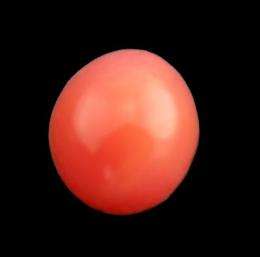
"This is a significant development for the pearl industry, and we were very excited to have the opportunity to closely examine these unique conch cultured pearls in our laboratory," said Tom Moses, senior vice president of the GIA Laboratory and Research. "Several of the pearls we examined are truly top-quality gems. With the equipment and expertise available at the GIA Laboratory, identification criteria are being compiled to separate queen conch cultured pearls from their natural counterparts."
Previous efforts to culture queen conch pearls were unsuccessful, probably because of the animal's sensitivity to traditional pearl seeding techniques and its complex shell. The spiral shape of the shell makes it virtually impossible to reach the gonad, one of the pearl-forming portions in pearl oysters, without endangering the animal's life.
"Perhaps the most significant outcome from our research is that the technique we have developed does not require sacrificing the conch in the process," said Davis. "The 100 percent survival rate of queen conch after seeding and the fact that it will produce another pearl after the first pearl is harvested will make this culturing process more efficient and environmentally sustainable for commercial application."
Survival of the animal is critical because commercial fishing has depleted the once-abundant wild populations of queen conch, and they are now considered a commercially threatened species in Florida and throughout the Caribbean.
There are basically two types of cultured pearls: nucleated (beaded) and non-nucleated (non-beaded). Nucleated cultured pearls are produced by inserting a piece of mantle tissue from a donor mollusk and a nucleus, usually a spherical piece of shell, into the body of a recipient mollusk. Non-nucleated pearls are produced by grafting only a piece or pieces of mantle tissue, and no bead is inserted.
"We used two different seeding techniques to induce pearl formation in the queen conch," said Acosta-Salmón. "One was a modification of the conventional technique used to produce cultured pearls in freshwater mussels, and the other was a modification of the conventional technique used in marine pearl oysters."
Conch pearls are formed by concentric layers of fibrous crystals, and this layering often produces the desired flame structure, which is characteristic of conch pearls. The pearls have a porcelain finish and luster like the interior of the conch shell, and come in a wide variety and combination of colors including white, red, pink, orange, yellow and brown. Queen conch pearls are measured in carats like traditional gemstones.
The size of the cultured pearls produced by Acosta-Salmón and Davis is controlled by the size of the bead and the culture time. The researchers have experimented with culture times from six months to two years; longer culture times may produce larger pearls. The queen conch is farmed in aquaculture tanks, and the queen conch cultured pearls in the initial harvest were grown in an aquaculture facility at HBOI. Queen conch achieve full size at about three years and have a life span of up to 40 years.
The queen conch is the largest molluscan gastropod of the six conch species found in the shallow seagrass beds of Florida, the Bahamas, Bermuda, the Caribbean Islands, and the northern coasts of Central and South America.
Source: Florida Atlantic University


