Study points to new uses, unexpected side effects of already existing drugs
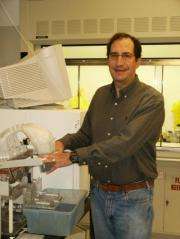
Scientists at the University of North Carolina at Chapel Hill School of Medicine and the University of California, San Francisco have developed and experimentally tested a technique to predict new target diseases for existing drugs.
The researchers developed a computational method that compares how similar the structures of all known drugs are to the naturally occurring binding partners -- known as ligands -- of disease targets within the cell. In a study published this week in Nature, the scientists showed that the method predicts potential new uses as well as unexpected side effects of approved drugs.
"This approach uncovered interactions between drugs and targets that we never could have predicted simply by looking at the chemical structures," said senior study author Bryan Roth, M.D., Ph.D., professor of pharmacology and director of the National Institute of Mental Health Psychoactive Drug Screening Program at UNC. "We may now have a way to predict what side effects are likely to occur from treatment before we even put a drug into clinical testing." Roth is also a member of the UNC Lineberger Comprehensive Cancer Center.
Many of the most successful drugs on the market today are being prescribed for ailments that are quite different from the ones they were originally designed to treat. Viagra, for instance, was once intended for coronary heart disease but now is used to combat erectile dysfunction. The discovery of surprising uses of developed drugs can sometimes be the result of serendipity, as unforeseen side effects emerge from clinical trials. In the past, researchers have tried to predict drug interactions by looking for chemical similarities among the possible targets of pharmaceutical compounds.
However, some drug targets which look very similar to one another bind very different ligands, and some targets that don't have any obvious similarity bind similar ligands, says Brian Shoichet, Ph.D., co-senior study author and professor of pharmaceutical chemistry at the University of California at San Francisco. "So if instead we were to organize targets by the ligands they recognize, it could reveal different patterns than traditional approaches, and illuminate new opportunities for drugs to bind to unexpected targets."
A team of researchers led by Roth and Shoichet did just that, comparing the structures of 3,365 FDA-approved and investigational drugs against the structures of hundreds of targets, defining each target by its ligands. They then honed in on thirty of the strongest predictions, validating the actual physical interactions between the drugs and targets in wet laboratory experiments.
In one of their follow-up experiments, the scientists investigated the molecular targets of the hallucinogenic substance dimethyltrytamine (DMT), which had previously been postulated to act through a site known as the sigma-1 receptor. Using the computational approach, Roth and colleagues found that DMT had a high affinity for serotonin receptors, including the binding site for LSD, another hallucinogen.
They also showed that the substance is hallucinogenic in normal mouse models but not in ones lacking the serotonin receptor. Roth says the power of their approach is it can be used to uncover the real targets of pharmaceutical compounds quickly and efficiently, and will probably lead to a greater understanding of the many molecular targets of each drug.
"Drugs are not as selective as we once thought," said Roth, who is also a professor in the School of Pharmacy's medicinal chemistry and natural products division. "It turns out that the most non-selective drugs are frequently the most effective for complex diseases. Rather than 'magic bullets,' we need to come up with 'magic shotguns' that hit more than one molecular target at a time. We could use this computational approach to identify the drugs that hit the right targets and miss the wrong ones."
Source: University of North Carolina School of Medicine (news : web)


