Common plants can eliminate indoor air pollutants
November 4, 2009
Common plants can eliminate indoor air pollutants

Enlarge

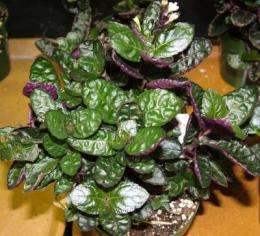
Hemigraphis alternata, or purple waffle plant, one of the highest rated ornamentals for removing indoor air pollutants. Credit: Photo courtesy of Dr. Stanley Kays

Air quality in homes, offices, and other indoor spaces is becoming a major health concern, particularly in developed countries where people often spend more than 90% of their time indoors. Surprisingly, indoor air has been reported to be as much as 12 times more polluted than outdoor air in some areas. Indoor air pollutants emanate from paints, varnishes, adhesives, furnishings, clothing, solvents, building materials, and even tap water.

A long list of , or VOCs [including benzene, xylene, hexane, heptane, octane, decane, trichloroethylene (TCE), and methylene chloride], have been shown to cause illnesses in people who are exposed to the compounds in indoor spaces. Acute illnesses like asthma and nausea and chronic diseases including cancer, neurologic, reproductive, developmental, and respiratory disorders are all linked to exposure to VOCs. Harmful indoor pollutants represent a serious health problem that is responsible for more than 1.6 million deaths each year, according to a 2002 report.

Stanley J. Kays, Department of Horticulture, University of Georgia, was the lead researcher of a study published in HortScience that tested ornamental indoor plants for their ability to remove harmful VOCs from indoor air. According to Kays, some indoor plants have the ability to effectively remove harmful VOCs from the air, and not only have the ability to improve our physical health, but also have been shown to enhance our psychological health. Adding these plants to indoor spaces can reduce stress, increase task performance, and reduce symptoms of ill health.

The ability of plants to remove VOCs is called "phytoremediation". To better understand the phytoremediation capacity of ornamental plants, the research team tested 28 common indoor ornamentals for their ability to remove five volatile indoor pollutants. "The VOCs tested in this study can adversely affect indoor air quality and have a potential to seriously compromise the health of exposed individuals," Kays explained. "Benzene and toluene are known to originate from petroleum-based indoor coatings, cleaning solutions, plastics, environmental tobacco smoke, and exterior exhaust fumes emanating into the building; octane from paint, adhesives, and building materials; TCE from tap water, cleaning agents, insecticides, and plastic products; and alpha-pinene from synthetic paints and odorants."

During the research study, plants were grown in a shade house for eight weeks followed be acclimatization for twelve weeks under indoor conditions before being placed in gas-tight glass jars. The plants were exposed to benzene, TCE, toluene, octane, and alpha-pinene, and air samples were analyzed. The plants were then classified as superior, intermediate, and poor, according to their ability to remove VOCs.

Of the 28 species tested, Hemigraphis alternata (purple waffle plant), Hedera helix (English ivy), Hoya carnosa (variegated wax plant), and Asparagus densiflorus (Asparagus fern) had the highest removal rates for all of the VOCs introduced. Tradescantia pallida (Purple heart plant) was rated superior for its ability to remove four of the VOCs.

The study concluded that simply introducing common ornamental plants into indoor spaces has the potential to significantly improve the quality of indoor air. In addition to the obvious health benefits for consumers, the increased use of indoor plants in both ''green'' and traditional buildings could have a tremendous positive impact on the ornamental plant industry by increasing customer demand and sales.

More information: The complete study and abstract are available on the ASHS electronic journal web site: http://hortsci.ashspublications.org/cgi/content/abstract/44/5/1377

Source: American Society for Horticultural Science

4.3 /5 (7 votes)  

Filter


Move the slider to adjust rank threshold, so that you can hide some of the comments.


Display comments: newest first

Caliban
Nov 04, 2009

Rank: 1 / 5 (1)
Had always understood this to be the case- somewhat surprised to hear that this is(possibly) the first such study. Trials should be made with a wider variety of houseplants, as some do better than others based on the temperature and light conditions indoors.
Rank 4.3 /5 (7 votes)
Related Stories
Relevant PhysicsForums posts
  • Factors affecting beet root cell membrane
    created12 hours ago
  • Stem cell question.
    createdFeb 10, 2012
  • Protease cleavage
    createdFeb 10, 2012
  • Pertubance in a model
    createdFeb 10, 2012
  • Cancer drugs and Alzheimer's, Oh my!
    createdFeb 09, 2012
  • Squishing cells
    createdFeb 09, 2012
  • More from Physics Forums - Biology

More news stories

A mitosis mystery solved: How chromosomes align perfectly in a dividing cell

Although the process of mitotic cell division has been studied intensely for more than 50 years, Whitehead Institute researchers have only now solved the mystery of how cells correctly align their chromosomes during symmetric ...

Biology / Cell & Microbiology

created 7 hours ago | popularity 4.5 / 5 (12) | comments 0 | with audio podcast

Researchers find extensive RNA editing in human transcriptome

In a new study published online in Nature Biotechnology, researchers from BGI, the world's largest genomics organization, reported the evidence of extensive RNA editing in a human cell line by analysis of RNA-seq data, demons ...

Biology / Biotechnology

created 7 hours ago | popularity 5 / 5 (4) | comments 0 | with audio podcast

The proteins ensuring genome protection

Researchers from the University of Geneva (UNIGE), Switzerland, have discovered the crucial role of two proteins in developing a cell 'anti-enzyme shield'. This protection system, which operates at the level of molecular ...

Biology / Cell & Microbiology

created 7 hours ago | popularity 5 / 5 (3) | comments 0 | with audio podcast

Entire genome of extinct human decoded from fossil

(PhysOrg.com) -- In 2010, Svante Pääbo and his colleagues presented a draft version of the genome from a small fragment of a human finger bone discovered in Denisova Cave in southern Siberia. The ...

Biology / Biotechnology

created Feb 07, 2012 | popularity 4.7 / 5 (60) | comments 51 | with audio podcast

Why are there so few fish in the Earth's oceans?

(PhysOrg.com) -- A Stony Brook University researcher has found that, contrary to popular belief, there are not plenty of fish in the sea.

Biology / Plants & Animals

created Feb 08, 2012 | popularity 4.2 / 5 (18) | comments 27 | with audio podcast


Scientists discover molecular secrets of 2,000-year-old Chinese herbal remedy

For roughly two thousand years, Chinese herbalists have treated Malaria using a root extract, commonly known as Chang Shan, from a type of hydrangea that grows in Tibet and Nepal. More recent studies suggest that halofuginone, ...

New method to examine batteries -- MRI from the inside

There is an ever-increasing need for advanced batteries for portable electronics, such as phones, cameras, and music players, but also to power electric vehicles and to facilitate the distribution and storage of energy derived ...

Google might launch Drive for cloud storage soon

(PhysOrg.com) -- Google's next big move, according to the Wall Street Journal, is a cloud storage service called Drive. Hardly first to the plate, Google is simply catching up to introducing its cloud reposi ...

Lab study raises questions over nano-particle impact

Tests involving chickens have raised questions about the impact on health from engineered nano-particles, the ultra-fine grains commonly used in drugs and processed foods, scientists said on Sunday.

Overeating may double risk of memory loss

New research suggests that consuming between 2,100 and 6,000 calories per day may double the risk of memory loss, or mild cognitive impairment (MCI), among people age 70 and older. The study was released today and will be ...

Starve a virus, feed a cure? Findings show how some cells protect themselves against HIV

A protein that protects some of our immune cells from the most common and virulent form of HIV works by starving the virus of the molecular building blocks that it needs to replicate, according to research published online ...