November 10, 2009 weblog
Single gene may cause curly hair
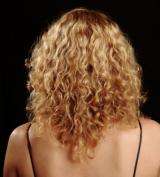
(PhysOrg.com) -- Scientists in Australia have identified a single gene that strongly influences whether you have curly or straight hair.
The study looked for genetic variations in people of European descent to identify any genes associated with curly and straight hair. People of European descent have 45% straight hair, 40% wavy, and 15% naturally curly hair. Professor Martin and colleague Dr Sarah Medland have previously found there is up to a 90% chance of inheriting the curly hair trait.
The scientists, from the Genetic Epidemiology Laboratory at the Queensland Institute of Medical Research (QIMR) in Brisbane identified the TCHH gene (trichohyalin) on chromosome one as the major gene controlling the curliness of hair. TCHH has been known for over twenty years to play a role in the development of hair follicles. It is expressed in the inner root sheath of developing hair follicles.
Leader of the team, Professor Nick Martin said that variations in the gene determine how straight or curly the hair is, but more work is needed to determine the exact variant that influences curliness. Professor Martin said a variation that causes a change in an amino acid is the most likely contender.
Hair morphology has been studied extensively in Asian populations, and research carried out in Japan last year determined the genetic basis for the straight, thick hair common in East Asian populations. The differences in the FGFR2 and EDAR genes found in Asia are thought to have originated after East Asian and European populations diverged. Much less is known about the genetic basis of straight and curly hair in Europeans.
The study analyzed data collected from a 30-year study of 5000 twins of European ancestry. The twins were asked whether their hair was curly, wavy or straight, and the researchers then tried to match the hair type against the data on the genomes of the twins.
The paper was published on November 5 in the online edition of the American Journal of Human Genetics. The research is likely to have applications in the cosmetics industry and in forensics, where the knowledge may help in identifications.
More information: Common Variants in the Trichohyalin Gene Are Associated with Straight Hair in Europeans, The American Journal of Human Genetics, 09 November 2009, doi:10.1016/j.ajhg.2009.10.009
© 2009 PhysOrg.com


